
The EOTECH Vudu lineup covers several very different purchases. A 1-6 LPVO, a super-short 3-9 and a 5-25 scope may wear the same name, but their size, viewing experience and reticle options are not interchangeable.
Choose the scope family before choosing the reticle. Start with the lowest magnification you want, the physical size you are comfortable with and whether you prefer a first- or second-focal-plane view. Then compare the patterns and package options within that family.
This guide takes you through the individual models before comparing them. It draws on EOTECH specifications and the configurations we carry, not an invented hands-on test of every scope. If you already know the model you want, browse our EOTECH Vudu collection.
In this guide
- Vudu 1-6 FFP: A Focused LPVO Choice
- Vudu X 1-6 SFP: A Different Route to the Same Zoom Range
- Vudu 1-8 SFP: More Maximum Magnification, Consistent Reticle Size
- Vudu 1-10 FFP: The Broad-Range LPVO
- Vudu 3-9 SFP: Compactness Is the Main Attraction
- Vudu 4-12 FFP: Compact Size with a Different Reticle Experience
- Vudu X 2-12 SFP: A Broad Range without the 1x Requirement
- Vudu 3.5-18: Check the Focal Plane as Well as the Reticle
- Vudu 5-25 FFP: More Maximum Magnification and Detailed Reticle Choices
- Vudu 8-32 SFP: The More Specialized High-Power Choice
- Vudu Lineup Comparison
- FFP vs SFP: Choose the View You Prefer
- MOA vs MRAD and Simple vs Detailed Reticles
- Budget for the Complete Optic, Not Just the Scope
Vudu 1-6 FFP: A Focused LPVO Choice
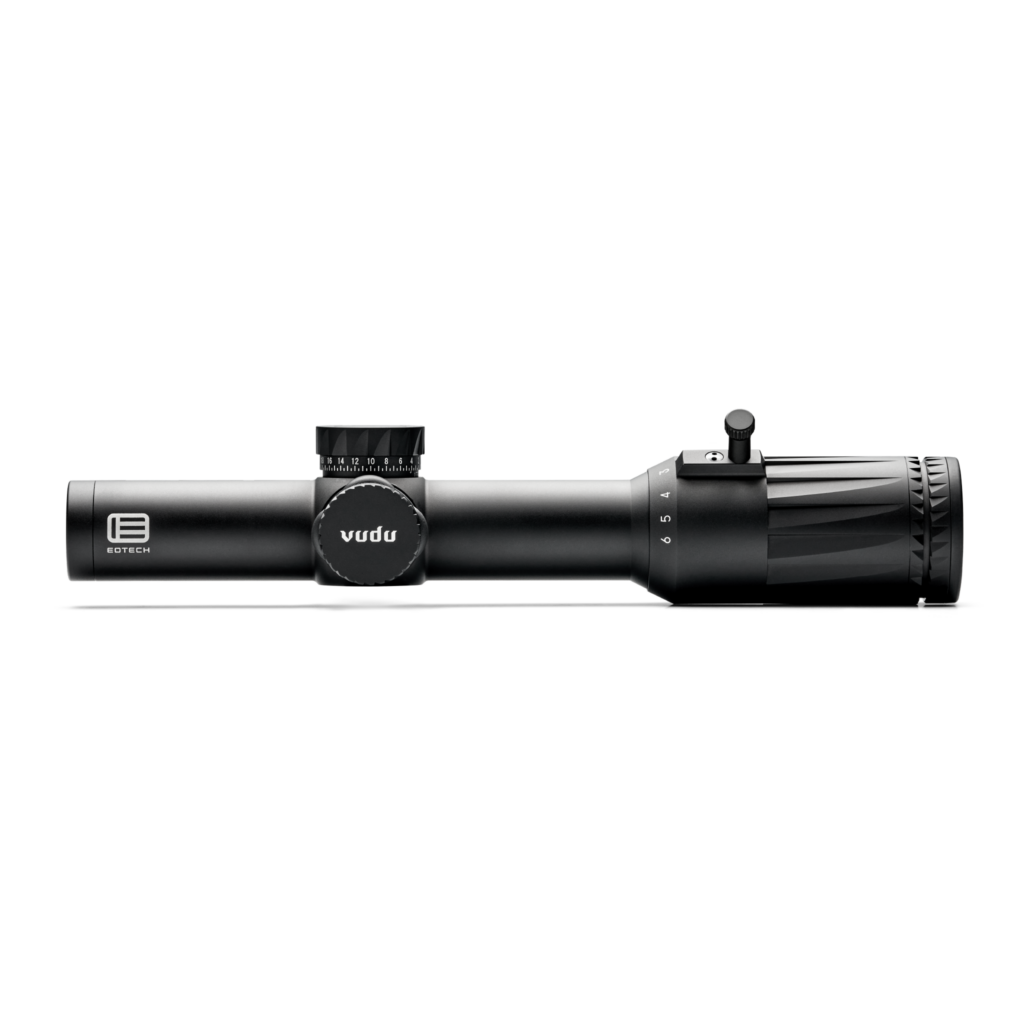
The standard Vudu 1-6 starts at 1x and extends to 6x. Its first-focal-plane reticle changes apparent size with the image, making it a different visual experience from the SFP models elsewhere in the range.
It is a sensible option when you want an LPVO but do not have a clear need for the higher maximum of the 1-10. A smaller zoom range is not automatically a disadvantage. Reticle preference, complete cost and how much of the range you expect to use are better reasons to choose.
SR1, SR2 and SR3 are different reticle configurations, not different scope bodies. The SR1 MRAD model is a useful starting point for an MRAD preference, while the other named variants have their own patterns. Compare the exact artwork rather than assuming the final digit is a quality grade.
Browse Vudu 1-6 options, keeping the standard FFP models separate in your comparison from Vudu X.
Vudu X 1-6 SFP: A Different Route to the Same Zoom Range
The Vudu X 1-6 has the same headline magnification range but uses a second-focal-plane design. Its reticle maintains the same apparent size rather than scaling like the standard FFP model.
EOTECH positions Vudu X as the more accessible part of the scope lineup. That makes it worth considering when you want a straightforward variable-power optic without paying for a feature combination you do not need. It does not mean every specification should be copied from the standard Vudu 1-6.
The BD1 version and DP1 version provide different reticle choices. Choose by the view and measurement information you prefer, then compare the price with the FFP alternative. Buying solely by 1-6×24 would miss a meaningful difference between these two families.
Vudu 1-8 SFP: More Maximum Magnification, Consistent Reticle Size
The Vudu 1-8 adds maximum magnification while retaining the 1x starting point. Its SFP design is as important to the decision as the extra two powers over a 1-6.
We would shortlist it for someone who likes a more consistent-looking reticle through the range and wants more maximum magnification than 6x. We would not describe it as the inevitable middle step toward a 1-10. The focal-plane preference can make it the final choice rather than a compromise.
The HC3 model and green HC3 configuration are examples of the available choices. Compare the actual illumination color and configuration; a green-reticle listing is not simply a different exterior finish.
If you are torn between 1-8 and 1-10, look at reticle behavior and the complete mounted package before deciding that two more powers must be worth the difference.
Vudu 1-10 FFP: The Broad-Range LPVO
The Vudu 1-10 brings a broad magnification range and an FFP reticle together in a 34mm-tube scope. It is the model to compare when you want the higher maximum but still want the scope to begin at 1x.
It does ask you to accept a substantial optic and its mounting solution. That can be a worthwhile trade if you will use the broad range. It is a less convincing purchase when the higher number is the only attraction and you actually prefer the reticle presentation of an SFP model.
SR4 is the MOA option; SR5 and LE5 use MRAD with different central patterns. There is also a specifically named daylight-bright SR5 variant, which should not be confused with every standard illuminated SR5 listing.
Our Vudu 1-10 review and reticle comparison examines each of those choices individually. Shop the 1-10 collection once you know the pattern and illumination variant you prefer.
Vudu 3-9 SFP: Compactness Is the Main Attraction
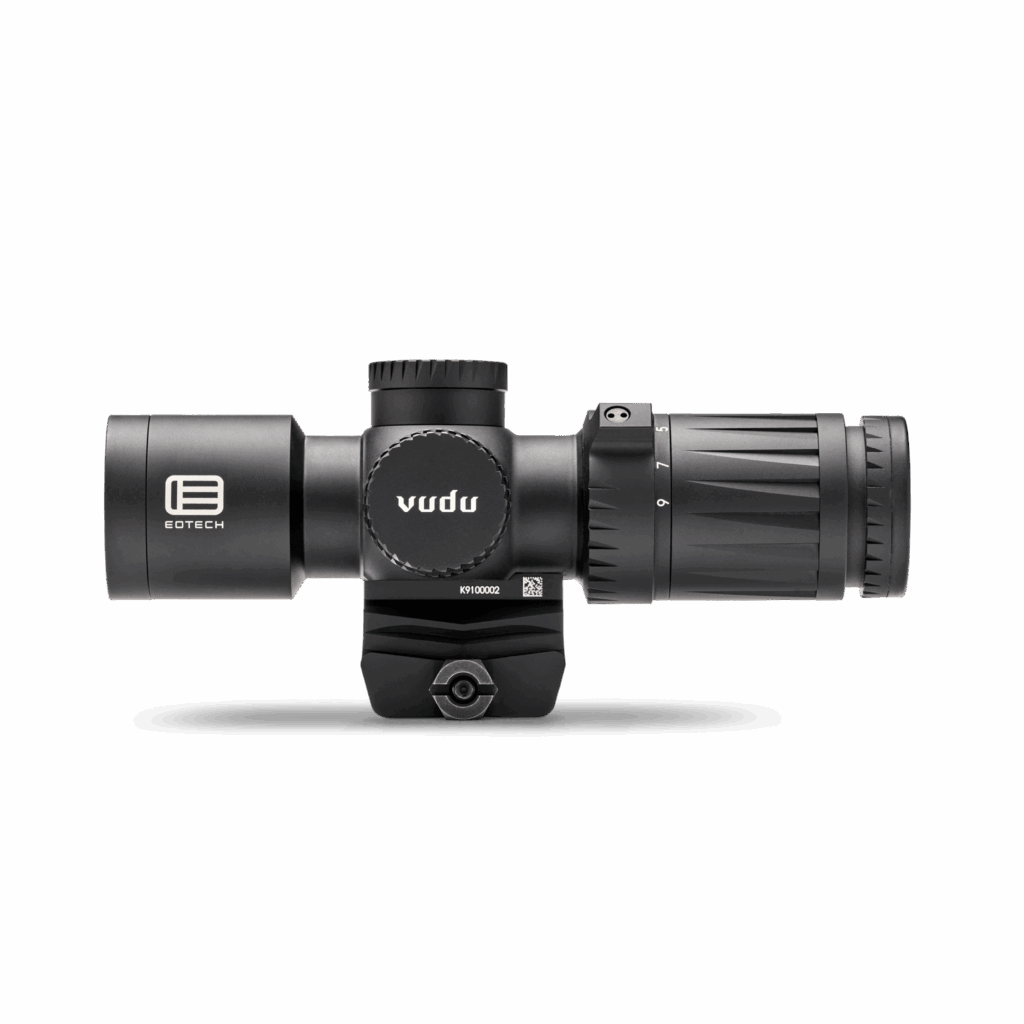
The Vudu 3-9 is not simply a conventional long-tube scope with familiar numbers. Its super-short body and integrated base give it a distinct physical arrangement.
It starts at 3x, so it is not an LPVO substitute for someone who needs a 1x view. In exchange, it offers a compact magnified platform and the consistent apparent reticle size of SFP.
HC1 and MD6 are MOA choices, while MR5 is the MRAD alternative. Scope-only listings and packages with an EFLX are separate purchases; a scope-only listing still has the integrated base.
We would choose the 3-9 for its physical format and SFP view, then select the reticle. Our detailed Vudu 3-9 guide covers those variants and the package differences.
Vudu 4-12 FFP: Compact Size with a Different Reticle Experience
The Vudu 4-12 keeps the compact integrated-base concept but changes to a 4-12x range and first focal plane. It is the closest alternative to the 3-9 if you like that short format.
The minimum matters just as much as the maximum. Starting at 4x is a different choice from starting at 3x, and neither gives you 1x through the scope. The FFP reticle also changes apparent size across the range.
MR5 and MD5 are both MRAD options, but the patterns are visibly different. MR5 has a segmented circle around the center; MD5 uses a crosshair-based center without that circle. Do not select one merely because a retailer’s thumbnail makes the exterior look identical.
Read our Vudu 4-12 review for the reticle diagrams, package choices and direct 3-9 comparison.
Vudu X 2-12 SFP: A Broad Range without the 1x Requirement
The Vudu X 2-12 is worth considering when you do not need a scope to start at 1x but would like a lower minimum than a 3-9 or 4-12. It uses a conventional scope arrangement rather than the integrated-base compact format.
Its SFP design and 2-12x range make it a different proposition from either the FFP 1-10 or the compact FFP 4-12. Similar maximum magnification does not make those scopes interchangeable.
The BD1 and DP1 versions offer alternative reticles. We would compare this model when cost, a relatively low minimum and an SFP view matter more than the shortest possible body.
For someone who never needed 1x in the first place, the 2-12 can be more relevant than paying for a broad-range LPVO and using only its magnified settings.
Vudu 3.5-18: Check the Focal Plane as Well as the Reticle
The 3.5-18 range moves toward a larger optical package and higher maximum magnification. It is a relevant alternative when the compact 3-9 or 4-12 does not give you the upper range you want.
Be especially careful with the full description here. The lineup includes both FFP configurations, such as the MD1 MRAD model, and an SFP HC1 model. Buying by the magnification label alone can mean choosing the wrong focal plane.
The 50mm objective and conventional body also make this a different physical purchase from a super-short model. We would consider it because the higher maximum and chosen reticle are useful to you, not because a larger scope is automatically more desirable.
Think of 3.5-18 as a separate option with its own size and viewing tradeoffs rather than a mandatory upgrade from 4-12.
Vudu 5-25 FFP: More Maximum Magnification and Detailed Reticle Choices
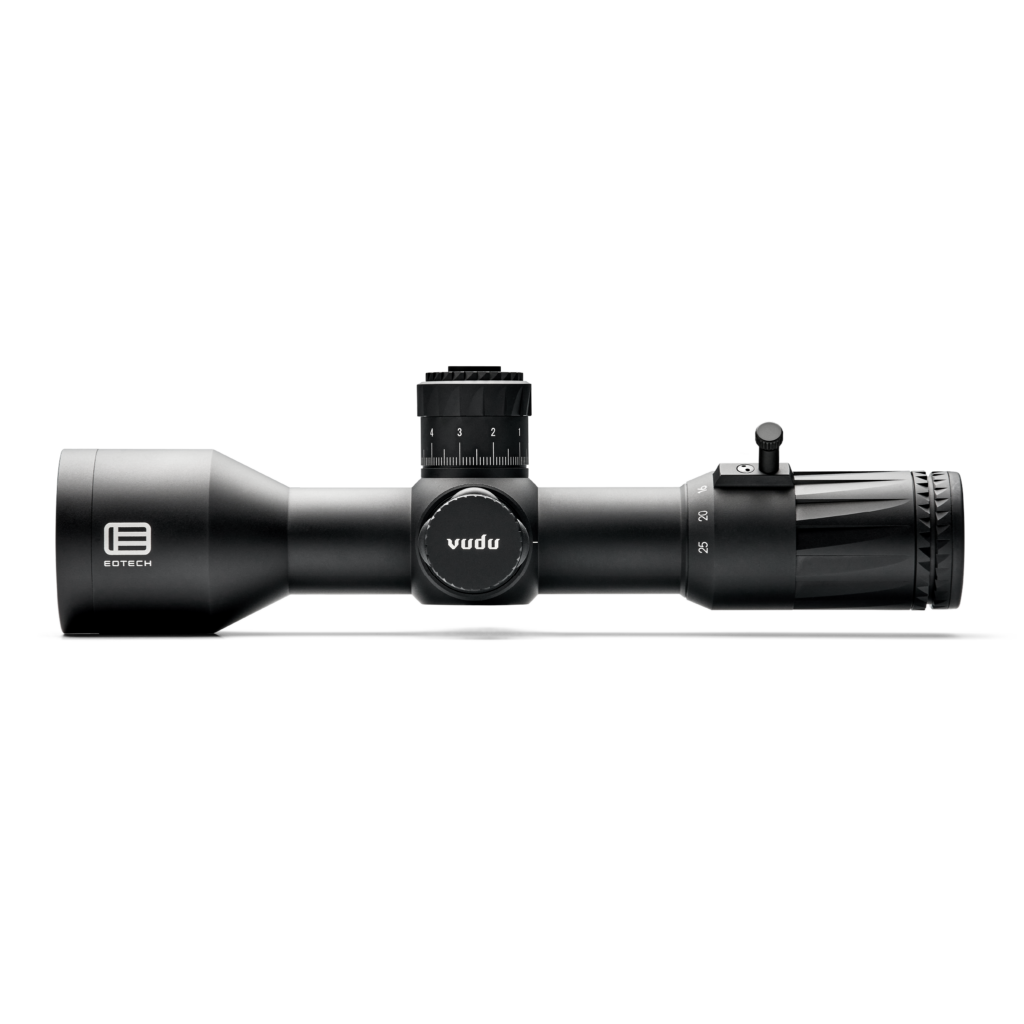
The Vudu 5-25 belongs on the shortlist when maximum magnification is a central reason for the purchase. It starts at 5x, uses FFP and offers several detailed reticle configurations.
MD3 MRAD, MD4 MOA and named Horus variants are not interchangeable labels. Their artwork can look very different, so choose the pattern you want before selecting finish or comparing a sale price.
We would not choose a detailed grid just because it looks more sophisticated in a product photograph. More visible references also mean more structure in the view. That is useful when it matches your preferences and unnecessary when you want a cleaner image.
The MD3 model and MD4 model provide a sensible MOA/MRAD starting comparison before you look at the Horus alternatives.
Vudu 8-32 SFP: The More Specialized High-Power Choice
The Vudu 8-32 HC2 starts higher and extends beyond the maximum of the 5-25. It also uses SFP, so it should not be treated as the same product with seven more powers added at the top.
This is a narrower purchasing decision. If a high minimum magnification does not suit your intended viewing, the large maximum does not fix that. We would shortlist it when you already know that the range and HC2 pattern are what you want, rather than use it as a default recommendation for anyone seeking more magnification.
Vudu Lineup Comparison
| Family | Focal plane | Main reason to compare |
|---|---|---|
| Vudu 1-6 | FFP | Focused LPVO range |
| Vudu X 1-6 | SFP | Accessible SFP alternative |
| Vudu 1-8 | SFP | Higher maximum with SFP view |
| Vudu 1-10 | FFP | Broad LPVO range |
| Vudu 3-9 | SFP | Super-short integrated-base design |
| Vudu 4-12 | FFP | Compact design with FFP |
| Vudu X 2-12 | SFP | Conventional scope, low 2x minimum |
| Vudu 3.5-18 | FFP or SFP by model | Higher maximum and multiple layouts |
| Vudu 5-25 | FFP | High-power range and reticle selection |
| Vudu 8-32 | SFP | More specialized high-power choice |
FFP vs SFP: Choose the View You Prefer
First focal plane means the reticle scales with the image. Second focal plane keeps the reticle’s apparent size consistent while the image changes. Both are legitimate design choices, and neither acronym proves that a scope is automatically right for you.
When comparing FFP scopes, look at the pattern at both ends of the magnification range. When comparing SFP models, make sure you prefer that more consistent reticle appearance. A static thumbnail can hide an important part of the experience.
The relevant reticle documentation explains how its measurement references relate to magnification. This guide is about choosing the product rather than providing adjustment or ballistic instructions.
MOA vs MRAD and Simple vs Detailed Reticles
MOA and MRAD identify different measurement systems. Choose the one you are comfortable with, then inspect the pattern. You do not need to change systems simply because a particular discounted listing is available.
Within either system, more marks do not automatically mean a better purchase. A relatively open central view may be preferable to a dense grid for one buyer, while another deliberately wants the detailed structure.
Reticle family letters are not enough on their own. For example, MD6 in the compact 3-9 is MOA while MD5 in the 4-12 is MRAD. Read the complete designation rather than assuming similar prefixes always use the same units.
Budget for the Complete Optic, Not Just the Scope
A conventional tube scope needs a suitable mount. The compact Vudu 3-9 and 4-12 use an integrated-base arrangement. An EFLX package adds a second optic and its accessory mount. Those are different shopping baskets, so compare like with like.
If you already own compatible equipment, a scope-only listing may avoid duplication. If you want the complete compact-scope package, compare the named reticle and included EFLX rather than assuming all bundle photos show identical components.
Our recommendation is to choose the optical experience first, then make sure the entire intended arrangement fits your budget and preferences. Browse all Vudu scopes, or go directly to the 1-10, 3-9 and 4-12 guides for deeper comparisons.
Frequently Asked Questions
The first numbers are the magnification range, and the number after x is the objective diameter in millimeters. A 1-10×28 has a 1-10x range and a 28mm objective.
No. The lineup includes both FFP and SFP designs, and the 3.5-18 family has configurations in both. Check the exact model.
No. Vudu X 1-6 is SFP, while the standard Vudu 1-6 covered here is FFP. The reticle choices and feature combinations differ.
The compact 3-9×32 and 4-12×36 use notably short bodies and integrated bases. They differ in magnification and focal plane.
No. Only specifically named packages include that reflex sight. Scope-only products and mount-only accessories are different purchases.
No. Minimum magnification, reticle appearance, physical size, focal plane and total mounted cost can be more important than the maximum number.
Sources
Manufacturer references: Vudu and Vudu X overview, Vudu model specifications, Vudu 1-6 FFP, Vudu 1-8 SFP and Vudu reticle index.