
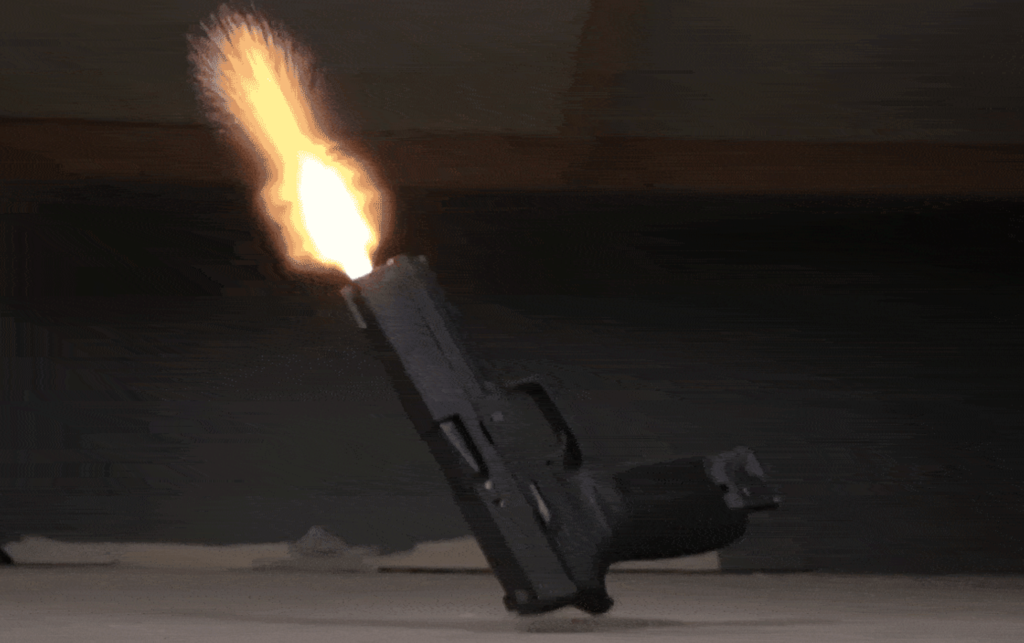
The Sig Sauer P320 is one of the most important handguns of the last decade.
It is modular. It is widely adopted. It became the basis for the U.S. military’s M17 and M18 pistols. It helped push the handgun industry toward fire-control-unit-based designs. It also gave civilian shooters, law enforcement agencies, and military users a platform that could be configured into compact, carry, full-size, XSeries, Legion, AXG, competition, and duty-style variants.
But the P320 is also one of the most controversial modern handguns on the market.
Over the last several years, the P320 has faced lawsuits, jury verdicts, appeals, proposed class actions, law enforcement restrictions, state-level legal action, and public debate over allegations that some pistols discharged without an intentional trigger pull. SIG Sauer strongly denies those allegations and maintains that the P320 cannot fire unless the trigger is pulled.
That is the core conflict.
On one side, SIG Sauer says the P320 is safe, tested, proven, and unfairly blamed for incidents caused by holsters, handling, foreign objects, or user error.
On the other side, plaintiffs and some agencies allege that the pistol’s internal safety design, trigger system, or lack of certain external safety features can allow unintended discharges under certain conditions.
This article breaks down where things stand, what the lawsuits are actually claiming, what SIG Sauer says in response, how the M17 and M18 fit into the story, and what buyers should consider before choosing a P320-family pistol.
Quick Navigation
Important Note Before We Start
This article is not legal advice.
It is also not a court ruling, manufacturer statement, or final technical conclusion. The P320 legal debate is ongoing, and different courts, juries, agencies, experts, plaintiffs, and investigators have reached different conclusions at different stages.
The goal here is simple: explain the controversy in plain English so buyers can understand the issue before making a decision.
The important thing is to separate three categories:
- Facts — things that have actually happened, such as lawsuits, verdicts, appeals, agency pauses, and manufacturer statements.
- Allegations — claims made by plaintiffs or government officials that still need to be proven in court.
- SIG Sauer’s defense — the company’s position that the P320 is safe and cannot fire without a trigger pull.
Those are not the same thing.
What Is the Sig Sauer P320?
The Sig Sauer P320 is a striker-fired, modular semi-automatic pistol.
Unlike many traditional pistols, the P320 is built around a removable fire control unit. That serialized fire control unit can be installed into different grip modules and paired with different slides, barrels, and magazines. This modular design is one of the main reasons the P320 became so popular.
The P320 family includes models such as:
- P320 Compact
- P320 Carry
- P320 Full-Size
- P320 XCompact
- P320 XCarry
- P320 XFull
- P320 AXG
- P320 AXG Legion
- P320 XFIVE Legion
- P320 Spectre Comp
- P320 MAX
- P320 XTEN
- P320 M.O.D.
- P320 FLUX Legion
- M17 and M18 military-style variants
You can browse the full Sig Sauer P320 pistol collection to see how broad the lineup has become.
The same basic platform also led to the M17 and M18 military pistols. The M17 is the full-size military-style variant, while the M18 is the compact/carry-size version.
You can compare those here:
Why the P320 Became Such a Big Deal
The P320 was not just another striker-fired handgun.
It won the U.S. Army’s Modular Handgun System competition and became the basis for the M17 and M18 pistols. That gave the platform massive credibility. A civilian pistol becoming the foundation for a new U.S. military sidearm is not a small achievement.
The P320 also had features that made it attractive to civilian shooters and law enforcement:
- Modular fire control unit
- Multiple grip sizes
- Multiple slide lengths
- Caliber and configuration flexibility
- Striker-fired trigger system
- Optic-ready variants
- Manual-safety and non-manual-safety versions
- Large aftermarket support
- Military adoption through the M17/M18 program
For many buyers, the appeal was obvious. The P320 was not just one pistol. It was a system.
That same broad adoption is also why the controversy became so loud. When a widely used platform faces safety allegations, the issue does not stay small. It affects civilian owners, police departments, federal agencies, military users, retailers, instructors, and manufacturers.
What Is the P320 Controversy About?
The controversy centers on allegations that certain P320 pistols have fired without the user intentionally pulling the trigger.
Plaintiffs in various lawsuits have described incidents involving:
- Pistols discharging while holstered
- Pistols discharging during training
- Pistols discharging during administrative handling
- Pistols discharging while being removed from a holster
- Pistols discharging when bumped, struck, jostled, or moved
- Injuries to legs, hips, feet, and other body parts
The exact facts vary by case. Some cases involve law enforcement officers. Some involve civilians. Some involve older pistols. Some involve upgraded or newer configurations. Some involve holsters. Some involve training environments. Some involve agency-issued guns.
That is why this issue is complicated.
There is no single P320 lawsuit. There are many P320 lawsuits, and they do not all make identical claims.
SIG Sauer’s Position
SIG Sauer’s public position is clear: the company says the P320 cannot fire without a trigger pull.
SIG has argued that the pistol has passed extensive testing, including military testing, law enforcement evaluation, and independent analysis. The company also points to dismissed lawsuits and excluded expert testimony in some cases as evidence that many claims do not hold up in court.
SIG’s defense generally rests on a few points:
- The P320 requires trigger movement to fire.
- The pistol meets or exceeds applicable safety standards.
- Military testing did not find the defect plaintiffs allege.
- Some lawsuits have been dismissed.
- Plaintiffs’ experts have been excluded in certain cases.
- Holsters, foreign objects, handling, or user error may explain some alleged incidents.
- A firearm cannot be evaluated in a vacuum without examining the exact incident, holster, condition of the pistol, and handling environment.
That is the manufacturer’s side of the story.
And to be fair, SIG Sauer has not lost every case. Some cases have been dismissed. Some plaintiffs have failed to prove their claims. Some technical arguments have been rejected by courts.
But that is only half the story.
The Plaintiffs’ Position
The plaintiffs’ basic claim is that the P320’s design is less forgiving than competing striker-fired pistols.
Many claims focus on the absence of certain external or passive safety features found on other handguns. Depending on the lawsuit, plaintiffs may argue that the P320 should have included features such as:
- A tabbed trigger safety
- A stronger or different striker-blocking system
- Additional mechanical safeties
- Different internal geometry
- A manual safety on more commercial models
- Design changes similar to what other manufacturers use
Plaintiffs generally argue that the pistol can become vulnerable to discharge if the trigger or internal components are disturbed under certain conditions, even if the user did not intentionally press the trigger.
SIG disputes that.
The legal battle is really about whether the alleged incidents are better explained by product design or by outside factors such as holsters, objects entering the trigger guard, improper handling, or unsafe administrative practices.
The 2017 Drop-Safety Controversy and Voluntary Upgrade
To understand the current controversy, you have to understand the earlier one.
In 2017, the P320 faced scrutiny over reports that it could discharge if dropped at certain angles. SIG Sauer responded with a Voluntary Upgrade Program.
That upgrade involved changes such as lighter internal components and other modifications intended to improve protection against unintended discharges if the pistol was dropped.
This matters because many people confuse two issues:
- The earlier drop-safety issue
- The later uncommanded-discharge lawsuits involving holstered or handled pistols
They overlap in public discussion, but they are not exactly the same thing.
The voluntary upgrade was mainly tied to drop-related concerns. Many of the later lawsuits involve claims that upgraded or later-production P320 pistols still discharged without an intentional trigger pull under other circumstances.
SIG Sauer rejects those claims. Plaintiffs argue the upgrade did not resolve all potential failure modes.
That distinction is important.
Where the P320 Lawsuits Stand
The P320 litigation landscape is messy because there are individual cases, mass actions, proposed class actions, appeals, government lawsuits, and agency-level decisions all happening at once.
Here is the simplified version.
| Category | What Happened | Why It Matters |
|---|---|---|
| Individual injury lawsuits | Numerous plaintiffs have sued SIG Sauer after alleged unintended P320 discharges | These cases focus on specific injuries and specific pistols |
| Jury verdicts | At least two juries have ruled against SIG Sauer in major P320 cases | Jury findings give plaintiffs momentum, even while SIG continues to deny defect claims |
| Dismissed cases | SIG Sauer has also won dismissals in multiple cases | Dismissals support SIG’s argument that many claims fail when tested in court |
| Appeals | Some dismissed cases have been revived on appeal | Appellate rulings may allow more cases to reach juries |
| Class actions | P320 class-action claims have been filed or certified in certain jurisdictions | These cases focus more on consumer claims and alleged product defects than one injury alone |
| State lawsuit | New Jersey sued SIG Sauer over the P320 | This escalated the issue from private litigation to state-level consumer protection litigation |
| Agency actions | Some agencies have paused, banned, reviewed, or replaced P320-family pistols | Agency moves affect public trust and institutional adoption |
The result is not clean.
SIG Sauer can truthfully point to dismissals and continued use by major institutions. Plaintiffs can truthfully point to verdicts, appeals, agency actions, and ongoing litigation.
Major Jury Verdicts Against SIG Sauer
Two verdicts are especially important in the public debate.
One was the Georgia case involving Robert Lang, who alleged that his P320 discharged and injured him while he was removing a holstered pistol. A jury awarded him more than $2 million, and later reporting indicated that a judge declined to set aside that verdict.
Another was the Philadelphia case involving George Abrahams, a U.S. Army veteran who alleged that his holstered P320 discharged while he was going down stairs. A jury awarded $11 million in damages. The punitive portion later received additional legal scrutiny, but the verdict became a major turning point in how the P320 controversy was discussed.
These cases matter because juries heard evidence and ruled against SIG Sauer.
But it is also important not to overstate what that means. A jury verdict in one case does not automatically decide every other case. Product-liability litigation depends heavily on the facts of the incident, the exact firearm, expert testimony, admissible evidence, state law, and jury findings.
Still, from a public-trust standpoint, those verdicts changed the conversation.
Cases SIG Sauer Has Won or Had Dismissed
SIG Sauer has not simply been losing across the board.
The company has repeatedly emphasized that many P320 lawsuits have been dismissed. Some courts have excluded plaintiffs’ expert testimony. Some plaintiffs have failed to establish causation. In some cases, the court record has not supported the claim that the pistol fired without trigger movement.
That matters too.
The existence of lawsuits does not prove a defect. Even the existence of many lawsuits does not prove a defect. Courts require evidence, expert testimony, causation, and a legally recognized theory of liability.
SIG Sauer’s strongest argument is that when cases are closely examined, many plaintiffs have not been able to reproduce or prove the exact failure mechanism they allege.
The counterargument from plaintiffs is that uncommanded discharge incidents are difficult to reproduce because they may depend on tolerances, holster conditions, handling environment, parts interaction, impact, or slight trigger movement that the user did not perceive as a trigger pull.
That tension is why the litigation continues.
The New Jersey Lawsuit
The biggest escalation came when New Jersey became the first state to sue SIG Sauer over the P320.
The New Jersey Attorney General’s office alleged that SIG Sauer marketed the P320 as safe while knowing about the risk of unintended discharges. The state sought major remedies, including a mandatory recall in New Jersey and a ban on further P320 sales in the state.
That is different from an individual injury lawsuit.
An individual lawsuit asks whether one person was injured because of one product. A state consumer-protection lawsuit asks whether the company misled the public or sold a product that should not have been sold as represented.
That makes the New Jersey case especially serious.
SIG Sauer denied the allegations and described the lawsuit as baseless. The company continues to defend the P320 and points to testing, dismissals, and military adoption as support.
Still, the New Jersey lawsuit changed the landscape. Once a state government steps in, the issue becomes more than a private dispute between injured plaintiffs and a manufacturer.
The FBI Analysis Referenced in the New Jersey Case
One of the most discussed parts of the New Jersey lawsuit is its reference to an FBI analysis.
According to public summaries of the New Jersey complaint, the state cited an FBI analysis that allegedly found it was possible to render a key internal P320 safety ineffective under certain conditions.
That claim is important, but it should be handled carefully.
The state is using that analysis as part of its lawsuit. SIG Sauer disputes the state’s allegations. A complaint is not the same thing as a final court finding.
But the fact that New Jersey cited federal analysis in a consumer-protection lawsuit is significant. It gives the case a different posture than a typical private injury claim.
The Missouri Class Action
Another important development is the Missouri class action.
In July 2025, a federal court granted class certification in a case involving Missouri consumers who purchased certain P320 pistols without an external thumb safety. Class certification does not mean the plaintiffs have won. It means the court allowed certain claims to proceed as a class.
That distinction matters.
A class action can create broader exposure because it is not just about one accidental discharge or one injury. It may involve claims that many buyers purchased a product that was allegedly marketed or sold in a misleading way.
For a retailer or buyer, this kind of case matters because it is about the broader consumer-facing claims around the product, not only one incident.
The Washington Class Action
A separate Washington class action filed in late 2025 or reported in early 2026 also added to the legal pressure.
That suit alleges the P320 is defectively designed and was marketed in a way that did not adequately disclose risk. Like other class claims, it is not simply about one injury. It is about whether buyers allegedly received a product that was less safe than represented.
Again, allegations are not proof. But when class actions stack on top of individual injury cases, state lawsuits, and agency bans or pauses, the issue becomes impossible to ignore.
The Slatowski Appeal: Why It Matters
One of the most important appellate developments involves ICE officer Keith Slatowski.
Slatowski alleged that his P320 discharged during a training exercise and injured him. A lower court had dismissed the case after excluding expert testimony. But in 2025, the Third Circuit revived the lawsuit, ruling that the expert testimony should not have been excluded in the way the trial court handled it.
That does not mean Slatowski won his case.
It means the case can move forward.
The ruling matters because expert testimony is often the backbone of product-liability litigation. If plaintiffs cannot get experts admitted, their cases often die before trial. If appellate courts allow expert testimony to reach juries, more P320 cases may survive long enough for a jury to decide them.
That shift matters for future litigation.
The Colwell Appeal: Another Revived Case
In 2026, another appellate ruling revived a lawsuit by a New York police detective who alleged that his P320 discharged during training.
Like Slatowski, the issue was not a final determination that the P320 is defective. The issue was whether the case could proceed and whether a jury could reasonably consider the design-defect theory.
This matters because appellate courts are not saying every P320 claim is true. They are saying some claims should be heard by juries rather than dismissed early.
That is a meaningful difference.
Law Enforcement Agency Actions
The legal controversy has also spilled into agency decision-making.
Different agencies have responded differently. Some have kept the P320. Some have reviewed it. Some have paused use. Some have banned it from training environments. Some have moved away from it.
Examples that have been reported include:
- Training bans or restrictions in certain law enforcement training environments
- Agency reviews after alleged incidents
- Reported federal agency concerns or replacements
- Department-level decisions to transition away from the P320
- Temporary military pauses involving the M18
These actions do not all mean the same thing. An agency pause is not the same as a finding of defect. A training ban is not the same as a court verdict. A replacement decision may involve liability, policy, optics, union pressure, or actual safety concerns.
But taken together, they show that the controversy has affected real institutional behavior.
The M18 Air Force Pause
The M18 issue deserves special care.
In 2025, Air Force Global Strike Command paused use of the M18 after the death of Airman Brayden Lovan at F.E. Warren Air Force Base. The pause triggered safety inspections and a review of M18 pistols.
Later reporting indicated that the investigation shifted, with another airman accused of pointing the pistol in a joking manner and firing it, and other airmen later pleading guilty to false official statement charges. That moved the specific fatal incident away from a simple “the gun fired on its own” narrative.
This is an important example of why caution matters.
The M18 pause was real. The safety inspection was real. The P320/M18 controversy was part of the public backdrop. But the later criminal-investigation facts complicated the early assumptions.
That is why responsible writing about this topic should not treat every M18-related headline as proof of a firearm defect.
How the M17 and M18 Fit Into the P320 Debate
The M17 and M18 are military variants of the P320 platform.
That creates a weird tension for buyers.
On one hand, military adoption is one of SIG Sauer’s strongest credibility points. The P320 platform went through the Modular Handgun System competition and became the basis for the M17 and M18. That is not nothing.
On the other hand, the fact that the M17 and M18 are based on the P320 means public concern about the P320 often bleeds into interest in the military variants.
This is why M17 and M18 buyers should understand the difference between:
- A commercial P320
- An M17-style pistol
- An M18-style pistol
- Manual-safety configurations
- Non-manual-safety configurations
- Military-issued pistols
- Civilian commercial variants
- X-series upgraded variants like M17X and M18X
The details matter.
You can browse the Sig Sauer M17 collection and Sig Sauer M18 collection to compare configurations.
The Manual Safety Question
A major point in the P320 debate is the absence of certain safety features on many commercial models.
Some P320 models have a manual safety. Some do not. The M17 and M18 are commonly associated with manual-safety configurations, though civilian variants vary by model.
Plaintiffs in some cases have argued that the lack of a manual safety, tabbed trigger safety, or other external safety feature contributed to the risk of unintended discharge.
SIG Sauer disputes that the P320 is defective without those features.
This debate is not unique to SIG. Many striker-fired pistols do not have manual safeties. Many buyers prefer a clean, simple striker-fired design. Others prefer external safeties. The issue in the P320 cases is whether this specific design, with its internal components and trigger system, is unreasonably risky without additional safety features.
That is ultimately a legal and technical question.
For buyers, the practical takeaway is simple: if a manual safety matters to you, choose a manual-safety model.
The Holster Question
A lot of alleged P320 incidents involve holstered pistols.
That has led to a second major debate: is the pistol the problem, the holster the problem, or the interaction between the two?
SIG Sauer and defenders of the P320 often point to holster fit, foreign objects, clothing, keys, drawstrings, or improper handling as possible explanations for some discharges.
Plaintiffs often argue that a properly designed pistol should not discharge from minor contact, movement, or holster interaction unless the user intentionally pulls the trigger.
Both points matter.
A quality holster is non-negotiable for any striker-fired pistol. It should fully cover the trigger guard, retain the pistol properly, resist collapse, and be designed for the exact gun, light, optic, and configuration being carried.
But the holster argument does not automatically end the debate. If a case alleges that minimal movement or impact caused the fire-control system to release, then the holster is only one part of the analysis.
What Buyers Should Know Before Buying a P320
The P320 is still widely sold. Many people own and use them without incident. The platform has massive support, strong ergonomics, modularity, and a huge number of model options.
But the controversy is real enough that buyers should not ignore it.
Before buying a P320, think through these questions:
- Do you want a manual safety?
- Are you comfortable with the P320’s current legal controversy?
- Is your intended use carry, range, duty, competition, or home defense?
- Do you already own compatible P320 parts, mags, or holsters?
- Are you choosing the P320 because of modularity?
- Would a P365, P226, P229, or another platform better match your risk tolerance?
- Are you prepared to use a high-quality holster designed for your exact setup?
- Do you understand your state’s magazine and handgun restrictions?
If you still want a P320, shop carefully by exact model. The P320 lineup is broad, and a compact carry gun is not the same thing as an AXG Legion, XTEN, Spectre Comp, MAX, or M17-style configuration.
Start here: Sig Sauer P320 pistols
What Current P320 Owners Should Know
If you already own a P320, the first thing to do is identify exactly what you have.
Check:
- Model
- Manufacture period
- Voluntary upgrade status
- Manual safety or no manual safety
- Holster setup
- Light/optic configuration
- Any aftermarket parts
- Carry condition
- Training habits
If you own an older, pre-upgrade P320, check SIG Sauer’s voluntary upgrade information. That program addressed earlier drop-safety concerns.
For any P320 used for carry, the holster matters. Use a holster made for the exact pistol configuration. Do not use a loose universal holster. Do not use a damaged holster. Do not use a holster that allows objects into the trigger guard.
Also be careful with aftermarket parts. Triggers, springs, grip modules, holsters, lights, and optic setups can change the handling profile of a pistol. Any modifications should be made carefully and tested thoroughly.
Is the P320 Safe?
That is the question everyone wants answered, and it is also the question that cannot be answered honestly with a lazy yes or no.
SIG Sauer says the P320 is safe and cannot fire without a trigger pull.
Some juries have found the P320 defective in specific cases.
Some courts have dismissed claims against SIG Sauer.
Some appellate courts have revived cases and allowed claims to proceed.
Some agencies continue to use the platform.
Some agencies have paused, banned, reviewed, or replaced it.
That is the current reality.
If you want the most pro-SIG answer, it is this: the P320 has been tested, adopted, and used by major institutions, and SIG says the gun cannot fire without a trigger pull.
If you want the most critical answer, it is this: the number of allegations, verdicts, agency actions, and lawsuits is too large to dismiss as internet drama.
The more balanced answer is this: the P320 is a successful and widely used pistol platform with an unresolved legal and public-trust controversy around alleged uncommanded discharges.
Should You Avoid the P320?
That depends on your risk tolerance.
Some buyers will read the lawsuits and decide they do not want a P320. That is a reasonable decision.
Some buyers will read SIG Sauer’s defense, look at the military adoption, consider the dismissed cases, and decide they are comfortable with the platform. That is also a decision people are making.
Some buyers may choose a P320 only in manual-safety form.
Some may choose an M17 or M18 because they prefer that military-style configuration.
Some may avoid the P320 entirely and choose another SIG platform like the P365, P226, or P229.
There is no universal answer. There is only an informed answer.
Where the P320, M17, and M18 Collections Fit
If you are still comparing models, these are the three collection pages that matter most:
- Sig Sauer P320 Pistols — best for comparing the entire commercial P320 family
- Sig Sauer M17 Pistols — best for full-size military-style P320 variants
- Sig Sauer M18 Pistols — best for compact/carry-size military-style P320 variants
If the legal controversy bothers you, look closely at manual-safety models and alternative SIG platforms before buying.
If the controversy does not change your mind, still choose the exact model carefully and use a proper holster.
Final Thoughts
The Sig Sauer P320 story is not simple.
It is not fair to say every allegation is proven. It is also not fair to pretend nothing is happening.
The P320 remains popular. SIG Sauer continues to defend it. Many users trust it. At the same time, lawsuits continue, agencies have taken action, and courts are still deciding what evidence juries should hear.
For buyers, the best approach is to be informed rather than emotional.
Know the controversy. Know SIG Sauer’s defense. Know the difference between P320, M17, and M18 models. Know whether you want a manual safety. Know your holster setup. Know your state laws. Then decide whether the P320 platform still makes sense for you.
The P320 is not just a pistol anymore. It is a product, a military platform, a legal battleground, and a case study in how fast trust can become the most important feature a firearm company has.
Frequently Asked Questions
What is the Sig Sauer P320 controversy?
The controversy involves lawsuits and allegations that some P320 pistols discharged without an intentional trigger pull. SIG Sauer denies that the pistol is defective and says the P320 cannot fire unless the trigger is pulled.
Has SIG Sauer lost any P320 lawsuits?
Yes. At least two major jury verdicts have gone against SIG Sauer in P320-related cases. However, SIG has also had other cases dismissed and continues to deny that the P320 is defective.
Did New Jersey sue SIG Sauer over the P320?
Yes. New Jersey filed a state-level lawsuit alleging that SIG Sauer marketed the P320 as safe despite alleged risks of unintended discharge. SIG Sauer denies the allegations.
What is SIG Sauer’s position on the P320?
SIG Sauer says the P320 cannot discharge without a trigger pull and points to testing, military adoption, and dismissed lawsuits as support for its position.
Is the M17 the same as the P320?
The M17 is based on the P320 platform and is the full-size military-style variant. Civilian M17-style models share the P320 family architecture but vary by configuration.
Is the M18 the same as the P320?
The M18 is the compact/carry-size military-style variant based on the P320 platform.
Did the Air Force pause use of the M18?
Yes. Air Force Global Strike Command paused M18 use after a fatal incident in 2025 while inspections and investigations took place. Later reporting complicated the early assumptions about that incident.
What was the P320 voluntary upgrade?
SIG Sauer’s voluntary upgrade program was introduced after earlier drop-safety concerns. It involved design updates intended to improve protection against unintended discharges if the pistol was dropped.
Should I buy a P320 with a manual safety?
That depends on your preference. Some buyers prefer manual-safety models because they add an external control. Others prefer the standard striker-fired setup. If the P320 controversy concerns you, a manual-safety model may be worth considering.
Is the P320 still sold?
Yes. The P320 is still sold in many configurations, including compact, full-size, XSeries, Legion, AXG, XTEN, M17, and M18 variants.
Should I avoid the P320?
That depends on your risk tolerance and intended use. Some buyers will avoid it because of the lawsuits. Others will trust SIG Sauer’s defense and the platform’s adoption history. The important thing is to understand the controversy before buying.
Where can I compare P320, M17, and M18 models?
You can compare available models through the Deerford Defense collections for Sig Sauer P320 pistols, Sig Sauer M17 pistols, and Sig Sauer M18 pistols.
Sources and Further Reading
This article was written from publicly available reporting, court summaries, manufacturer statements, and related coverage. Readers should review the original sources and make their own judgment.
- Homeland Arms: Sig Sauer P320 Uncommanded Discharge Lawsuits: Where the Cases Stand in 2026
- SIG Sauer: The Truth About the SIG P320
- Reuters: New Jersey sues Sig Sauer, alleging handguns fire on their own
- Reuters: Sig Sauer must face ICE officer’s lawsuit over accidental gun firing
- Justia: Slatowski v. Sig Sauer, Inc., Third Circuit opinion
- AP: Air Force says Sig Sauer pistols are safe after airman’s death sparked a review
- AP: U.S. nuclear airmen plead guilty to false statements in shooting that suspended Sig Sauer M18 use
- The Trace: New Jersey Sues Sig Sauer Over Alleged P320 Pistol Defect
- Police1: New Jersey sues Sig Sauer for the recall of P320 handguns
- Police1: Sig Sauer P320 controversy: Separating fact from fiction in safety claims
- Wyoming Gun Project video referenced by Homeland Arms
- Homeland Arms: Sig Sauer P365XL Review