
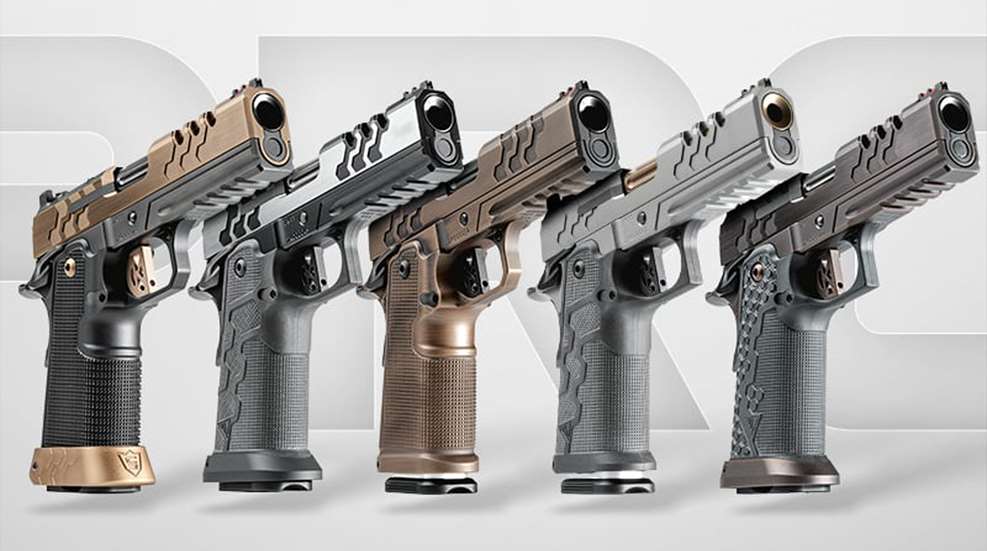
Kimber has spent decades building its name around the 1911 platform, but the modern Kimber handgun lineup is a lot broader than a basic single-stack .45 ACP pistol. Today, a buyer looking at Kimber may be comparing a traditional 1911, a modern high-capacity 2K11, or the shorter 2K11 Pro.
That is where the confusion starts.
All three live in the same general world. They share the 1911 influence, single-action feel, premium handgun positioning, and Kimber styling. But they are not the same pistol, and they are not built for the exact same buyer.
A standard Kimber 1911 is the classic choice. It is where you look if you want a traditional 1911 in 9mm, .45 ACP, 10mm, or one of Kimber’s many carry, stainless, tactical, or premium-finished configurations. Kimber’s own 1911 category highlights both .45 ACP and 9mm 1911 pistols as core parts of the lineup.
The Kimber 2K11 is the modern double-stack option. Kimber positions the 2K11 around high-capacity capability, optic-ready support, an external extractor, improved magazine geometry, and a patent-pending tool-less guide rod.
The Kimber 2K11 Pro takes that same modern direction and shrinks it into a shorter format. Kimber’s 2K11 Pro models use a 4.25-inch barrel, which makes them meaningfully different from the full-size 2K11 pistols.
So the question is not simply “Which Kimber is better?”
The better question is: Which Kimber fits the role you actually need?
Browse the collections here:
Shop Kimber 1911 Pistols
Shop Kimber 2K11 Pistols
Shop Kimber 2K11 Pro Pistols
Quick Comparison: Kimber 1911 vs 2K11 vs 2K11 Pro
Before getting deep into the details, here is the simple version.
A standard Kimber 1911 is the traditional option. It is best for buyers who want the classic 1911 feel, a slimmer single-stack frame, familiar controls, and a wide range of chamberings, sizes, and finishes.
A Kimber 2K11 is the modern high-capacity option. It is best for buyers who want more capacity, optic-ready features, a larger double-stack frame, and a more performance-focused Kimber handgun.
A Kimber 2K11 Pro is the compact modern option. It is best for buyers who like the 2K11 concept but want a shorter pistol that is easier to move with, easier to carry for some users, and still more modern than a traditional single-stack 1911.
None of these choices are wrong. They just solve different problems.
What Makes the Standard Kimber 1911 Family Different?
The standard Kimber 1911 family is the broadest group in this comparison. It includes classic models like the Custom II, Stainless II, Pro Carry, Ultra Carry, TLE-style pistols, Rapide models, Warrior variants, and many other Kimber handguns that follow the more traditional 1911 format.
This is the Kimber category most people think of first.
A traditional Kimber 1911 gives you the core 1911 experience: single-action trigger, manual thumb safety, grip safety, slim grip profile, metal-frame feel, and a design that has been around for over a century. That is the appeal. You are not buying one because it is the newest pistol design on the market. You are buying one because the 1911 still does certain things extremely well.
Kimber’s Custom II is a good example of this traditional positioning. Kimber describes the Custom line as setting the performance standard for production 1911 pistols, with fixed, adjustable, or night sight options depending on the model.
That tells you a lot about where the standard 1911 family fits. It is not just one pistol. It is a large platform family with different sight systems, finishes, sizes, frame materials, and chamberings.
Why People Still Buy Traditional Kimber 1911 Pistols
The main reason people still buy a Kimber 1911 is simple: the platform feels different.
A good 1911 has a trigger feel that many striker-fired pistols do not replicate. The single-action design, straight-to-the-rear trigger movement, grip angle, frame shape, and manual controls create a shooting experience that still has a strong following.
For buyers who care about feel, this matters.
A standard Kimber 1911 also usually has a slimmer grip than a double-stack pistol. That can make a traditional single-stack model easier to hold for some shooters, especially those who do not like the width of larger high-capacity pistols.
The tradeoff is capacity. A classic single-stack 1911 generally gives up round count compared to modern double-stack handguns. For some buyers, that is not a dealbreaker. For others, it is the entire reason they start looking at something like the 2K11.
The standard Kimber 1911 family also gives you more style and model variety than almost any other Kimber handgun group. If you want a stainless pistol, a two-tone pistol, a lightweight carry model, a compact Ultra model, a Pro-size model, a full-size range gun, a 10mm hunting-style pistol, or a premium-finished Rapide, the broader 1911 lineup is where those options live.
You can see that broader spread here:
Kimber 1911 Pistols
Kimber 1911 Size Classes: Full-Size, Pro, and Ultra
One thing that makes Kimber 1911 shopping confusing is the size language.
A full-size 1911 usually means the classic Government-style format, commonly associated with a 5-inch barrel. These are the pistols many people want for the range, collection value, classic .45 ACP use, or a traditional full-size shooting experience.
A Pro-size Kimber 1911 generally points toward a mid-size format. Kimber’s own 1911 manual references 4-inch models under Pro and Compact sizing. These models are often easier to carry than a full-size 1911 while still giving you more grip and sight radius than the smallest variants.
Ultra models are the compact end of the traditional Kimber 1911 world. These are the smaller carry-focused pistols. They generally make sense for buyers who want Kimber 1911 controls and styling but do not want the length and weight of a full-size gun.
This is important because the standard 1911 family is not one size. When someone says they want a Kimber 1911, they may be talking about a full-size .45 ACP Custom II, a Pro Carry, an Ultra Carry, a Rapide, a TLE/RL, or a 10mm model for outdoor use.
That variety is a strength, but it also means shoppers need to slow down and compare the exact listing.
Kimber 1911 Calibers: 9mm, .45 ACP, and 10mm
Caliber is another major dividing line.
A Kimber 1911 in .45 ACP is the classic choice. This is the chambering most people associate with the 1911 platform. If you want the traditional experience, .45 ACP is usually where your mind goes first.
A Kimber 1911 in 9mm is often easier to shoot for longer range sessions. Recoil is softer, ammunition is usually more affordable, and many shooters find 9mm 1911 pistols very pleasant to run.
A Kimber 1911 in 10mm moves the platform in a different direction. These pistols appeal more to hunters, outdoorsmen, and buyers who want a harder-hitting semi-auto handgun.
The standard 1911 family gives you the most traditional caliber variety. The 2K11 family also includes multiple chamberings depending on the specific model, but if your goal is to browse the widest spread of Kimber 1911 chamberings, the standard 1911 collection is the first place to start.
What Makes the Kimber 2K11 Different?
The Kimber 2K11 is a different animal.
It is still tied to the 1911 world, but it is not just a standard single-stack pistol with a different name. The 2K11 is Kimber’s modern high-capacity 1911-style platform, and it is built around features that buyers expect from newer double-stack handguns.
Kimber highlights several major 2K11 features: a patent-pending tool-less guide rod, improved internal magazine geometry, an external extractor, and optic-ready capability.
That feature set immediately separates the 2K11 from the traditional 1911 family.
The double-stack format is the biggest practical difference. A traditional 1911 is slimmer, but gives up capacity. The 2K11 is wider, but gives buyers more rounds on board depending on the chambering and magazine configuration.
The 2K11 also leans harder into modern performance features. Kimber’s official 2K11 listings reference a GT trigger, custom aluminum or MJD polymer grip modules, 5-inch barrel options, and 5R rifling depending on the model family.
This is the Kimber for someone who likes the 1911 concept but wants the pistol to feel more current.
The 2K11 Is Not Just About Capacity
It would be easy to describe the 2K11 as “the double-stack Kimber” and stop there, but that undersells the difference.
Capacity matters, but the 2K11 is also about modernization.
The external extractor is one example. Traditional 1911 pistols are known for internal extractors. Kimber’s 2K11 moves to an external extractor setup, which is one of the ways the platform steps away from a purely classic pattern.
Optic-ready capability is another major piece. A growing number of handgun buyers want the ability to mount a red dot. The 2K11 family answers that demand more directly than older traditional models.
The tool-less guide rod is also worth noting. It is not the kind of feature that sells a pistol by itself, but it matters to buyers who care about takedown and maintenance convenience.
Then there is the grip system. Depending on the exact 2K11 model, Kimber uses custom aluminum or MJD polymer grip modules. That is part of what gives the 2K11 family its own identity rather than simply being a wider version of a normal 1911.
Where the Full-Size Kimber 2K11 Makes Sense
The full-size 2K11 makes the most sense for buyers who want a larger, more capable handgun for range use, training, competition-leaning setups, or a modern defensive pistol with more capacity.
This is not the smallest Kimber. It is not trying to be.
The full-size models are better for buyers who want stability, sight radius, capacity, and performance features. If you are primarily thinking about range use or a more serious training pistol, the 2K11 has a lot of appeal.
The 2K11 Target models push even harder in that direction. Kimber’s Target OR page references a GT trigger with a 3–4 pound pull, which supports the more performance-focused role of that variant.
There are also optics-included models. Kimber lists a 2K11 Target OI variant, and the OI naming is tied to the optics-included configuration. That matters for buyers who want to skip the process of choosing and mounting an optic separately.
If you want the larger double-stack Kimber experience, start here:
Kimber 2K11 Pistols
Kimber 2K11 Target, Stainless, Comp, and Other Variants
The 2K11 lineup is not just one model. Kimber offers several directions within the family.
The 2K11 OR is the core optic-ready setup. This is the clean starting point for buyers who want the platform without necessarily adding a compensator or specialty finish.
The 2K11 Target models are more range-focused. These are the ones to look at if trigger feel, optic mounting, and precision-oriented features are high on your list.
The 2K11 Stainless Target models add a stainless look and a more classic bright-metal appearance while staying within the 2K11’s modern high-capacity format. Kimber’s Stainless Target page also references the GT Match Grade Trigger and 5R rifling language.
The 2K11 Comp models are built around recoil management. Kimber describes the 2K11 Comp as a feature-rich handgun and references recoil reduction language on the official 2K11 Comp page.
The 2K11 Pro models are the shorter version, which we will get into next.
The important point is this: do not treat all 2K11 pistols as interchangeable. A 2K11 Target, 2K11 Comp, 2K11 Stainless Target, and 2K11 Pro may all share the same family name, but they are built around different priorities.
What Makes the Kimber 2K11 Pro Different?
The Kimber 2K11 Pro is the shorter, more compact branch of the 2K11 family.
It exists for buyers who like the modern double-stack 1911-style concept, but do not necessarily want a full-size pistol. Kimber lists 2K11 Pro models with a 4.25-inch stainless steel barrel, 5R rifling, fluted and ramped barrel treatment, and a Black DLC finish on certain variants.
That 4.25-inch barrel is the key difference.
The Pro is not just a different finish or marketing name. It changes the format of the pistol. Compared to the full-size 2K11, the Pro is shorter and easier to manage for some buyers. It still gives you the 2K11 concept, but in a more compact package.
Kimber also offers Pro Comp variants. The 2K11 Pro Comp page lists the same 4.25-inch barrel length and confirms the Pro Comp as its own configuration within the lineup.
That gives buyers two major Pro directions: a cleaner optic-ready Pro model or a compensated Pro model.
Browse them here:
Kimber 2K11 Pro Pistols
Why the 2K11 Pro Exists
The full-size 2K11 makes sense for buyers who want maximum shootability and a larger platform. But not everyone wants that much pistol.
Some buyers want a modern double-stack 1911-style handgun that is easier to carry, easier to move with, and easier to fit into a more compact role. That is where the Pro makes sense.
The 2K11 Pro is the middle ground between a traditional compact 1911 and a full-size double-stack gun.
It is more modern than a standard Pro Carry or Ultra Carry.
It offers more capacity than a traditional single-stack model.
It is shorter than the full-size 2K11.
It still keeps the 1911-inspired direction that makes the platform appealing.
That middle-ground role is the entire point.
If the full-size 2K11 feels like too much gun, but a standard Kimber 1911 feels too old-school or capacity-limited, the 2K11 Pro deserves a serious look.
2K11 Pro vs 2K11 Pro Comp
The next decision inside the Pro family is whether to go compensated or non-compensated.
A standard 2K11 Pro keeps the pistol cleaner and simpler. It gives you the compact 2K11 format without adding the extra complexity or length associated with a compensated setup.
The 2K11 Pro Comp is more focused on recoil control and faster recovery between shots. A compensator helps redirect gas to reduce muzzle rise. That can make the pistol track flatter and return to target faster, especially during quicker strings of fire.
That does not mean every buyer needs the Pro Comp.
For a range or training pistol, the Pro Comp may be attractive. For a simpler compact double-stack Kimber, the standard Pro may make more sense. Buyers should also think about holster compatibility, added length, maintenance, and whether they actually want a compensated carry pistol.
In other words, the Pro Comp is not automatically better. It is more specialized.
Kimber 1911 vs 2K11: The Biggest Real-World Difference
The biggest real-world difference between the standard Kimber 1911 and the 2K11 is not the name. It is the entire design priority.
A standard Kimber 1911 prioritizes tradition, slimness, classic handling, and model variety.
The 2K11 prioritizes capacity, modern features, optic support, and performance-oriented configurations.
That difference shows up immediately in the grip.
A traditional single-stack 1911 has a slimmer grip. Many shooters love that. It points naturally, carries closer to the body, and feels very different from most modern double-stack pistols.
A 2K11 has a larger grip because it is built around higher capacity. That may be an advantage or a disadvantage depending on your hand size and intended use.
If you have smaller hands or strongly prefer a thin pistol, a standard 1911 may feel better. If you want more rounds and do not mind the extra grip width, the 2K11 becomes much more attractive.
Kimber 1911 vs 2K11 Pro: Traditional Carry vs Modern Compact Capacity
The comparison between a standard Kimber 1911 and a 2K11 Pro is more interesting.
A traditional Kimber Pro Carry or Ultra Carry gives you a smaller 1911 format with a slimmer profile. That may still be the better carry choice for buyers who value thinness over capacity.
The 2K11 Pro gives you a more modern compact double-stack format. It is likely to feel thicker, but it gives you the 2K11 feature set in a shorter package.
This is where the buyer has to decide what matters more.
If you want the thinnest Kimber carry-style pistol in this general category, a traditional 1911 may still win.
If you want capacity, optic-readiness, and a more modern platform, the 2K11 Pro may be the better fit.
There is no universal answer. The right choice depends on how you carry, how you shoot, what grip size you prefer, and whether you want a traditional or modern feature set.
2K11 vs 2K11 Pro: Full-Size Performance or Compact Balance?
The 2K11 vs 2K11 Pro comparison is more straightforward.
Choose the full-size 2K11 if you want the larger pistol. It makes the most sense for range use, competition-style shooting, training, and buyers who want the most stable version of the platform.
Choose the 2K11 Pro if you want a shorter pistol. It makes more sense for buyers who want something easier to carry or move with while staying inside the 2K11 family.
The full-size gun gives you a longer sight radius, longer slide, and generally more stable shooting feel.
The Pro gives you a shorter overall package.
That is the tradeoff.
If you are buying mainly for the range, the full-size 2K11 is probably where you start. If you are buying a do-everything modern Kimber and want a shorter format, the Pro is probably the better first stop.
What About Caliber?
Caliber should be one of the first filters you use.
If you want the classic 1911 experience, .45 ACP remains the obvious choice. This is especially true in the standard Kimber 1911 lineup.
If you want softer recoil, easier range sessions, and more capacity in many models, 9mm makes a lot of sense. This is especially true in the 2K11 and 2K11 Pro families.
If you want something harder-hitting, look at Kimber’s 10mm options. The standard 1911 family and certain 2K11 configurations may be relevant depending on availability and specific model listings.
Do not choose by model name alone. A Kimber 1911, 2K11, or 2K11 Pro can vary significantly depending on caliber, capacity, barrel length, and configuration.
Always check the exact product page before ordering.
What About Optics?
Optic support is one of the clearest reasons to look at the 2K11 family.
Many traditional Kimber 1911 models were designed around iron sights first. Some newer models and Next Gen variants add optic-ready capability, but the broader standard 1911 lineup is mixed.
The 2K11 family is much more clearly aligned with modern optic-ready expectations. Kimber repeatedly positions the 2K11 around optic-ready capability, and several 2K11 models are specifically marked OR.
Some models go a step further and include an optic from the factory, such as the Target OI configuration.
If a red dot is a must, the 2K11 and 2K11 Pro collections are the cleaner places to start.
If you are fine with irons or want a more traditional setup, the standard Kimber 1911 collection gives you plenty of choices.
What About Capacity?
Capacity is one of the main reasons the 2K11 exists.
A traditional single-stack 1911 is slimmer, but capacity is limited compared to a double-stack pistol.
The 2K11 and 2K11 Pro move Kimber into the higher-capacity 1911-style market. That is why buyers compare them against 2011-style pistols and other double-stack 1911 variants.
The capacity difference is not just about numbers on paper. It changes the entire feel of the pistol. A wider grip can feel better to some shooters and worse to others. It can give you more control, but it can also make the pistol harder to conceal or less comfortable for smaller hands.
This is why it is important not to treat “more capacity” as automatically better. More capacity is an advantage when you want it. But the classic 1911 still has a strong case if slimness, feel, and tradition matter more.
What About Carry?
For carry, the comparison gets more personal.
A full-size Kimber 1911 can be carried, but it is not the easiest option. A Pro or Ultra model from the standard 1911 lineup will usually make more sense if carry is the main goal.
A full-size 2K11 is generally more of a range, training, or performance-focused choice. Its size and double-stack grip make it less carry-oriented than smaller Kimber options.
The 2K11 Pro is the more carry-relevant member of the 2K11 family. It is shorter than the full-size version and keeps the modern double-stack format.
Still, that does not mean it will carry like a small single-stack pistol. It is compact compared to the full-size 2K11, not necessarily tiny compared to dedicated concealed-carry handguns.
If concealed carry is the main use, compare the 2K11 Pro against Kimber Pro Carry, Ultra Carry, KDS9c, CDS9, and Micro 9 options before making a decision.
What About Range Use?
For range use, the full-size 2K11 has a strong argument.
The larger pistol, longer barrel format, double-stack grip, optic-ready options, and performance-oriented variants make it a strong fit for buyers who want a Kimber that feels modern and capable on the range.
The 2K11 Target models are especially range-friendly. Kimber’s Target OR listing references the GT trigger and its 3–4 pound pull, which reinforces that the Target models are built with shooting performance in mind.
A traditional Kimber 1911 is still excellent for range use, especially if you want the classic trigger and handling. A 9mm Kimber 1911 can be a very enjoyable range pistol. A .45 ACP model gives you the classic feel. A 10mm model gives you a harder-hitting experience.
The 2K11 Pro also works well at the range, especially if you want a shorter double-stack Kimber. The Pro Comp models make the most sense for shooters who care about flatter tracking and faster follow-up shots.
What About Competition-Style Shooting?
None of this should be confused with saying every 2K11 is automatically a competition gun. But the 2K11 family clearly leans more toward that performance world than the most traditional Kimber 1911 models.
The 2K11 Target, Stainless Target, Comp, and Pro Comp variants are the ones that will interest buyers who are thinking about faster shooting, optics, recoil management, and more capacity.
A standard Kimber 1911 can absolutely be used for competition-style shooting depending on the division, setup, and shooter preference. But if you are shopping inside the Kimber catalog specifically for modern features, the 2K11 side of the lineup deserves more attention.
Which One Has the Most Traditional Feel?
The standard Kimber 1911 wins here.
If you want a classic single-stack grip, classic 1911 handling, traditional .45 ACP feel, and the most familiar 1911 profile, stay with the standard Kimber 1911 family.
The 2K11 and 2K11 Pro are not trying to preserve the traditional 1911 experience exactly as it was. They are trying to modernize it.
That modernization is the appeal for some buyers and the dealbreaker for others.
If you want old-school 1911 character, get the standard 1911.
If you want a modern Kimber that borrows heavily from the 1911 world but adds capacity and newer features, look at the 2K11 family.
Which One Has the Most Modern Feature Set?
The 2K11 family wins here.
The 2K11 brings the strongest combination of optic-ready support, higher capacity, external extractor, updated magazine geometry, modern grip modules, Target variants, Comp variants, and Pro variants.
The 2K11 Pro gives you many of those same benefits in a shorter format.
The standard Kimber 1911 lineup still includes modernized options, especially newer optic-ready and Rapide-style models, but as a whole, the 2K11 family is the more modern branch.
Which One Should You Buy?
Here is the simplest way to choose.
Buy a standard Kimber 1911 if you want the classic platform. This is the right direction if you care about single-stack slimness, traditional controls, .45 ACP history, and the widest range of Kimber 1911 variants.
Buy a Kimber 2K11 if you want a larger, modern, double-stack Kimber. This is the right direction if you care about capacity, optic-ready features, full-size handling, and a more performance-focused platform.
Buy a Kimber 2K11 Pro if you want the modern 2K11 concept in a shorter package. This is the right direction if the full-size 2K11 feels too large, but a traditional single-stack 1911 feels too limited.
There is overlap between them, but the roles are different enough that the right choice usually becomes clear once you know what you are trying to do with the pistol.
Final Recommendation by Buyer Type
If you are a traditional 1911 buyer, start here:
Kimber 1911 Pistols
If you want a full-size modern double-stack Kimber, start here:
Kimber 2K11 Pistols
If you want a shorter double-stack Kimber with modern features, start here:
Kimber 2K11 Pro Pistols
For the classic shooter, the standard Kimber 1911 is still the cleanest answer.
For the capacity-focused shooter, the 2K11 is the more modern answer.
For the buyer who wants the 2K11 idea without the full-size footprint, the 2K11 Pro is the one to compare hardest.
The best choice is not about which pistol has the most features. It is about which set of compromises makes the most sense for your use.
FAQ
Is the Kimber 2K11 a 1911?
The Kimber 2K11 is best understood as Kimber’s modern high-capacity 1911-style pistol family. It is connected to the 1911 platform, but it uses a double-stack format and newer features that separate it from a traditional single-stack Kimber 1911.
What is the difference between Kimber 1911 and Kimber 2K11?
The standard Kimber 1911 is the traditional single-stack family. The 2K11 is Kimber’s modern double-stack 1911-style platform with more capacity, optic-ready support, an external extractor, and updated magazine geometry.
What is the difference between Kimber 2K11 and 2K11 Pro?
The main difference is size. The full-size 2K11 uses a larger format, while the 2K11 Pro uses a shorter 4.25-inch barrel configuration. The Pro is the better fit for buyers who want the 2K11 concept in a more compact package.
Is the Kimber 2K11 Pro better for carry than the full-size 2K11?
For many buyers, yes. The 2K11 Pro’s shorter format makes it more carry-relevant than the full-size 2K11. That said, it is still a double-stack 1911-style pistol, so buyers should compare size, weight, capacity, and holster options carefully.
Should I buy a Kimber 1911 in 9mm or .45 ACP?
Choose 9mm if you want softer recoil, lower ammunition cost, and easier range sessions. Choose .45 ACP if you want the classic 1911 chambering and traditional feel.
Is the Kimber 2K11 available in 9mm?
Yes. Kimber offers 2K11 models in 9mm, with other chamberings available depending on the exact model and configuration. Always confirm caliber and capacity on the individual product listing.
What does OR mean on Kimber 2K11 models?
OR generally means optic-ready. On Kimber 2K11 models, it indicates the pistol is configured for optic mounting, though the exact plate or optic setup can vary by model.
What does OI mean on Kimber 2K11 models?
OI refers to optics-included models. Kimber lists a 2K11 Target OI configuration, which is separate from the standard optic-ready version.
What is the Kimber 2K11 Pro Comp?
The 2K11 Pro Comp is a compensated version of the 2K11 Pro. It keeps the shorter Pro format while adding a compensator-focused setup for flatter shooting and faster recovery between shots.
Which Kimber should I choose for range use?
For classic range use, a standard Kimber 1911 is still a strong choice. For a more modern range pistol with capacity and optic-ready features, look at the 2K11 or 2K11 Target models. For a shorter modern range/carry crossover, look at the 2K11 Pro.