
The EOTECH Vudu 1-10×28 promises a broad magnification range in one optic, but choosing the scope is only half the purchase. SR4, SR5, LE5 and the daylight-bright SR5 version present different reticle choices within the same general platform.
Start with MOA versus MRAD, then compare the actual reticle artwork, and finally decide whether you want the specifically named daylight-bright model. That sequence is more useful than treating every Vudu 1-10 listing as interchangeable.
This review is based on manufacturer specifications and reticle diagrams. It does not claim hands-on testing of illumination, optical resolution or turret tracking. It explains the design and the tradeoffs you can evaluate before ordering.
In this guide
- The Vudu 1-10×28 Platform
- What First Focal Plane Changes
- SR4: The MOA Option with a Less Busy Layout
- SR5: MRAD with a Dot-Centered Grid
- LE5: MRAD with a Crosshair Center
- The Daylight-Bright SR5 Variant
- SR4 vs SR5 vs LE5
- Vudu 1-10 Specifications
- 1-10 vs 1-6 and 1-8: Is More Range Worth It?
- 1-10 vs the Compact Vudu Scopes
- Our Verdict
The Vudu 1-10×28 Platform
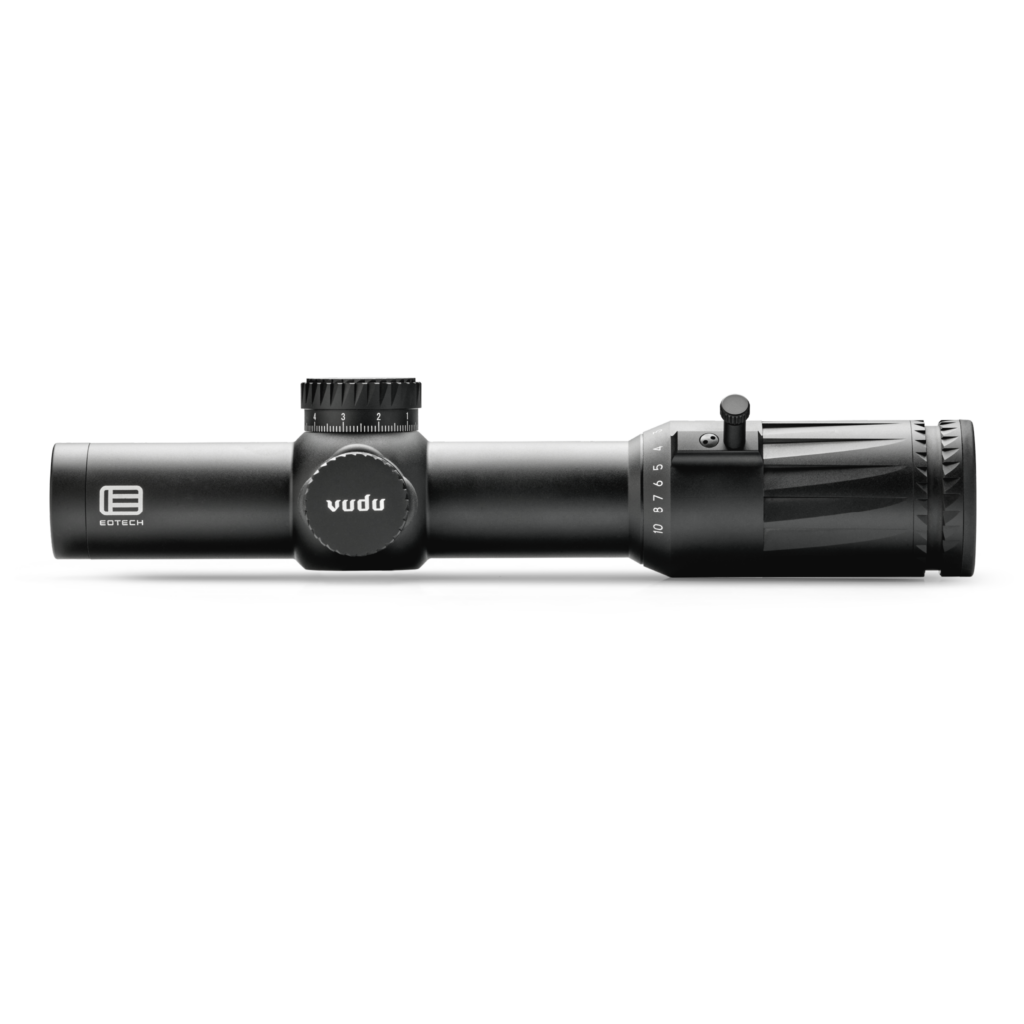
The Vudu 1-10 is a first-focal-plane LPVO with a 34mm main tube. EOTECH lists a 10.63-inch length and 21.3-ounce weight. It includes a removable throw lever and combines a locking elevation turret with capped windage.
The broad 1-10x range is its main attraction. You can choose a low-magnification view or a substantially enlarged image without adding a separate magnifier. That does not mean it has the same viewing experience as a holographic sight at the low end or a dedicated higher-power scope at the high end.
The sensible question is whether you value that range in one optic enough to accept the weight and physical size. A buyer who regularly wants the upper part of the range has a clearer reason to choose it than someone buying 10x only because it is available.
Remember to include a compatible mounting solution in your cost and weight comparison. The supplied throw lever is not a scope mount, and the 34mm tube dimension matters when selecting the appropriate mount.
What First Focal Plane Changes
The reticle scales with the magnified image. At low magnification it appears smaller; at higher magnification more of the fine pattern becomes visually prominent. That changing appearance is part of the Vudu 1-10’s design, not a feature unique to one reticle variant.
For a buying decision, examine both low- and high-power illustrations where available. A large diagram of the detailed pattern can exaggerate how busy it feels at the low end, while a small product thumbnail can conceal differences that matter at the high end.
FFP should be a preference you understand rather than an acronym you buy automatically. If a reticle that maintains a more consistent apparent size is important to you, the SFP Vudu 1-8 is a relevant alternative.
SR4: The MOA Option with a Less Busy Layout
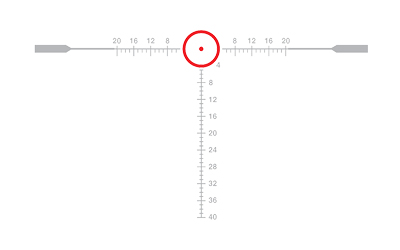
The SR4 model is the starting point if you prefer MOA. Its diagram has a circular central feature and an orderly crosshair-based arrangement without the broad lower grid seen in the other two primary choices.
That can appeal to someone who values a less crowded view. It is not a budget reticle or a lower optical grade; it is a different pattern in the same scope family.
We would select SR4 when the measurement system and simpler-looking lower field both suit your preferences. Choosing it solely because one finish happens to be on sale would be less persuasive if you actually prefer MRAD and a grid.
The tan SR4 version gives you the same basic decision in another finish. Compare reticle and finish together when checking price differences.
SR5: MRAD with a Dot-Centered Grid
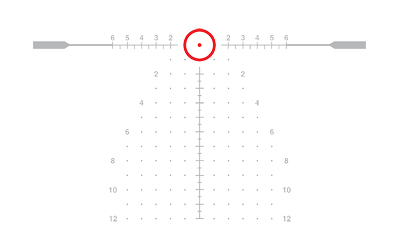
The standard SR5 is the MRAD option with a dot-centered pattern and a lower grid. Its artwork is noticeably more populated below the center than SR4, making this more than a change in units.
If you like a central dot and want that additional reference structure, SR5 is the relevant comparison. If you prefer a plainer view, do not assume more marks are automatically better.
The standard SR5 also needs to be distinguished from the specifically named daylight-bright version. A listing saying illuminated is not enough to establish that it is the diffraction-grating model. The full model description is part of what you are purchasing.
We would choose the standard SR5 because its pattern and price suit the purchase, after considering whether the other illumination variant matters to you. That is a more deliberate decision than assuming all SR5 listings describe identical features.
LE5: MRAD with a Crosshair Center
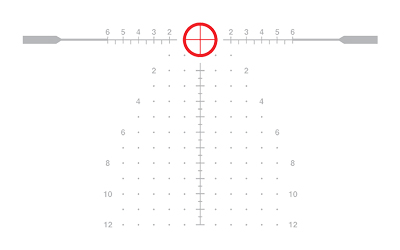
The LE5 configuration is another MRAD choice. Its defining visual difference from SR5 is the central crosshair rather than the isolated dot. It retains a lower reference grid.
This is a preference worth looking at closely. Two buyers can reasonably choose different variants without either one being less informed. Some like the isolated center; others prefer the continuity of a crosshair.
LE5 does not mean a larger objective, a different zoom range or a superior lens package. It identifies the reticle configuration. We would choose it because that central pattern looks right to you, not because the name sounds more specialized.
The Daylight-Bright SR5 Variant
EOTECH offers an SR5 diffraction-grating configuration specifically described as daylight bright. The technology concentrates illumination in the center feature and circle. This is a named variant, not a description we should casually apply to every illuminated Vudu 1-10.
If prominent illumination in bright conditions is a leading requirement, this is the version to compare first. That recommendation identifies the intended feature; it is not a claim that we measured its brightness against competitors.
See the black daylight-bright SR5 and tan daylight-bright SR5. Compare their full descriptions with the standard SR5 listings before deciding whether the difference is worth the price.
SR4 vs SR5 vs LE5
| Reticle | Units | Visual distinction |
|---|---|---|
| SR4 | MOA | Less populated lower field |
| SR5 | MRAD | Dot center and lower grid |
| LE5 | MRAD | Crosshair center and lower grid |
| SR5 daylight bright | MRAD | Specifically enhanced center illumination |
Our recommendation is SR4 for the MOA buyer who likes its simpler-looking pattern, SR5 for a dot-centered MRAD grid, and LE5 for an MRAD grid with a crosshair center. Treat the daylight-bright decision as an additional feature choice rather than a new magnification class.
Vudu 1-10 Specifications
| Specification | Vudu 1-10×28 FFP |
|---|---|
| Magnification / objective | 1-10x / 28mm |
| Main tube | 34mm |
| Length / listed weight | 10.63 in / 21.3 oz |
| Eye relief at 1x | 3.27-3.90 in |
| Eye relief at 10x | 3.35-3.62 in |
| Field of view at 100 yd | 116.6 ft at 1x; 11.7 ft at 10x |
| Battery | CR2032 |
These are EOTECH’s published scope figures. A separate mount adds to the final size, weight and cost. The specifications are useful for comparison, but do not by themselves describe the full viewing experience.
1-10 vs 1-6 and 1-8: Is More Range Worth It?
The case for 1-10 is clearest when you actually want the upper part of its range. If you would rarely choose more than 6x or 8x, reticle preference, focal plane and complete cost may matter more than maximum magnification.
The standard Vudu 1-6 is an FFP alternative with a smaller range. The Vudu 1-8 is SFP, which changes the reticle’s apparent behavior as well as the maximum number. Vudu X 1-6 is another distinct SFP product, not merely a different reticle in the standard FFP 1-6.
We would compare those models on the qualities you notice every time you look through them. A larger zoom range is a useful benefit when you want it, but should not excuse a reticle or handling preference that points elsewhere.
1-10 vs the Compact Vudu Scopes
The Vudu 3-9 and Vudu 4-12 offer much shorter bodies and integrated bases, but neither starts at 1x. That is the central tradeoff.
Choose a compact model because you want that physical arrangement and are comfortable with its minimum magnification. Choose the 1-10 because its broad range is important to you. Their similar top-end numbers do not make them substitutes in every respect.
Our Verdict
The Vudu 1-10 is a compelling option for a buyer who wants a broad FFP range in one scope and has room in the budget for the complete mounting arrangement. It becomes a better purchase when you choose the reticle deliberately rather than treating the variants as interchangeable.
Browse EOTECH Vudu 1-10 scopes to compare the SR4, SR5, LE5, finish and daylight-bright options. For the wider lineup, our Vudu buying guide explains the alternatives.
Frequently Asked Questions
Yes. Its reticle scales with the magnified image rather than keeping the same apparent size throughout the range.
SR4 is the MOA option. SR5 and LE5 use MRAD.
Both have MRAD lower grids, but SR5 uses a dot-centered pattern while LE5 uses a crosshair-style center.
No. The specifically named diffraction-grating or daylight-bright SR5 is a distinct variant. Compare the complete listing rather than relying on the word illuminated.
Its main tube is 34mm. Confirm a suitable mounting solution for the exact scope and platform; a mount is not the same component as the included throw lever.
Sources
Manufacturer references: Vudu 1-10 specifications and current reticle descriptions, EOTECH scope and daylight-bright overview, reticle artwork and Vudu 1-10 introduction.
Leave a Reply