
The EOTECH EFLX is an appealing option if you like a generous, square viewing window and want a compact reflex sight rather than a full-size holographic optic. Before choosing one, however, separate the original EFLX from the enclosed EFLX CE. They share a name, but the differences go well beyond a protective cover.
The original EFLX uses a DeltaPoint Pro footprint and comes with either a fixed 3 MOA or 6 MOA red dot. The CE adds an enclosed emitter and a selectable reticle. It also changes battery access and controls. Those are the practical decisions this guide covers, alongside the compatibility questions that matter before ordering.
This is a specification-based buying guide, not a firsthand durability test. We can explain what the designs offer without claiming that a feature list proves how an individual optic will perform through years of use.
In this guide
- The Original EFLX: Open Window, Straightforward Dot
- EOTECH EFLX Footprint: What Fits?
- The 3 MOA EFLX: A Smaller Visual Reference
- The 6 MOA EFLX: A More Prominent Dot
- EFLX CE: What the Enclosed Model Adds
- Original EFLX vs EFLX CE
- Battery Life and Everyday Ownership
- EFLX and Vudu Scope Packages
- Is the EFLX the Right Purchase for You?
The Original EFLX: Open Window, Straightforward Dot
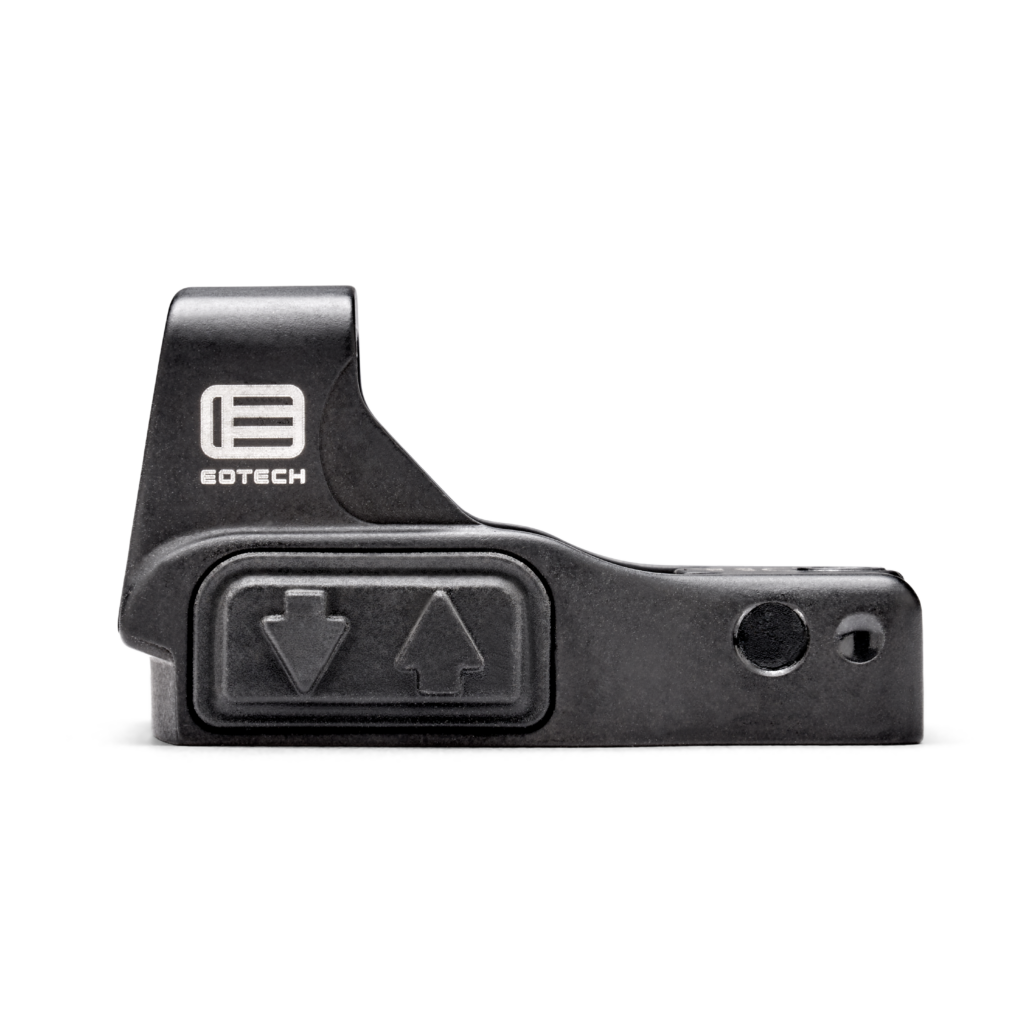
The original EFLX is the simpler choice in the family. It gives you a single red dot rather than a menu of ring-and-dot patterns. Its aluminum housing surrounds a large, relatively square window, and the battery is accessible from the top without removing the optic from its mount.
That is a worthwhile combination for someone who wants uncomplicated ownership. You choose your preferred dot size when you buy the sight, then have one familiar pattern each time you use it. Black and tan models provide finish options without changing the basic optical design.
The open-emitter arrangement is also its main limitation. The emitter is not sealed inside a fully enclosed optical chamber. A buyer whose priority is protecting that path from debris should consider the CE rather than assume all EFLX models offer the same protection.
We would shortlist the original EFLX if the footprint suits your equipment, you like its window, and a fixed-size dot is all you need. We would not pay extra for an enclosed model merely to collect features, but we also would not dismiss enclosure as cosmetic. It addresses a different ownership concern.
EOTECH EFLX Footprint: What Fits?
The standard EFLX uses the Leupold DeltaPoint Pro footprint. That identifies its mounting interface; it does not mean every product described as optic-ready accepts the sight directly. A compatible slide cut, plate or mount is still required.
An RMR-pattern mounting surface is not interchangeable with a DeltaPoint Pro interface simply because both are used by pistol optics. Likewise, the name of a firearm family is not enough to establish fit. Different generations and optic-ready packages can have different arrangements.
Before purchasing, identify the exact mounting system you have and check its manufacturer’s EFLX compatibility information. Ask about the optic by its full name rather than just asking whether the plate accepts an EOTECH. That avoids confusing the original EFLX, the CE and unrelated rifle-sight mounts.
EOTECH lists DeltaPoint Pro and Shield RMSc compatibility for the CE. That broader statement should not be read backward as a claim that the original EFLX shares both interfaces, or as a blanket guarantee for every plate using either name. Confirm the CE-specific fit with the mount manufacturer. This is a product-compatibility check, not a reason to buy an adapter by guesswork.
The 3 MOA EFLX: A Smaller Visual Reference
The 3 MOA EFLX in black is the version we would put first on the list for a buyer who prefers a smaller dot. It leaves more of the view around that dot unobstructed, which can be appealing when a large illuminated point feels visually dominant.
The tradeoff is personal rather than absolute. A smaller dot is not automatically easier for every eye to see, and the number on the box cannot predict how cleanly an illuminated point appears to you. If you have the opportunity to compare both sizes in person, that is more useful than deciding that the smaller number must be the premium option.
The tan 3 MOA version is the same basic choice in a different finish. Choosing tan does not enlarge the window or change the footprint. Compare like-for-like configurations when deciding whether a price difference is worthwhile.
The 6 MOA EFLX: A More Prominent Dot
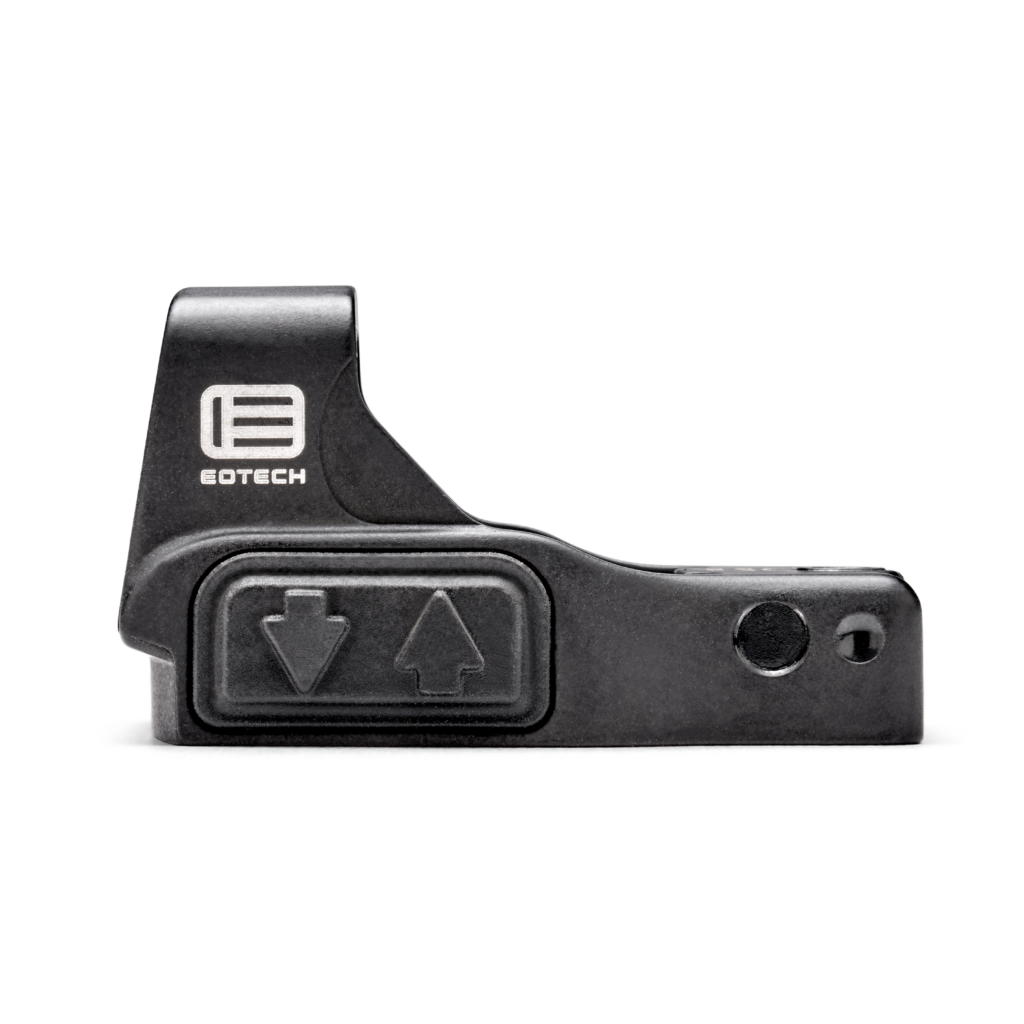
The 6 MOA EFLX suits someone who finds a larger illuminated point more comfortable to see. It is not a lower-quality version of the 3 MOA optic. Dot size is a preference about the sight picture, not a quality grade.
You do give up some visual space around the center compared with the smaller dot. Whether that bothers you depends on your preferences and the conditions in which you use the optic. We would choose this version because its dot looks better to you, not because a universal rule says every buyer should prefer large or small.
The dot size is fixed for the original model. Buying the 6 MOA sight does not give you a software option to turn it into the 3 MOA version. That makes the initial choice more important than finish if you are otherwise comparing the same EFLX configuration.
EFLX CE: What the Enclosed Model Adds
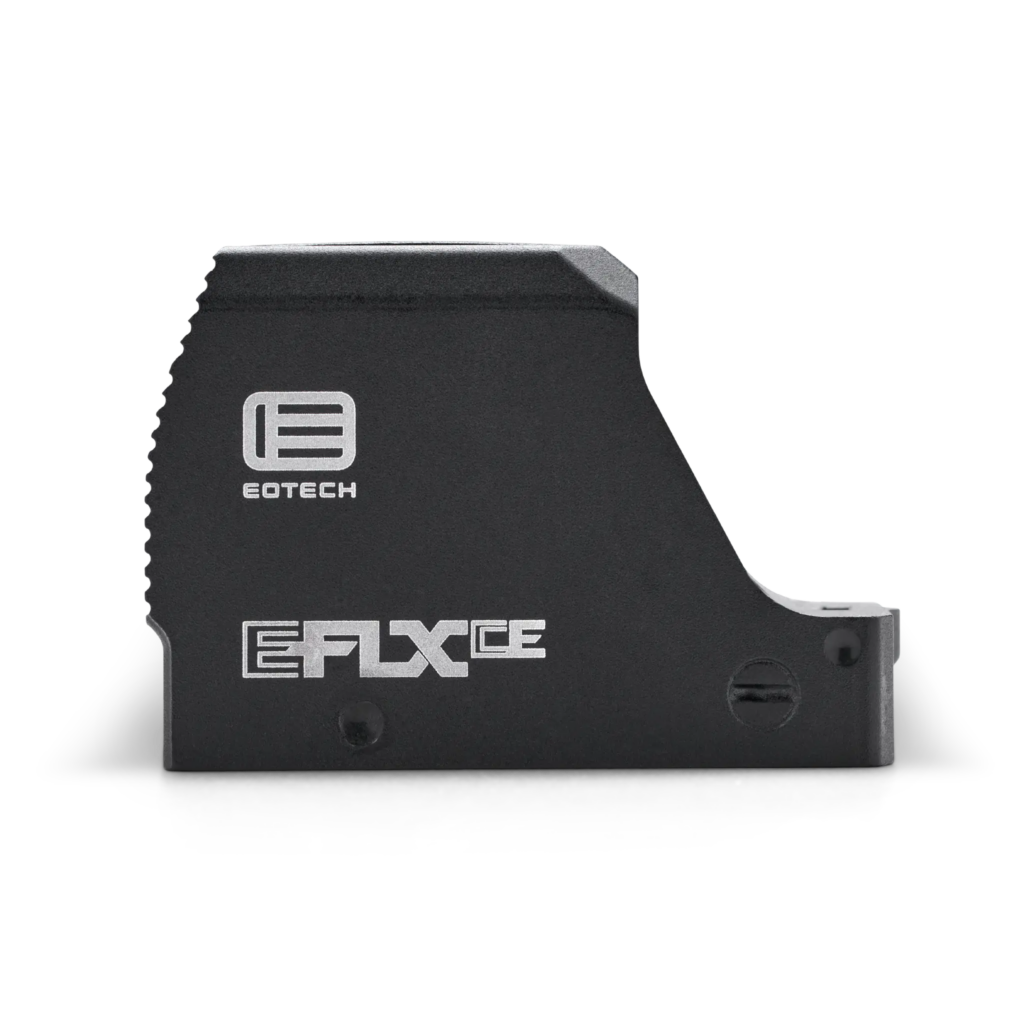
The EFLX CE encloses the emitter, adds a side-access battery and uses top-mounted controls. Its selectable patterns include a 3 MOA dot, a 42 MOA circle and the combined circle-dot. Motion activation and an integrated rear sight are additional differences from the original.
The strongest reason to choose it is the protected emitter path. If that is high on your list, the CE answers a question the open model does not. The reticle choices are a separate benefit: they allow more flexibility in the visual pattern without purchasing another original EFLX dot-size variant.
Enclosed does not mean maintenance-free. The exterior windows can still become dirty, and a housing specification is not a guarantee that the view is always clear. We would treat enclosure as meaningful protection, not an invitation to ignore ordinary care.
Nor should the integrated rear sight be treated as proof of compatibility with every front sight or plate height. It is an included feature whose usefulness depends on the complete arrangement. For an existing installation, check the CE’s dimensions and mounting compatibility before assuming it is a drop-in replacement for the original.
Original EFLX vs EFLX CE
| Feature | Original EFLX | EFLX CE |
|---|---|---|
| Emitter | Open | Enclosed |
| Reticle | Fixed 3 or 6 MOA dot | Dot, circle or circle-dot |
| Battery access | Top | Side |
| Motion activation | Not a listed feature | Included |
| Mounting family | DeltaPoint Pro | DPP / RMSc compatibility listed |
| Main appeal | Simple dot and open window | Protected emitter and more features |
Our recommendation is to choose the housing design first, then the reticle you prefer. If you know you want enclosure, neither original EFLX dot size substitutes for it. If you prefer the original open sight and do not need the added features, the CE name alone is not a reason to spend more.
Battery Life and Everyday Ownership
The original sight uses a CR2032 battery with top access. EOTECH rates the 3 MOA version at approximately 25,000 hours and the 6 MOA version at approximately 20,000 hours at brightness level five. Those are rated conditions, not a promise that every use pattern produces the same replacement interval.
The useful ownership advantage is access: you do not need to remove the original optic just to reach the battery compartment. The CE provides that same general convenience from the side. Battery location is worth considering when comparing the EFLX with an optic that requires removal for routine replacement.
We would not base the entire purchase on the longest advertised runtime. A sight that fits your mounting system and gives you a view you like is a better choice than an incompatible one with an impressive battery claim. Runtime, controls and battery access should support the decision, not make it on their own.
EFLX and Vudu Scope Packages
Some compact Vudu packages pair a scope with an EFLX and its accessory mount. That is different from buying a scope-only listing or a mount kit that contains no reflex sight. The names can look similar at a glance, so compare the included components rather than the product photograph alone.
A complete package can be convenient if you want both optics. It is unnecessary duplication if you already own the suitable reflex sight. It also does not mean every current package has been updated to the enclosed CE; the included EFLX model is part of the specification you should check.
Our Vudu 3-9 guide and Vudu 4-12 review distinguish scope-only and EFLX package options. Those are the relevant comparisons if the compact-scope arrangement is what brought you to the EFLX.
Is the EFLX the Right Purchase for You?
The original EFLX makes a clear case for itself: a simple dot, an open window and convenient battery access. The CE makes a different case with its enclosed emitter and selectable patterns. Neither needs an exaggerated promise of being perfect for every buyer.
We would prioritize confirmed fit, then your preferred view, then the features you will appreciate over time. Finish comes after those decisions. Browse our EOTECH EFLX collection to compare the original 3 MOA and 6 MOA models with the CE.
Frequently Asked Questions
The original EFLX uses the Leupold DeltaPoint Pro footprint. Confirm compatibility with your specific slide, plate or mount before purchasing.
No. The original EFLX is a DeltaPoint Pro-pattern optic. Do not assume an RMR-pattern mounting surface accepts it directly.
No. They are separate fixed-dot variants. The CE is a different model with selectable dot, circle and circle-dot patterns.
No. The original has a top-access CR2032 battery, while the CE uses side access.
Not necessarily. A mount-only accessory and a complete scope-and-EFLX package are different products. Check the components named in the listing.
Sources
Manufacturer references: original EFLX specifications, EFLX CE specifications, EOTECH’s EFLX overview and product manuals.