
Springfield SA-35 Review: The Hi-Power Reborn the Right Way
The Springfield SA-35 is one of those guns that makes more sense the more you understand what it is being compared against.
At first glance, it is easy to call it a modern Hi-Power clone and move on. That is not wrong, but it is too simple. The better way to look at the SA-35 is this:
The Springfield SA-35 is not just a tribute to the Browning Hi-Power. It may actually be closer to the classic Hi-Power experience than FN’s own modern High Power reboot.
That sounds odd at first. FN is the company historically tied to the original Hi-Power. FN Herstal completed and produced the classic design. Browning’s name is tied to it forever. So when FN brought back the High Power name, you would expect it to be the most authentic modern continuation of the platform.
But that is not really what happened.
The modern FN High Power is a reimagining. It is bigger, heavier, more modernized, higher capacity, and redesigned in ways that move it away from the original P-35 pattern. It is a cool pistol in its own right, but it is not exactly a “real Hi-Power” in the old-school sense.
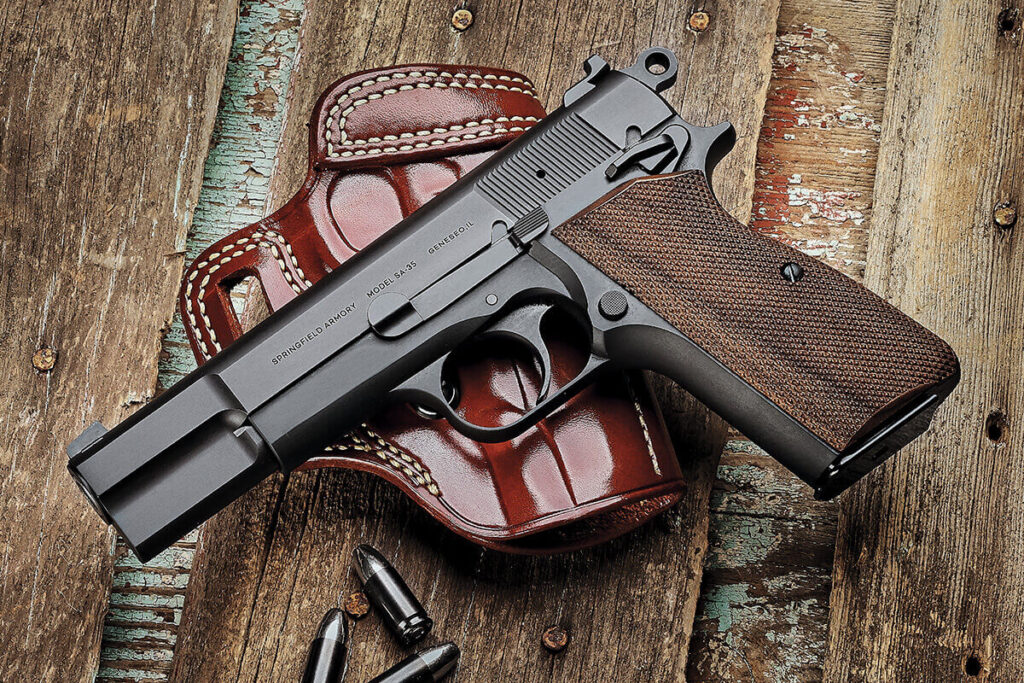
The Springfield SA-35, on the other hand, feels much closer to the original formula. It keeps the classic profile, the slimmer grip feel, the traditional controls, the 4.7-inch barrel, the forged steel frame and slide, the single-action layout, and the old wood-and-steel personality that made the original famous.
Springfield modernized the design, but they did not try to reinvent it.
That is why the SA-35 is so interesting.
For current models, finishes, and availability, you can shop our Springfield SA-35 collection here:
Shop Springfield SA-35 Pistols at Deerford Defense
What Is the Springfield SA-35?
The Springfield SA-35 is Springfield Armory’s modern take on the classic P-35 / Browning Hi-Power-style 9mm pistol.
It is a steel-frame, single-action, double-stack 9mm handgun built around the same general spirit that made the original Hi-Power famous: good capacity, excellent pointability, slim grip feel, simple controls, and classic lines.
The standard Springfield SA-35 includes:
- 9mm chambering
- Forged carbon steel slide
- Forged carbon steel frame
- 4.7-inch cold hammer forged barrel
- Single-action operation
- White-dot front sight
- Serrated Tactical Rack rear sight
- Checkered walnut grips
- Matte blued finish on the standard model
- Improved feed ramp
- Factory-tuned trigger
- No magazine disconnect
- 15-round magazine where allowed
That last point matters.
Springfield did not just copy the original pistol and leave every old complaint in place. They kept the soul of the Hi-Power but addressed some of the things modern shooters usually complain about, especially the small sights, magazine disconnect, hammer bite concerns, and ammunition compatibility.
The result is a pistol that feels old-school without feeling neglected.
The Short Review: Who Is the SA-35 For?
The Springfield SA-35 is for the shooter who wants a classic Hi-Power-style pistol without chasing down an expensive, worn, collectible, or discontinued original.
It makes sense if you like:
- Classic Browning Hi-Power styling
- Steel-frame 9mm pistols
- Single-action triggers
- Slim double-stack grip feel
- Walnut grips and blued steel
- Pistols with history behind them
- A modernized classic rather than a fully reimagined design
It probably does not make sense if you want:
- A red-dot-ready slide from the factory
- A weapon light rail
- A striker-fired trigger
- A polymer frame
- Maximum modern duty-pistol features
- A pistol that feels like an FN 509, Echelon, Glock, or P320
The SA-35 is not trying to be a modern tactical pistol.
That is the whole point.
It is trying to give you the classic Hi-Power feel with enough modern improvement to make it enjoyable and practical today.
The History of the Original Browning Hi-Power
To understand the Springfield SA-35, you have to understand why the original Browning Hi-Power mattered so much.
This was not just another old service pistol. The Hi-Power was one of the most important handgun designs of the 20th century. It helped define what a modern fighting pistol could be: chambered in 9mm, fed from a double-stack magazine, slim enough to carry, accurate enough for military use, and reliable enough to be adopted across the world.
The story starts after World War I.
At the time, many military pistols were still single-stack designs with relatively limited capacity. The 1911 held seven rounds of .45 ACP in its original magazine. The Luger and many other European service pistols were also limited compared to what would come later. Militaries were beginning to realize that a sidearm with more capacity, practical handling, and simpler maintenance could be a serious advantage.
France issued a requirement for a new service pistol known as the Grande Puissance, meaning “high power.” The French wanted a pistol that was compact, durable, easy to disassemble, equipped with an external hammer and manual safety, and capable of holding more rounds than most pistols of the era. That requirement helped push FN Herstal toward what would eventually become the P-35.
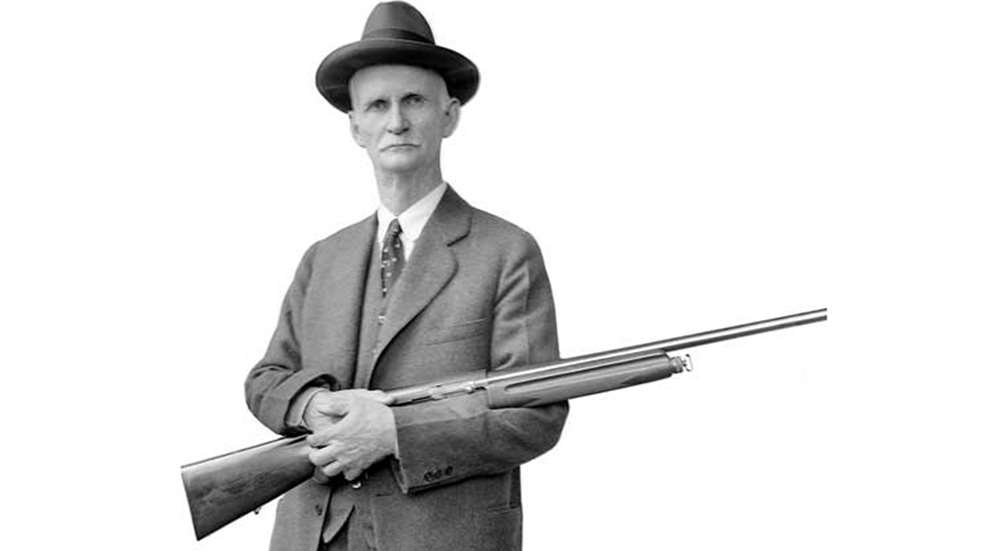
FN turned to John Moses Browning.
By that point, Browning was already one of the most important firearms designers in history. He had designed the 1911, along with a long list of shotguns, rifles, machine guns, and pistols that changed the firearms world. But Browning could not simply remake the 1911 for FN. Colt held the rights to the 1911 design, so Browning had to work around his own earlier patents and create something different.
That limitation ended up being important.
The Hi-Power did not become a 1911 copy. It became its own pistol.
Browning developed early prototypes in the 1920s. These early designs explored different operating systems and layouts, including striker-fired concepts and locked-breech designs. One of the most important pieces of the project, however, came from FN engineer Dieudonné Saive: the double-column magazine.
That magazine is a huge part of the Hi-Power story.
Today, a double-stack 9mm pistol is completely normal. Back then, it was a major step forward. The Hi-Power’s 13-round magazine gave it nearly double the capacity of many popular service pistols of its time, while still keeping the grip slim enough for real-world use. That balance of capacity and ergonomics is one of the biggest reasons the Hi-Power became legendary.
John Browning died in 1926 before the pistol was finished.
That is why the Hi-Power is often described as Browning’s last pistol design, but not solely Browning’s finished pistol. Dieudonné Saive took over the project after Browning’s death and continued developing it into the handgun we recognize today.
Saive deserves a lot of credit here.
He was not just some assistant cleaning up loose ends. He was a brilliant designer in his own right, later connected to other major FN designs. With the Hi-Power, Saive refined the pistol, helped finalize the magazine system, and brought the design into production form. The final gun was the result of Browning’s design genius and Saive’s engineering work coming together.
By the early 1930s, the design was nearing its final shape.
The pistol used a short-recoil, locked-breech operating system. It was single action. It had an external hammer, manual safety, double-stack magazine, and a grip that managed to feel surprisingly slim for its capacity. The design was eventually completed and adopted by Belgium in 1935.
That is where the “P-35” name comes from.
P-35. Pistol of 1935.
The French requirement may have started the project, but France did not end up adopting the pistol. Instead, the Hi-Power found its home with Belgium and then spread across the world.
And spread it did.
The Hi-Power became one of the most widely used military pistols of the 20th century. It served with armies, police forces, security units, and special operations forces in country after country. Its appeal was simple: it was reliable, accurate, comfortable, and held more ammunition than many of its competitors.
Then World War II made the story even stranger.
When Germany occupied Belgium, the FN factory fell under German control. The Germans continued producing Hi-Power pistols for their own forces. In German service, the pistol was known as the Pistole 640(b). That meant Hi-Powers were being produced in occupied Belgium for the Axis.
At the same time, Allied production continued elsewhere.
Dieudonné Saive escaped occupied Europe and eventually made his way to Canada. There, production of the Hi-Power was set up through John Inglis and Company. Inglis Hi-Powers were produced for Allied use, including British, Canadian, Chinese, and other forces.
That means the Hi-Power has one of the strangest wartime histories of any handgun.
It was used by both sides.
German troops carried FN-made Hi-Powers from occupied Belgium. Allied troops carried Inglis-made Hi-Powers from Canada. Few pistols can claim that kind of history. It was not just respected by one army or one nation. The design was so good that everyone who could get their hands on it used it.
After the war, the Hi-Power did not disappear.
It became one of the dominant military and police pistols of the Cold War era. It saw use across Europe, the Middle East, Africa, Asia, and the Americas. It served with conventional militaries, police agencies, and elite units. It appeared in conflicts all over the world and earned a reputation as one of the great fighting pistols.
Part of that reputation came from its balance.
The Hi-Power was not the most powerful handgun. It was not the simplest. It was not the cheapest. But it did a lot of things well at the same time.
It had more capacity than most older service pistols.
It had a grip that felt better than many later double-stack designs.
It was slim enough to carry.
It was heavy enough to shoot well.
It pointed naturally.
It had real-world military durability.
It looked good while doing it.
That last point sounds shallow, but it matters.
The Hi-Power is one of the best-looking service pistols ever made. The slide profile, grip shape, frame lines, and overall proportions all work together. It has that old-world FN elegance that modern pistols rarely capture. A lot of guns are useful. The Hi-Power was useful and beautiful.
That is why people still care about it.
The original Hi-Power was not perfect, though.
Many older examples had small sights by modern standards. The thumb safety could be small. The hammer could bite the shooter’s hand. The magazine disconnect often made the trigger worse and could prevent magazines from dropping free. Some older pistols were not ideal with modern hollow-point ammunition without tuning or attention.
But the foundation was excellent.
That is what makes the Springfield SA-35 interesting. Springfield did not try to erase the original design. They did not turn it into a completely different modern handgun. They kept the things that made the Hi-Power great and cleaned up the things that modern shooters often complain about.
That is also why the SA-35 feels closer to a real Hi-Power than FN’s modern High Power reboot.
The original Hi-Power was not huge. It was not overly bulky. It was not a completely reimagined modern pistol. It was a slim, steel-frame, single-action 9mm with excellent balance and a 13-round magazine that was ahead of its time.
The Springfield SA-35 follows that spirit.
It keeps the classic profile.
It keeps the single-action system.
It keeps the steel-frame feel.
It keeps the slim double-stack grip.
It keeps the old-school look.
It keeps the 4.7-inch barrel format on the standard model.
It even keeps the visual personality that made the original so iconic.
Then Springfield makes the updates that actually help: better sights, no magazine disconnect, improved feed ramp, recontoured hammer, improved trigger feel, and 15-round capacity where allowed.
That is the right kind of modernization.
The modern FN High Power is a different animal. It may carry the FN name, and it may be a good pistol on its own, but it is more of a modern reinterpretation than a faithful continuation. It is larger, heavier, higher capacity, and more redesigned. It feels inspired by the Hi-Power rather than directly descended from the old P-35 experience.
The SA-35 is different.
It understands why people loved the original in the first place.
That is the real historical argument for the Springfield SA-35. It is not just “another Hi-Power clone.” It is a current-production pistol that gets much closer to the size, feel, balance, and soul of the original Browning/FN design than many modern attempts.
The original Hi-Power earned its reputation over decades of military, police, and civilian use. It was born from a French requirement, shaped by Browning, finished by Saive, adopted by Belgium, used by both sides in World War II, and carried across the world for generations.
The SA-35 matters because it taps into that lineage without completely rewriting it.
It is not the real original.
But it remembers what made the real original great.
Original Browning Hi-Power vs. Modern FN High Power vs. Springfield SA-35
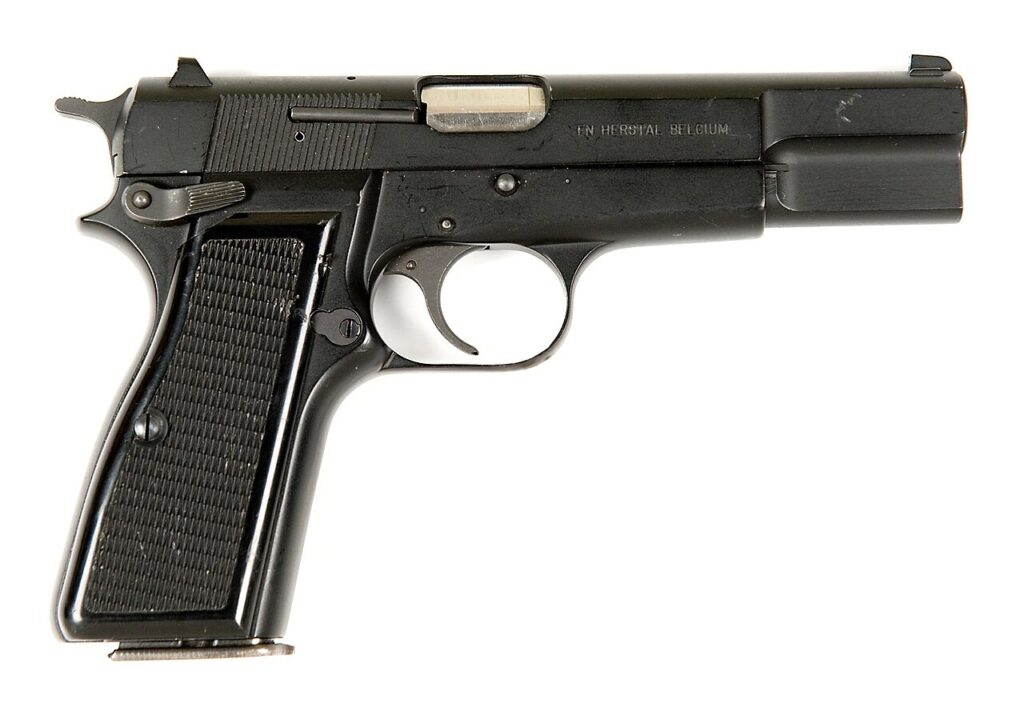
This is where the comparison gets interesting.
A lot of people assume the modern FN High Power is the closest thing to the original because it has the FN name on the slide. From a branding standpoint, that makes sense. From a design standpoint, it is more complicated.
The modern FN High Power is not simply the old Hi-Power put back into production.
It is a major redesign.
The modern FN version has 17-round magazines, a larger and heavier frame, full ambidextrous controls, a redesigned takedown system, revised ergonomics, an extended beavertail, a redesigned hammer, a wider overall feel, and more modernized construction. It is still single-action. It is still steel. It still carries the High Power name. But it is not a traditional P-35 clone.
The Springfield SA-35 is different.
It is more conservative. It stays much closer to the original profile, manual of arms, size, appearance, and feel. It still updates the things that needed updating, but it does not turn the pistol into something totally different.
Here is the practical breakdown:
| Feature | Original Browning / FN Hi-Power | Springfield SA-35 | Modern FN High Power |
|---|---|---|---|
| General design | Classic P-35 pattern | Modernized P-35-style pistol | Reimagined modern High Power |
| Caliber | 9mm commonly, also other variants historically | 9mm | 9mm |
| Action | Single action | Single action | Single action |
| Frame/slide | Steel | Forged carbon steel | Steel |
| Standard capacity | Traditionally 13 rounds | 15 rounds where allowed | 17 rounds |
| Magazine disconnect | Usually present on many originals | Removed | Removed |
| Grip feel | Slim, classic double-stack | Very close to classic feel | Larger, more modern feel |
| Controls | Traditional, often small | Improved but still classic | Fully ambidextrous modern controls |
| Sights | Often small by modern standards | Modern white-dot front and Tactical Rack rear | Modern driftable sights |
| Takedown | Classic Hi-Power-style | Traditional-style | Redesigned modern takedown |
| Overall identity | The real deal | Closest modern classic | Modern reinterpretation |
The FN High Power may be the official modern FN pistol, but the SA-35 feels more like what most Hi-Power fans actually mean when they say they want a modern Hi-Power.
Why the SA-35 Feels Closer to the Real Hi-Power
The biggest reason the SA-35 feels closer to the original Hi-Power is that Springfield did not mess with the basic personality of the gun.
The original Hi-Power was loved because of its slim grip, balance, pointability, steel-frame feel, and elegant profile. Springfield kept that.
The modern FN High Power went a different direction. It increased capacity to 17 rounds, redesigned the frame, added more aggressive modern controls, changed the takedown, and made the gun feel more like a modern all-metal pistol inspired by the Hi-Power rather than a true continuation of the old pattern.
There is nothing wrong with that if that is what you want.
But if your goal is to get as close as possible to the old Hi-Power experience in a current-production pistol, the Springfield SA-35 is the more natural fit.
It feels like a Hi-Power.
It looks like a Hi-Power.
It handles like a Hi-Power.
And it keeps the wood-and-steel identity that made the original so attractive.
The Modern FN High Power Is Not Bad — It Is Just Different
This is worth saying clearly: the modern FN High Power is not a bad pistol just because it is different.
In fact, a lot of the changes FN made make sense for a modern shooter.
A 17-round magazine gives it more capacity. Full ambidextrous controls make it more left-hand friendly. The extended beavertail helps prevent hammer bite. The revised takedown system makes maintenance simpler. The larger frame and heavier weight can make it soft-shooting. The updated ejection port and polished feed ramp help with modern ammunition.
Those are all real benefits.
But they come at a cost.
The modern FN High Power loses some of the classic Hi-Power feel. It is larger. It is heavier. It feels more modernized in the hand. It is less of a faithful P-35-style pistol and more of a 21st-century all-steel 9mm wearing the High Power name.
That may be exactly what some buyers want.
But for the shooter who wants the real Hi-Power experience, the FN reboot may feel like it drifted too far.
The Springfield SA-35 does not drift as far.
That is its strength.
The SA-35 Updates the Right Things
The best thing about the SA-35 is that Springfield updated the parts of the Hi-Power that actually needed help.
They did not try to make it a totally new pistol. They did not try to turn it into a duty gun with rails and optic cuts. They did not bulk it up just to win a capacity war.
Instead, they focused on the classic complaints.
No Magazine Disconnect
Many original Hi-Powers included a magazine disconnect. That means the pistol would not fire without a magazine inserted.
Some people like that feature. Many shooters do not.
The magazine disconnect can make the trigger feel worse and can prevent magazines from dropping free cleanly. Springfield removed it from the SA-35, which helps the trigger feel cleaner and makes reloads more natural.
This is one of the biggest practical improvements on the SA-35.
Better Sights
Original Hi-Power sights are often small, especially by today’s standards.
The SA-35 uses a white-dot front sight and a serrated Tactical Rack rear sight. It still looks clean, but it is easier to use than many older sight setups.
That matters if you actually plan to shoot the gun instead of just admire it.
Improved Feed Ramp
Older Hi-Power pistols were designed in a different ammunition era. Modern defensive hollow points are not always shaped like traditional ball ammo.
Springfield uses an improved feed ramp design on the SA-35 to better support modern ammunition.
Recontoured Hammer
Hammer bite is one of the classic Hi-Power complaints.
Springfield recontoured the hammer on the SA-35 to help reduce that issue while keeping the traditional look.
15-Round Capacity
The original Hi-Power was famous for its 13-round magazine capacity. Springfield bumps that to 15 rounds in standard models where allowed.
That gives the SA-35 a useful modern capacity increase without making the gun feel oversized.
What the SA-35 Keeps From the Original
The SA-35 works because it keeps the things that made the original great.
It keeps the slim-feeling double-stack grip.
That is probably the most important part. The grip is why so many people still love the Hi-Power. It is a double-stack pistol that does not feel like a block.
It keeps the single-action trigger system.
A single-action pistol has a different rhythm than a striker-fired gun. The trigger only releases the hammer. It does not cock and release the striker or hammer in one movement. That gives the SA-35 a more classic, direct trigger feel.
It keeps the steel-frame balance.
The SA-35 has enough weight to settle in the hand, but it does not feel like an oversized competition pistol.
It keeps the classic profile.
This matters more than some people want to admit. Part of the Hi-Power’s appeal is visual. It is one of the best-looking service pistols ever made. Springfield understood that and did not ruin the lines.
It keeps the old-school soul.
That sounds dramatic, but it is true. Some pistols are just tools. The SA-35 feels like a piece of firearms history that you can still buy, shoot, and enjoy.
SA-35 vs. Original Browning Hi-Power
Compared to a real original Browning or FN Hi-Power, the Springfield SA-35 gives you a familiar experience with a few practical improvements.
The original has the historical value. There is no replacing that.
A real Belgian FN or Browning-marked Hi-Power has collector appeal, military history, and a direct connection to the platform’s original production. If you want the actual classic, only the actual classic will do.
But the SA-35 has advantages as a shooter.
You do not have to worry as much about wearing out a collectible pistol. You get better sights from the factory. You get no magazine disconnect from the factory. You get improved feeding for modern ammunition. You get 15-round capacity. You get a new-production pistol with current availability.
That makes the SA-35 a better choice for a lot of people who want to shoot the platform rather than preserve it.
Choose an original Hi-Power if you want:
- Real historical value
- FN/Browning collectibility
- Military or police surplus character
- A true old-production pistol
- The actual classic, not a modern version
Choose the Springfield SA-35 if you want:
- The classic Hi-Power feel
- A current-production pistol
- Better sights
- No magazine disconnect
- Improved feed ramp
- New-production reliability
- A gun you can shoot without feeling guilty
That is the sweet spot for the SA-35.
It is not more historically important than a real Hi-Power.
But it may be more practical for the shooter who wants to actually use one.
SA-35 vs. Modern FN High Power
This is the comparison that matters most for today’s buyer.
The FN High Power has the name. The Springfield SA-35 has the feel.
The modern FN High Power is larger, heavier, higher capacity, and more aggressively modernized. It is built for the shooter who likes the idea of a Hi-Power but wants a pistol updated almost completely for the modern market.
The SA-35 is built for the shooter who wants the classic pistol with light modernization.
That difference changes everything.
The FN High Power gives you:
- 17-round capacity
- Full ambidextrous controls
- Modern takedown
- Extended beavertail
- Redesigned ergonomics
- Heavier all-metal build
- More modern feel
The Springfield SA-35 gives you:
- More traditional Hi-Power profile
- Slimmer classic grip feel
- 15-round capacity
- No magazine disconnect
- Improved sights
- Improved feed ramp
- Classic wood-and-steel appearance
- A design that feels much closer to the original P-35
The FN is probably better if you want a modernized all-metal range pistol with the High Power name.
The Springfield is better if you want something that actually feels like a Hi-Power.
That is the whole argument.
Why Hi-Power Fans Often Prefer the SA-35 Approach
Hi-Power fans are a specific crowd.
They usually are not asking for the platform to become a totally different gun. They do not want it turned into a thick modern service pistol. They do not necessarily want an optic cut, rail, huge beavertail, or fully redesigned frame.
They want the classic feel.
They want the slim grip.
They want the balance.
They want the single-action trigger.
They want the clean profile.
They want the old-school handling.
The SA-35 gives them that while fixing the obvious pain points.
That is why Springfield’s approach makes sense. They respected the original design instead of using it as a loose inspiration.
The SA-35 is not perfect, but it understands the assignment.
Springfield SA-35 Standard Blued Model
The standard blued Springfield SA-35 is the purest version of the pistol.
This is the one to buy if you want the most classic Hi-Power-style experience. It has the matte blued forged carbon steel slide and frame, checkered walnut grips, 4.7-inch barrel, single-action operation, and 15-round magazine where allowed.
This model looks and feels the closest to the traditional P-35 style.
It is the one that makes the most sense for the shooter who wants the SA-35 because of the original Hi-Power connection.
Choose the standard SA-35 if you want:
- The most classic appearance
- Walnut grips
- Blued steel
- Full-size 4.7-inch handling
- The closest SA-35 to the original Hi-Power vibe
For most buyers, this is the model to start with.
Shop Springfield SA-35 Pistols
Springfield SA-35 4-Inch Model
The 4-inch Springfield SA-35 gives the platform a slightly shorter slide and barrel.
It still keeps the SA-35 identity, but it feels a little handier. The shorter barrel and slide make the pistol easier to carry, pack, and move with compared to the standard 4.7-inch model.
This is not the most historically pure version, but it may be one of the more practical ones.
Choose the 4-inch SA-35 if you want:
- A shorter SA-35
- Easier handling
- Classic style in a more compact package
- A pistol that feels less like a range-only classic
The 4-inch model makes sense if you love the SA-35 idea but want a slightly more modern size.
Springfield SA-35 Polished Blued Model
The polished blued SA-35 is the dressier version.
It keeps the full-size 4.7-inch format, steel frame, single-action system, walnut grips, and 15-round magazine where allowed. The major difference is the finish.
The polished blued model leans into the old-school beauty of the platform.
If the standard blued model is the working classic, the polished blued model is the one that feels more like an heirloom.
Choose the polished blued SA-35 if you want:
- A more refined traditional finish
- Full-size SA-35 handling
- Walnut grips
- Stronger collector appeal
- A pistol that looks as good as it shoots
This is not the most tactical option.
Good.
It is not supposed to be.
Springfield SA-35 Tactical Gray
The Tactical Gray SA-35 is the more modern-looking version of the lineup.
It keeps the same classic foundation but adds a Tactical Gray Cerakote finish and G10 grips. That makes it feel more durable, more textured, and less traditional than the walnut-and-blued models.
This version is for someone who wants to shoot the SA-35 hard without leaning fully into the old-school look.
Choose the Tactical Gray SA-35 if you want:
- G10 grips
- More aggressive grip texture
- Cerakote finish
- A less traditional appearance
- A shoot-it-often version of the platform
The Tactical Gray model is not as visually classic as the blued version, but it is very practical.
Springfield SA-35 Coyote Brown
The Coyote Brown SA-35 is one of the more distinctive versions.
It brings a modern color and G10 grip setup to the classic SA-35 format. It is not the version for someone trying to get as close as possible to the old Belgian look, but it is a strong option for someone who already likes the SA-35 and wants something different.
Choose the Coyote Brown SA-35 if you want:
- A less common finish
- G10 grips
- A modernized appearance
- Full-size SA-35 handling
- A version that stands out from the standard blued pistol
This one is more about personality than purity.
And that is fine.
Which SA-35 Is Closest to the Original Hi-Power?
If your goal is to get as close as possible to the original Hi-Power experience, choose the standard blued SA-35.
That model gives you the right look, the right size, the right grip feel, the right barrel length, and the right overall character.
The polished blued model is also a strong choice if you want something a little prettier.
The Tactical Gray and Coyote Brown models are still SA-35s, but their finishes and grips push them more modern.
The 4-inch model is practical, but the shorter slide makes it less traditional.
So the simple answer is:
For the most classic Hi-Power feel, buy the standard blued 4.7-inch Springfield SA-35.
Browse Springfield SA-35 Pistols at Deerford Defense
What We Like About the SA-35
The best thing about the SA-35 is that Springfield knew when to stop.
They could have overdone it. They could have added a rail, optic cut, huge beavertail, front slide serrations, magwell, threaded barrel, and every other modern feature people expect on new handguns.
They did not.
Instead, they kept the pistol clean.
The sights are better. The trigger is better. The magazine disconnect is gone. The feed ramp is improved. The hammer is recontoured. The capacity is increased.
That is enough.
The SA-35 is modernized where it needs to be, but it still feels like a Hi-Power.
That balance is the entire reason the pistol works.
What To Consider Before Buying
The SA-35 is not for everyone.
It is still a single-action pistol with a manual safety. If you are used to striker-fired handguns, it will feel different.
It is not optics-ready from the factory. If every pistol you own wears a red dot, this may not be your first choice.
It does not have an accessory rail. If you need a weapon light, you may want a more modern defensive pistol.
It is steel, so it is heavier than many polymer carry guns.
It is also not a true original Browning or FN Hi-Power. If you are a collector chasing historical value, the SA-35 will not replace the real thing.
But if you want the classic Hi-Power experience in a current-production pistol, those drawbacks may not matter much.
Final Thoughts: The SA-35 Understands the Assignment
The Springfield SA-35 succeeds because it respects the original Hi-Power.
It does not just borrow the name. It does not turn the gun into something unrecognizable. It does not chase modern trends at the expense of the design’s identity.
The modern FN High Power may be the official FN reboot, but it is more of a reimagined pistol than a faithful continuation. It has more capacity, more modern controls, more weight, and a more redesigned feel.
The SA-35 is different.
It feels like a Hi-Power.
It looks like a Hi-Power.
It keeps the classic size, profile, balance, and spirit of the original while fixing the complaints that actually needed attention.
That is why, if someone wants the closest current-production pistol to the real Hi-Power experience, the Springfield SA-35 deserves a serious look.
It is not the original.
But it gets the point better than most.
Shop the Springfield SA-35 Collection at Deerford Defense
Springfield SA-35 FAQ
Is the Springfield SA-35 a real Hi-Power?
The Springfield SA-35 is not an original FN or Browning Hi-Power, but it is a modern P-35-style pistol that stays very close to the classic Hi-Power feel. It keeps the steel-frame, single-action, slim double-stack layout while adding practical updates.
Is the SA-35 closer to the original Hi-Power than the modern FN High Power?
In terms of feel, profile, and overall design philosophy, yes. The modern FN High Power is more heavily redesigned, with 17-round magazines, full ambidextrous controls, revised ergonomics, and a different modern feel. The SA-35 stays closer to the classic P-35 pattern.
What is the main difference between the SA-35 and the original Browning Hi-Power?
The SA-35 removes the magazine disconnect, uses modern sights, has an improved feed ramp, uses a recontoured hammer, and offers 15-round capacity where allowed. The original Hi-Power has more historical and collector value, but the SA-35 is often more practical as a shooter.
What is the main difference between the SA-35 and the modern FN High Power?
The modern FN High Power is a larger, heavier, more modern redesign with 17-round capacity and full ambidextrous controls. The SA-35 is a more traditional Hi-Power-style pistol with a more classic grip feel and appearance.
Does the Springfield SA-35 have a magazine disconnect?
No. The SA-35 does not use a magazine disconnect. This helps improve trigger feel and allows magazines to drop free more naturally.
What caliber is the Springfield SA-35?
The Springfield SA-35 is chambered in 9mm.
How many rounds does the SA-35 hold?
Standard SA-35 models use a 15-round magazine where allowed. Compliant models may use reduced-capacity magazines depending on state restrictions.
Which SA-35 is closest to the original Hi-Power?
The standard blued 4.7-inch SA-35 is the closest to the classic Hi-Power look and feel. The polished blued model is also a strong choice for buyers who want a more refined traditional appearance.
Should I buy an original Hi-Power or an SA-35?
Buy an original Hi-Power if you want collector value, history, and the real FN/Browning pistol. Buy the SA-35 if you want a current-production pistol that captures the classic Hi-Power feel with useful modern updates.