
Choosing a Trijicon SRO dot size means choosing among three separate optics: 1 MOA, 2.5 MOA, or 5 MOA. They share the SRO’s large window and basic feature set, but each has a fixed center-dot size. The brightness controls do not turn one model into another.
The most useful way to compare them is by visual preference. The 1 MOA version has the smallest specified dot, the 5 MOA version has the largest, and the 2.5 MOA version sits between them. None is automatically the right choice for every buyer, and choosing a larger number does not buy a larger window or additional controls.
This guide explains each option individually, then compares what changes and what stays the same. You can browse all three in our Trijicon SRO collection.
In This Guide
- Trijicon SRO 1 MOA: The Smallest Dot Option
- Trijicon SRO 2.5 MOA: The Middle Choice
- Trijicon SRO 5 MOA: The Most Prominent Dot
- Trijicon SRO Dot Size Comparison
- What Stays the Same Across These SRO Models?
- Dot Size, Brightness, and Your Eyes
- Choosing Your SRO Model
- Frequently Asked Questions
Trijicon SRO 1 MOA: The Smallest Dot Option
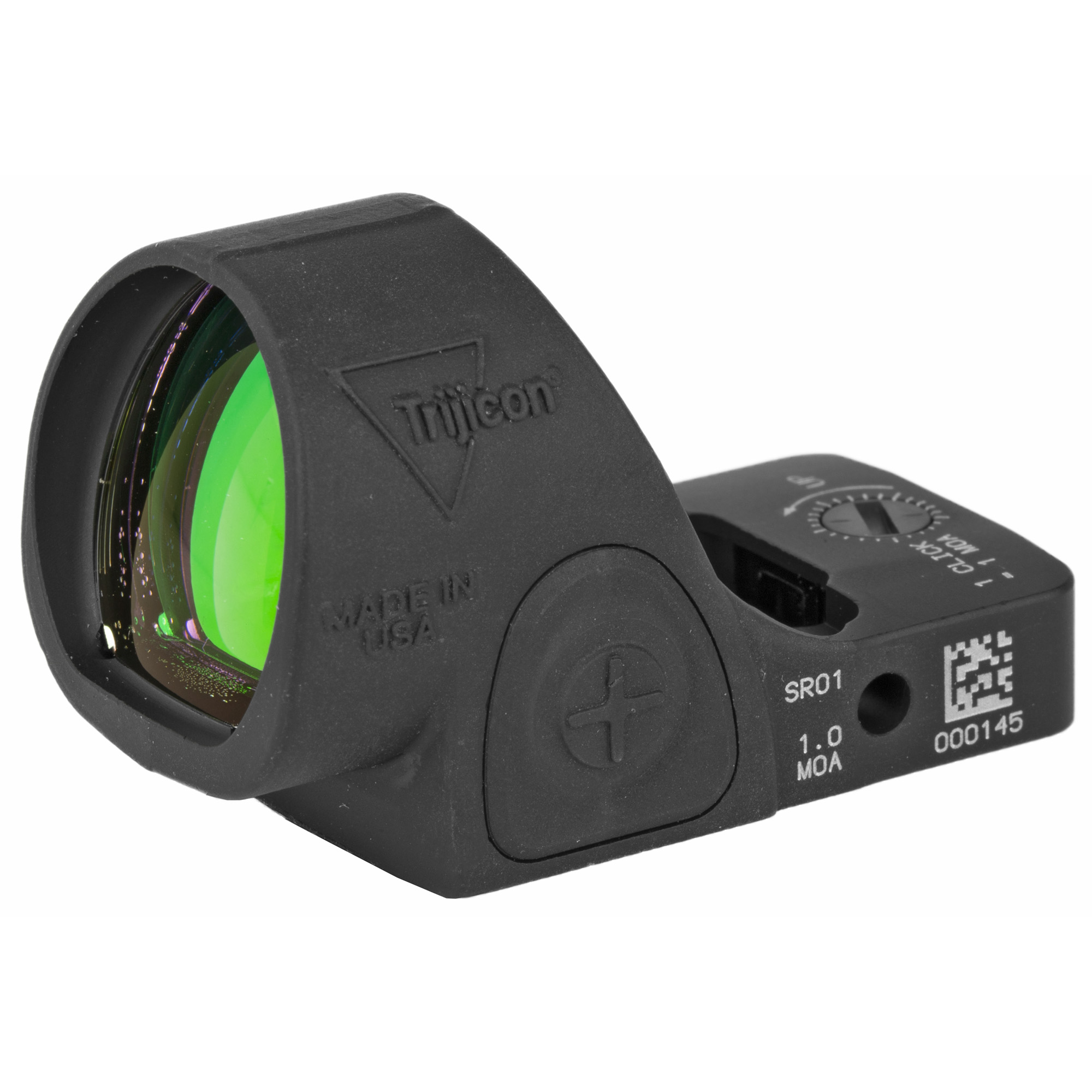
The SRO1-C-2500001 has a 1 MOA red dot. It is the option to consider when you prefer a small illuminated point rather than a more prominent spot. That preference is about how the reticle looks to you, not a claim that a smaller dot makes the optic universally better.
The small dot does not come in a smaller sight. You still get the large, rounded SRO window, top battery access, and the same control approach. If the SRO body appeals to you but you prefer a fine-looking illuminated reference, this configuration combines those two preferences.
Do not choose it solely because the lowest number sounds more sophisticated. Some people find a larger illuminated point more comfortable to see. If you already know that very small LED dots are difficult for your eyes to distinguish, the 1 MOA label is not a reason to ignore that experience.
Brightness can make a dot look more or less prominent, but increasing brightness is not the same as selecting a larger, clearly defined factory dot. An overbright dot can appear to bloom or lose its clean outline. That appearance should not be treated as a substitute for choosing the size you prefer.
Trijicon SRO 2.5 MOA: The Middle Choice
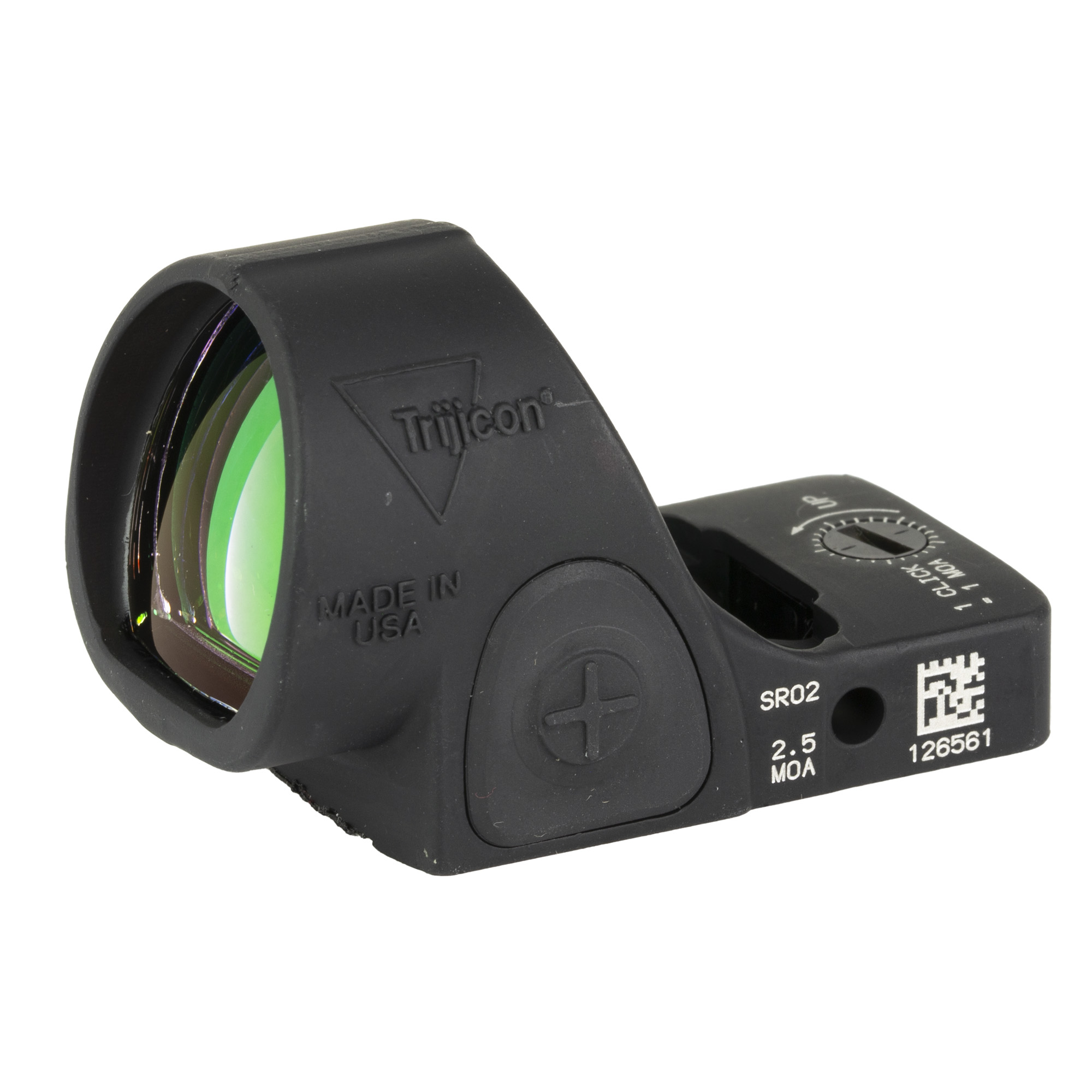
The SRO2-C-2500002 has a 2.5 MOA red dot. It is a useful starting point when you want neither the smallest nor the largest option. The dot is more prominent than the 1 MOA specification without reaching the 5 MOA model’s specified diameter.
Calling it the middle choice is more accurate than calling it the perfect choice for everyone. Your own vision and preference still matter. Someone who already likes a distinctly larger dot may have little reason to stop at 2.5 MOA, while someone who prefers a fine point may be happier with the 1 MOA version.
The SRO2 retains the same automatic and manual brightness options as the other models. You are not giving up a control mode by choosing the middle dot size. Its top-access CR2032 compartment also works the same way, so battery convenience does not distinguish it from the 1 or 5 MOA versions.
For buyers comparing the SRO 2.5 vs 5 MOA, this is the core question: do you prefer a more moderate illuminated point, or do you deliberately want a larger one? Price and availability can break a close tie, but the fixed dot size is the main reticle difference between these models.
Trijicon SRO 5 MOA: The Most Prominent Dot
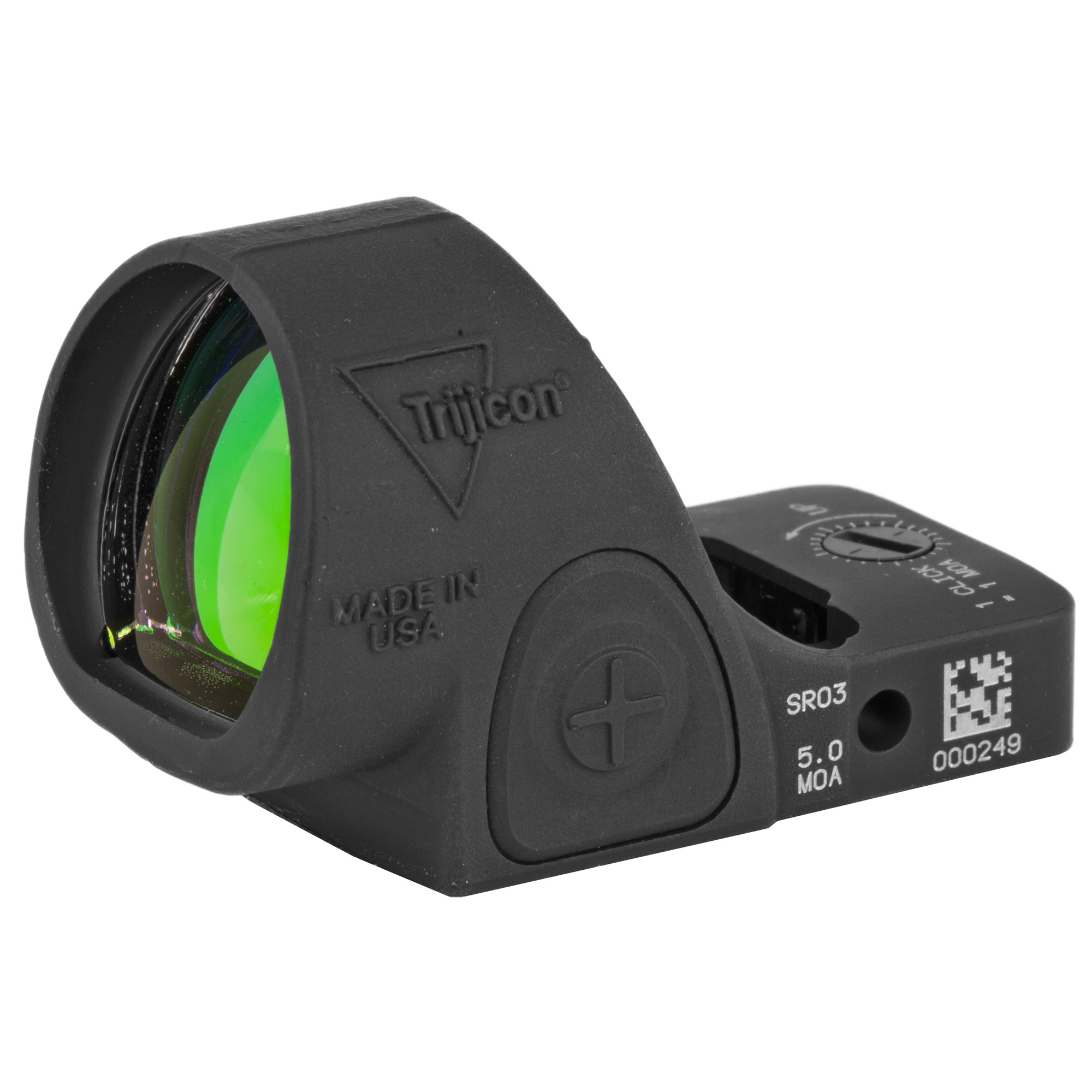
The SRO3-C-2500003 uses a 5 MOA red dot. It is the most prominent specified dot in this SRO group. If a larger illuminated reference is what you want, this is the direct factory option rather than an attempt to make a smaller dot look larger through extra brightness.
There is no selectable circle around the dot. A 5 MOA SRO is still a simple single-dot optic, not a circle-dot version of the SRO2. That distinction matters if you are comparing it with an RMR HD or a Holosun optic that uses multiple reticle components.
A larger dot does not change the housing, mounting footprint, or battery location. It also does not make the optic magnified. The view remains non-magnifying, and the same SRO clearance considerations apply to the complete body.
Choose the 5 MOA model because you prefer how a larger dot looks, not because a bigger number implies a more powerful light source or higher optical quality. Those are different characteristics. The size choice is meaningful enough without attaching unsupported performance promises to it.
Trijicon SRO Dot Size Comparison
| Model | Fixed red dot | Main visual distinction | Public item price, September 18, 2026 |
|---|---|---|---|
| SRO1-C-2500001 | 1 MOA | Smallest specified dot | $552.32 |
| SRO2-C-2500002 | 2.5 MOA | Middle-size dot | $542.58 |
| SRO3-C-2500003 | 5 MOA | Largest specified dot | $542.58 |
These prices are for the linked black-housing models before shipping and may change. The price difference does not establish a difference in glass quality. It is entirely possible for two dot sizes to have the same price while another costs slightly more.
What Stays the Same Across These SRO Models?
All three use the large SRO window, a red LED, an open-emitter design, and a top-access CR2032 battery. They share the RMR mounting footprint and the same basic rounded housing. Choosing a dot size does not solve a body-clearance issue; every version still needs a compatible plate, suitable space, and an appropriate holster where applicable.
The brightness system includes automatic operation and eight adjustable settings. Lock-In preserves a selected manual level, while Lock-Out maintains automatic operation and prevents unintended button changes. Those functions are part of the SRO design rather than premium features reserved for one dot size.
Trijicon’s published red-SRO battery figure is more than three years of continuous operation at setting 4 of 8 and 70 degrees Fahrenheit. Treat that as a stated-condition specification, not a maintenance schedule guaranteed for every setting or environment.
Dot Size, Brightness, and Your Eyes
MOA is an angular measurement used to describe the nominal dot size. It is not a brightness rating. A 5 MOA model does not necessarily look brighter than a 1 MOA model under every combination of settings and lighting; size and intensity are separate aspects of the appearance.
Screen images also have limits. The size at which a reticle diagram is displayed on your phone has little relationship to its appearance through an actual optic. Product photographs in this guide identify the three models and their shared housing; they are not a calibrated simulation of the illuminated dot.
If LED dots look star-shaped or streaked to you, choosing a different size is not a guaranteed solution. Individual vision, including astigmatism, can affect perceived shape. An in-person comparison is more informative than a promise that one particular dot size will look perfectly round for everyone.
This is why the most useful buying question is not simply which SRO dot size is best. It is which of the three you find comfortable and easy to distinguish without preferring a different reticle style altogether.
Choosing Your SRO Model
- Start with 1 MOA if you already prefer a small, fine-looking LED dot.
- Start with 2.5 MOA if you want a middle-size option without committing to either extreme.
- Start with 5 MOA if a deliberately prominent single dot is your preference.
Then confirm the actual model number, rather than relying on a generic SRO photograph. The external shapes are very similar, and product images alone may not tell you which dot size is inside. The full item title and manufacturer number should agree.
Our SRO collection keeps the choices together. Compare the 1 MOA, 2.5 MOA, and 5 MOA models by the visual preference you want to satisfy, then use current price and availability to finish the decision.
Frequently Asked Questions
No. The 1, 2.5, and 5 MOA versions are separate models with fixed dot sizes. Brightness adjustment does not change the factory dot-size specification.
The main difference is the specified size of the red dot. The 5 MOA dot has twice the nominal angular diameter of the 2.5 MOA dot. Both use the same basic SRO housing and feature set.
No. Its smaller dot does not mean a smaller viewing window. The three models share the SRO’s large-window design.
No. It has one fixed red dot. The 5 MOA number describes that dot, not a surrounding circle or a selectable reticle mode.
No size is guaranteed to eliminate distortion caused by individual vision. Compare the actual illuminated dots in person when possible rather than relying on a screen image or a universal recommendation.
Yes. The models discussed here use a top-access CR2032 battery. Their battery location and basic control features do not change with the selected dot size.
Manufacturer references: SRO1, 1 MOA, SRO2, 2.5 MOA, and SRO3, 5 MOA.