
The EOTECH Vudu 4-12×36 is interesting for a reason that does not fit neatly into a magnification chart: it puts a first-focal-plane scope into a body only 7.1 inches long. If you want a compact magnified optic, that physical design deserves as much attention as the 12x figure.
Its strongest case is compact size combined with an FFP reticle. Its main compromise is the 4x minimum. It is not an LPVO and does not become an unmagnified sight at the bottom of its range. The optional EFLX package adds a separate optic rather than changing that fact.
This review evaluates published specifications, reticle artwork and package contents. We have not represented it as a hands-on tracking, recoil or low-light test. Here is what you can establish before buying, and which tradeoffs deserve a closer look.
In this guide
- The Vudu 4-12×36 in Detail
- MR5: A Segmented Circle and Detailed Grid
- MD5: A More Conventional Central Crosshair
- Vudu 4-12 Specifications
- Scope-Only vs EFLX Package
- The Closest Alternative: Vudu 3-9×32
- How It Compares with an LPVO or Larger Scope
- What We Like and What Would Make Us Choose Something Else
The Vudu 4-12×36 in Detail
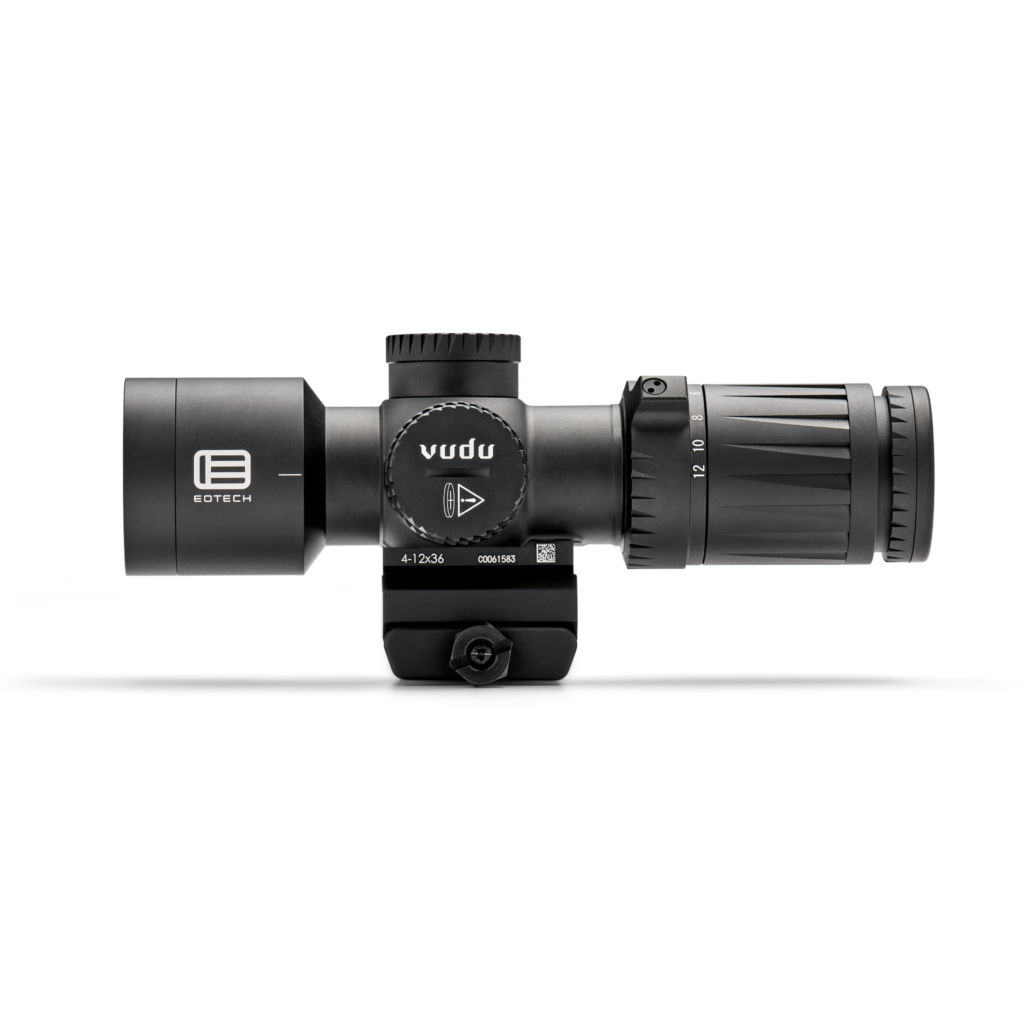
The compact Vudu design is different from a conventional scope that needs a separate pair of rings around a long main tube. It has an integrated base, and EOTECH describes compatibility with many aftermarket mini-ACOG mounts. That makes the mounting interface part of the purchase rather than an afterthought.
The listed 16.9-ounce weight is worth reading alongside the length. This is a short optic, not a claim that every complete configuration is featherweight. Adding the EFLX and its accessory mount changes both weight and the physical profile.
Capped turrets and a rotary illumination control give it a relatively tidy exterior. It has ten illumination settings and uses a CR2032. The manufacturer lists roughly 300 hours of operation, a very different ownership expectation from an LED sight advertised for many thousands of hours.
Our interest in this model is the combination rather than any single specification. A compact body, a modern reticle and a useful magnified range can be attractive together. But a short scope is not automatically comfortable for every person or receiver, especially if the available viewing position does not suit its eye relief.
What the 4-12×36 Numbers Tell You
The scope ranges from 4x to 12x magnification and has a 36mm objective. The first number is important: if you want an optic that begins at 1x, this is not the right category, regardless of how appealing its compact body looks.
The 36mm objective supports that compact design, but it is not a guarantee of a particular low-light impression. Lens quality, magnification, the viewer and conditions all matter. We would not claim that the scope beats a larger optic at dusk on the basis of the objective measurement alone.
First Focal Plane: A Real Difference from the 3-9
The reticle grows and shrinks with the image as magnification changes. That is the defining visual behavior of an FFP scope, and it distinguishes this model from the compact SFP Vudu 3-9.
For shopping purposes, the important consequence is that the reticle looks different across the zoom range. A detailed diagram of the high-power view is not the entire viewing experience. Consider whether you like both the smaller low-power appearance and the more prominent high-power pattern.
FFP is a feature, not a blanket quality ranking. If you prefer a reticle that keeps the same apparent size in the window, the SFP alternative may be more appealing. Paying for the focal plane you actually prefer is more useful than paying for whichever acronym sounds more advanced.
MR5: A Segmented Circle and Detailed Grid
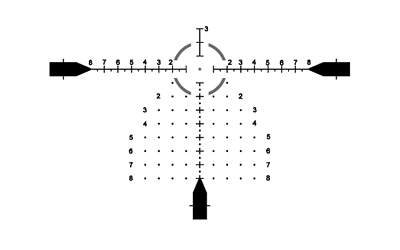
The MR5 combines a segmented circular feature around the center with a lower grid and prominent outer elements. In the manufacturer’s artwork, the circle gives the center a distinct visual frame instead of leaving it as a conventional crosshair alone.
That makes the MR5 Vudu 4-12 worth comparing if you like a more structured central image. Its appearance is different from the MD5 even though both versions use MRAD measurements and share the same scope body.
We would choose it for the pattern, not because MR5 is a higher specification than MD5. Reticle names are identifiers rather than a ladder of quality. If the segmented circle looks useful and comfortable to you, it is a meaningful reason to select this variant.
MD5: A More Conventional Central Crosshair
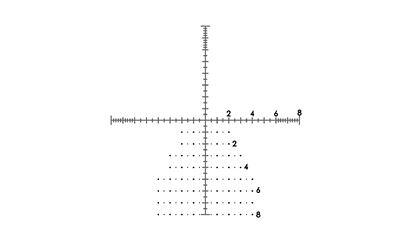
The MD5 removes that prominent circle and presents a more conventional crosshair-based center, with its own lower grid. That is a tangible difference you can see before purchasing rather than a vague claim that one reticle is for more serious users.
The MD5 version is the one we would examine first if you dislike a ring around the center. It still provides a detailed pattern; it is not a bare duplex reticle. Buyers looking for a very minimal image should inspect the diagram rather than interpret simpler center as simple everywhere.
Both reticles are available in the same compact platform. Choose between the actual artwork, then compare the scope-only and package prices for that reticle. There is no need to change the entire scope category just to get the pattern you prefer.
Vudu 4-12 Specifications
| Specification | Vudu 4-12×36 |
|---|---|
| Magnification / focal plane | 4-12x / first focal plane |
| Length / listed weight | 7.1 in / 16.9 oz |
| Objective | 36mm |
| Reticles | MR5 or MD5, both MRAD |
| Eye relief at 4x | 2.5-3.1 in |
| Eye relief at 12x | 2.4-3.0 in |
| Field of view at 100 yd | 28.5 ft at 4x; 9.5 ft at 12x |
| Battery | CR2032 |
Figures refer to EOTECH’s scope specifications, not the added weight of every accessory package. Eye relief is a useful compatibility consideration, but the published range alone does not fully describe viewing comfort.
Scope-Only vs EFLX Package
Scope-only does not mean the integrated base is missing. The distinction is the added EFLX reflex sight and accessory ring mount. That is important when comparing what is actually included for the price.
Choose the scope-only listing when you want the compact scope itself or already own a suitable secondary optic. Choose an EFLX package when you want both components and the named accessory mounting arrangement.
The package is not an automatic upgrade for everyone. It adds a second optic to own, maintain and pay for. If you never wanted that second sight, a bundle can be less economical even when it is discounted compared with buying all the components separately.
Compare the MR5 EFLX package and MD5 EFLX package against the standalone versions. Our EFLX guide explains the reflex sight family and why an original EFLX package should not be confused with the enclosed CE.
The Closest Alternative: Vudu 3-9×32
The Vudu 3-9 is the closest design comparison because it also uses a very short body and integrated base. It starts at a lower 3x, tops out at 9x and uses a second-focal-plane reticle.
That lower minimum may be more appealing than extra maximum magnification for some buyers. The SFP design also keeps the reticle’s apparent size more consistent, which is a preference in its own right. It should not be dismissed as a lesser 4-12 simply because it has less zoom at the top.
The 4-12 counters with higher maximum magnification and FFP behavior while remaining close in physical size. The complete Vudu 3-9 guide covers its HC1, MD6 and MR5 options.
| Difference | Vudu 3-9 | Vudu 4-12 |
|---|---|---|
| Range | 3-9x | 4-12x |
| Focal plane | Second | First |
| Length | 6.8 in | 7.1 in |
| Objective | 32mm | 36mm |
| Main reason to choose | Lower minimum and SFP view | Higher maximum and FFP view |
How It Compares with an LPVO or Larger Scope
An LPVO such as the Vudu 1-10 is the more relevant choice if beginning at 1x is essential. It offers a different range in a longer conventional scope body. It does not become equivalent to the 4-12 just because their maximum magnifications are relatively close.
A larger model such as the Vudu 3.5-18 or 5-25 moves the purchase in the other direction, toward a larger optical package and more maximum magnification. That can make sense when compactness is no longer your leading priority.
We would not choose among these using the highest number alone. Start with the minimum view you want, then the focal-plane behavior, then the physical arrangement. Our Vudu scope guide puts those options side by side.
What We Like and What Would Make Us Choose Something Else
- Reasons to shortlist it: genuinely short body, an integrated base, FFP design and two visually distinct MRAD reticles.
- Reasons to look elsewhere: a need for 1x, a preference for a fixed-size SFP reticle, or a setup that does not suit the available eye relief and mount interface.
- Reason to choose a package: you actually want the included EFLX and its mount, rather than buying extra components because a bundle exists.
Our verdict is positive for the buyer who wants this particular combination. The Vudu 4-12 is not trying to be every scope at once, and that is part of its appeal. Shop Vudu 4-12 scopes and packages to compare the MR5 and MD5 versions.
Frequently Asked Questions
Yes. Its reticle changes apparent size with magnification. The compact Vudu 3-9 is a second-focal-plane alternative.
Yes. Scope-only distinguishes the scope from packages that add an EFLX and accessory ring mount; it does not mean the integrated base is omitted.
MR5 includes a segmented circle around the center. MD5 has a crosshair-based center without that circle. Both include lower reference grids and use MRAD measurements.
No. It starts at 4x and cannot provide an unmagnified 1x view through the scope. An EFLX package adds a separate reflex sight.
No. Their published lengths are 7.1 and 6.8 inches respectively. Their magnification ranges and focal-plane designs are more important differences than that small length gap.
Sources
Manufacturer references: Vudu 4-12 specifications and reticle artwork, Vudu 4-12 announcement and Vudu 3-9 comparison specifications.