
A 3-9x scope usually sounds like a familiar, conventional purchase. The EOTECH Vudu 3-9×32 makes the category more interesting with its unusually short body, integrated base and choice of reticles. It is worth a look if compactness matters as much to you as maximum magnification.
The Vudu 3-9 is a second-focal-plane scope with a 6.8-inch body, available on its own or in an EFLX package. Its appeal is not that it replaces every LPVO or larger scope. It offers a distinct combination for a buyer who wants a small magnified optic and likes a reticle that keeps the same apparent size.
This is a specification-based review and buying guide. We discuss the design, reticles and relevant alternatives without presenting unperformed range or endurance tests as firsthand experience.
In this guide
- The Compact Vudu 3-9×32 Design
- What the 3-9x Range Offers
- Second Focal Plane: A Consistent-Looking Reticle
- HC1: A Familiar MOA Option
- MD6: An Alternative MOA Pattern
- MR5: The MRAD Alternative
- Reticle and Package Comparison
- Scope-Only, Mount Kit and Complete EFLX Package
- Vudu 3-9 Specifications
- Vudu 3-9 vs Vudu 4-12
- When an LPVO Makes More Sense
- Our Verdict
The Compact Vudu 3-9×32 Design
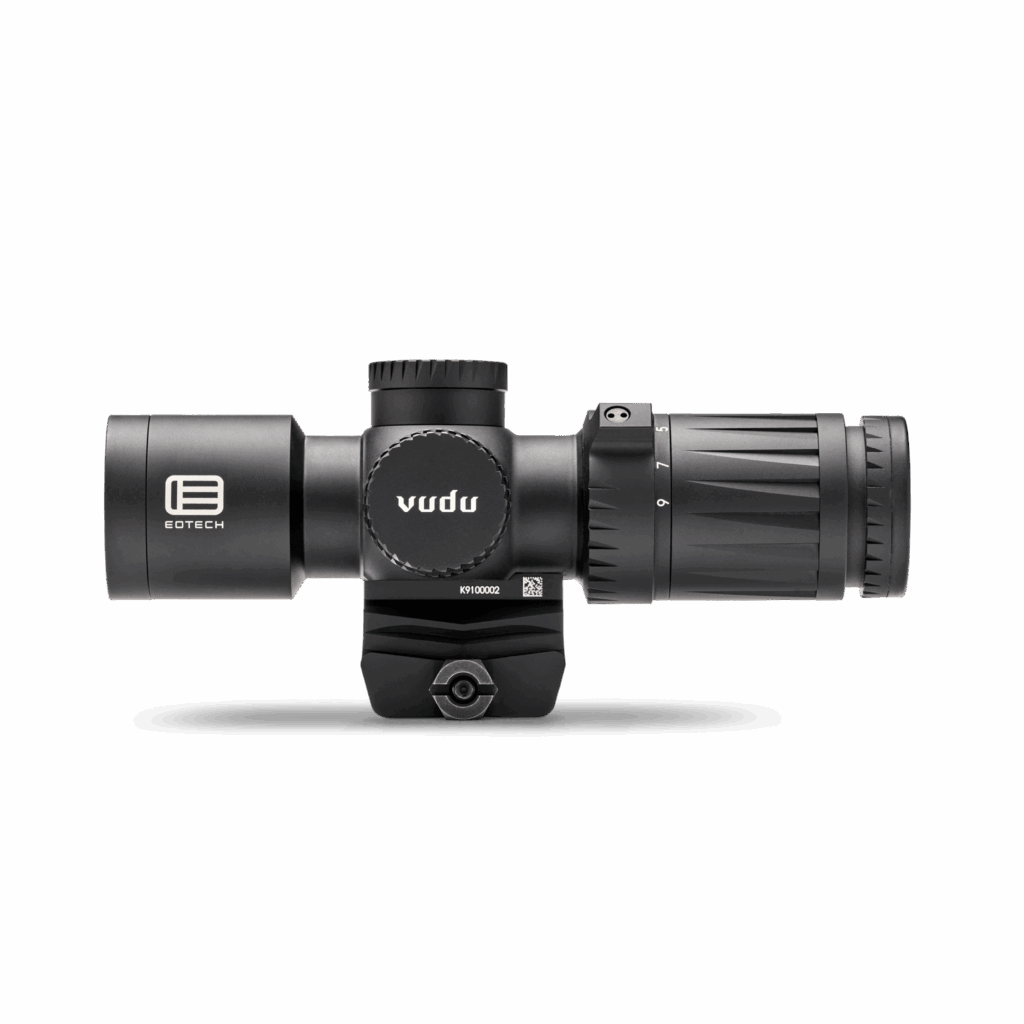
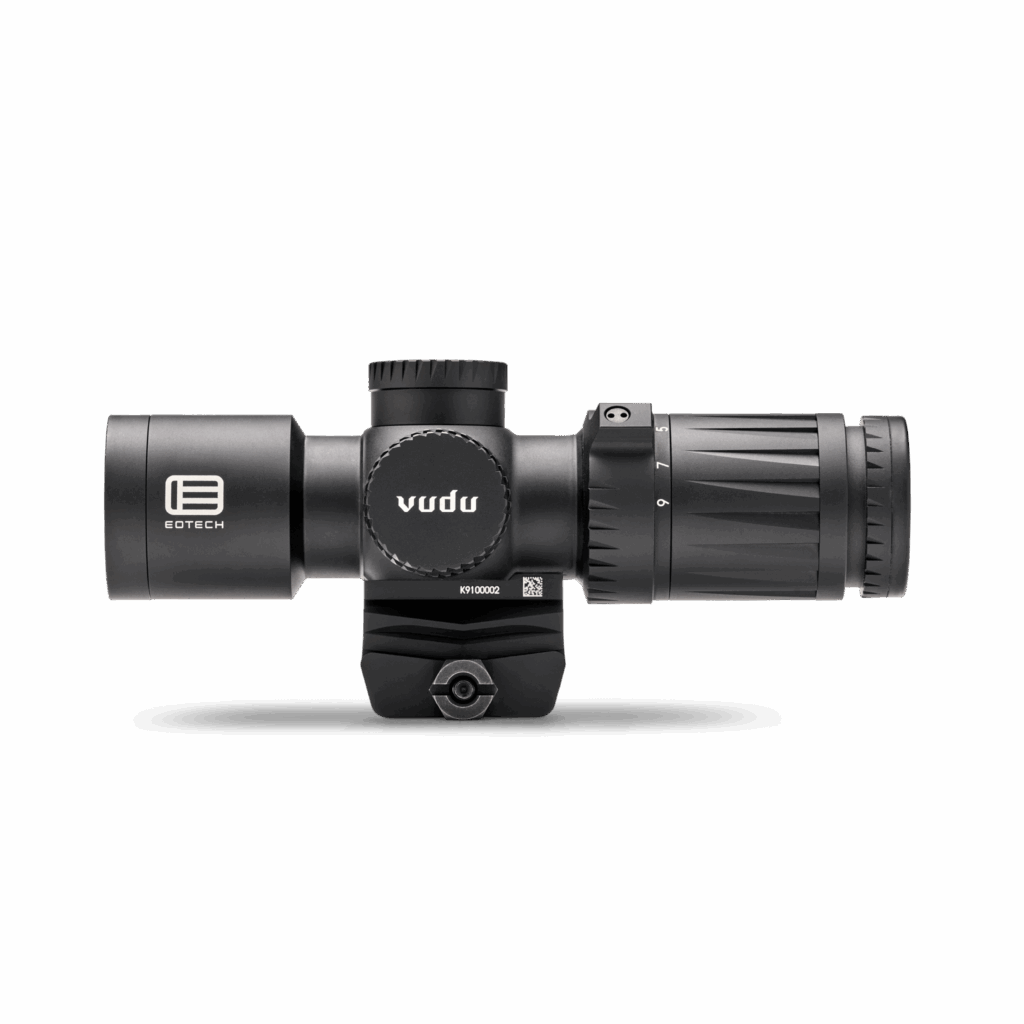
The physical design is the first reason to consider this scope. It does not look like a long tube shortened only by choosing a smaller objective. Its integrated base is part of the design, and EOTECH lists compatibility with many mini-ACOG mounting options.
That changes the shopping process. You should evaluate the complete base and viewing position rather than assume any pair of conventional scope rings will be relevant. For someone who already wants this compact arrangement, that can simplify the purchase. For someone committed to an existing ring system, it may point toward a different model.
The manufacturer lists a 16-ounce scope weight. Short and lightweight are related ideas, but not synonyms: compare the complete intended package, especially if you are adding an EFLX. The compact body is the clear benefit; the final weight depends on the parts you choose.
Capped turrets and rotary illumination controls give the scope a tidy exterior. The reticle uses CR2032-powered illumination, but the buying decision should begin with the view and geometry. A long feature list is not a substitute for a scope you enjoy looking through.
What the 3-9x Range Offers
The 3x minimum provides a wider starting view than the compact Vudu 4-12’s 4x minimum, while the 9x maximum gives you a useful increase in image size. Neither end is an unmagnified view. If starting at 1x is non-negotiable, an LPVO belongs higher on your shortlist.
A moderate maximum can be a reasonable preference. Buying 12x, 18x or 25x because it is available is not necessarily an improvement if you would rather keep the smaller package. On the other hand, if you already know 9x leaves you wanting more detail, the compactness alone may not settle the decision.
We would consider the range alongside the reticle, not in isolation. A scope that has the magnification numbers you want but a pattern you dislike is a poor match, particularly when several variants share the same exterior.
Second Focal Plane: A Consistent-Looking Reticle
The Vudu 3-9 uses a second-focal-plane design. As the image changes size with magnification, the reticle keeps the same apparent size in the window. That can appeal to someone who prefers a consistent visual presentation rather than the changing reticle appearance of an FFP scope.
This is not a statement that SFP is more accurate or less sophisticated. It is a difference in the viewing experience and the way the reticle’s references relate to magnification. Consult the model’s own reticle documentation for those references rather than borrowing assumptions from a first-focal-plane optic.
For the buying decision, inspect the reticle you will actually receive. The MR5 name also appears on other scopes, but that does not make the focal-plane behavior of those scopes identical.
HC1: A Familiar MOA Option
The HC1 Vudu 3-9 is the natural starting point for a buyer who prefers a familiar central crosshair arrangement with reference marks rather than the more elaborate appearance of a lower grid.
HC1 in this model is an MOA reticle. A description that compares its appearance with mil-dot-style artwork should not be taken as a change in its stated measurement system. The complete reticle name and manufacturer diagram are more useful than a casual shorthand description.
We would shortlist HC1 if you like a relatively uncluttered view and do not want extra visual structure simply because another variant offers it. A simpler-looking reticle is a preference you can deliberately choose, not a lack of ambition.
MD6: An Alternative MOA Pattern
The MD6 version keeps the MOA measurement family while giving you another reticle layout to consider. It does not change the scope into a different magnification range or focal plane.
The useful comparison with HC1 is therefore the artwork and the view, rather than a claim that the higher reticle number means better glass. If you prefer MOA and the MD6 pattern looks more comfortable to you, it is a legitimate reason to choose this configuration.
Keep the distinction between MD6 and MD5 clear. MD6 here is the MOA option in the 3-9 family; MD5 is an MRAD option associated with the 4-12 covered in our separate guide. Similar letters do not make them the same purchase.
MR5: The MRAD Alternative
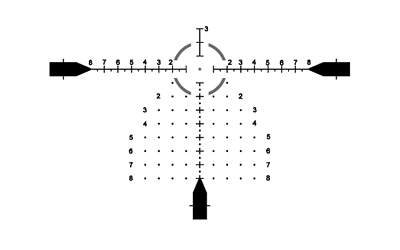
The MR5 Vudu 3-9 is the option to examine if you prefer MRAD. Its segmented central circle and lower grid make the view more structured than a conventional minimal crosshair.
We would choose it for the measurement system and pattern together. Switching from MOA to MRAD just to buy a particular discounted listing can be an unnecessary change if you are already comfortable with one system. Conversely, an MRAD preference is a concrete reason not to treat every 3-9 variant as interchangeable.
The tan MR5 version offers another finish. Finish is the final choice once you know the reticle and package you want; it does not transform the optical design.
Reticle and Package Comparison
| Option | Measurement family | Reason to compare |
|---|---|---|
| HC1 | MOA | Familiar crosshair-based view |
| MD6 | MOA | Alternative MOA layout |
| MR5 | MRAD | Segmented circle and lower grid |
| Scope-only | Chosen reticle | Compact scope with integrated base |
| EFLX package | Chosen reticle | Adds reflex sight and accessory mount |
There is no universal winner among these reticles. The same exterior can hide a different visual experience, so make that choice before comparing black versus tan or a package discount.
Scope-Only, Mount Kit and Complete EFLX Package
These three descriptions should not be confused. A scope-only listing includes the compact scope with its integrated base. An EFLX mount kit is an accessory, not automatically another scope or a reflex sight. A complete EFLX package adds the named reflex sight and its accessory mounting arrangement.
For a buyer starting from nothing and wanting both optics, the package can be convenient. For someone who already owns the relevant reflex sight, buying the complete bundle may duplicate equipment. Compare what is in the box, not just the combined photograph.
Examples include the MD6 EFLX package and MR5 EFLX package. The EFLX guide explains the original reflex sight and the separate enclosed CE model. Do not assume a package uses the CE unless its listing says so.
Vudu 3-9 Specifications
| Specification | Vudu 3-9×32 |
|---|---|
| Magnification / focal plane | 3-9x / second focal plane |
| Length / listed weight | 6.8 in / 16 oz |
| Objective | 32mm |
| Battery | CR2032 |
| Eye relief at 3x | 2.5-3.1 in |
| Eye relief at 9x | 2.3-3.1 in |
| Field of view at 100 yd | 38 ft at 3x; 12.7 ft at 9x |
These figures are the manufacturer’s scope specifications. Accessories alter the complete package weight, and the listed eye-relief range does not by itself establish comfortable fit on every setup.
Vudu 3-9 vs Vudu 4-12
The Vudu 4-12 is the closest alternative in physical concept. Its 7.1-inch body remains very short, but it changes to FFP, starts at 4x and extends to 12x.
Choose the 3-9 when you prefer the lower minimum and consistent-looking SFP reticle. Choose the 4-12 when FFP behavior and the higher maximum are the reasons you are shopping. Those are more important differences than the small gap in body length.
For someone already happy with the 3-9 view, the 4-12 is not an obligatory upgrade. For someone specifically seeking FFP, choosing the 3-9 to save a little length misses the feature that matters most.
When an LPVO Makes More Sense
If the lack of 1x keeps bothering you, listen to that concern. A Vudu 1-10 or another LPVO is designed around a different magnification range and may suit your preferences better.
The compact 3-9 should be bought because you want a compact magnified scope, not because you hope it will feel exactly like an unmagnified optic. An EFLX package offers a separate viewing option, but also introduces another component and another cost.
Our Verdict
The Vudu 3-9 is a distinctive alternative to the familiar long-tube 3-9 scope. We like the clarity of its purpose: compact dimensions, an integrated base and a choice of reticle styles in an SFP platform.
We would choose it when those qualities are the goal, then select HC1, MD6 or MR5 according to the view and measurement system you prefer. Browse Vudu 3-9 scopes and packages for current options.
Frequently Asked Questions
It is second focal plane. The reticle keeps the same apparent size as the magnified image changes.
HC1 and MD6 are MOA options. MR5 is the MRAD alternative.
It uses an integrated base rather than the conventional main-tube ring arrangement. Confirm compatibility with the exact mounting solution you intend to use.
No. Scope-only versions and EFLX packages are separate listings. A mount-only accessory also should not be mistaken for a complete package.
The 3-9 starts at lower magnification and uses an SFP reticle. The 4-12 adds maximum magnification and FFP behavior. Choose the viewing experience you prefer.
Sources
Manufacturer references: Vudu 3-9 specifications and reticle options, EFLX accessory mount, Vudu reticle index and Vudu 4-12 specifications.
Leave a Reply