
Trijicon optic footprints can look deceptively simple on a product listing. RMR, SRO, RMR HD, and RCR belong to the same broad RMR mounting-pattern family, while RMRcc uses a separate interface. Yet a shared pattern does not guarantee that every optic fits the same plate, surrounding space, or holster.
The useful distinction is between the base interface and the complete optic. A footprint describes the mounting arrangement underneath. It does not fully describe the housing above it, forward overhang, battery access, or the hardware required for a particular design.
This guide explains the main Trijicon models at the buying stage. It is a compatibility reference, not an installation procedure. For any final combination, use the exact optic and plate manufacturer’s application information rather than assuming that similar names guarantee a fit.
In This Guide
- The Standard RMR Footprint
- Trijicon SRO Footprint: RMR Pattern, Different Body
- RMR HD Footprint: Familiar Pattern, New Clearance Checks
- RCR Footprint: RMR Pattern with Specific Hardware Requirements
- RMRcc Footprint: A Separate Interface
- Trijicon Optic Footprints at a Glance
- A Simple Compatibility Checklist
- Frequently Asked Questions
The Standard RMR Footprint
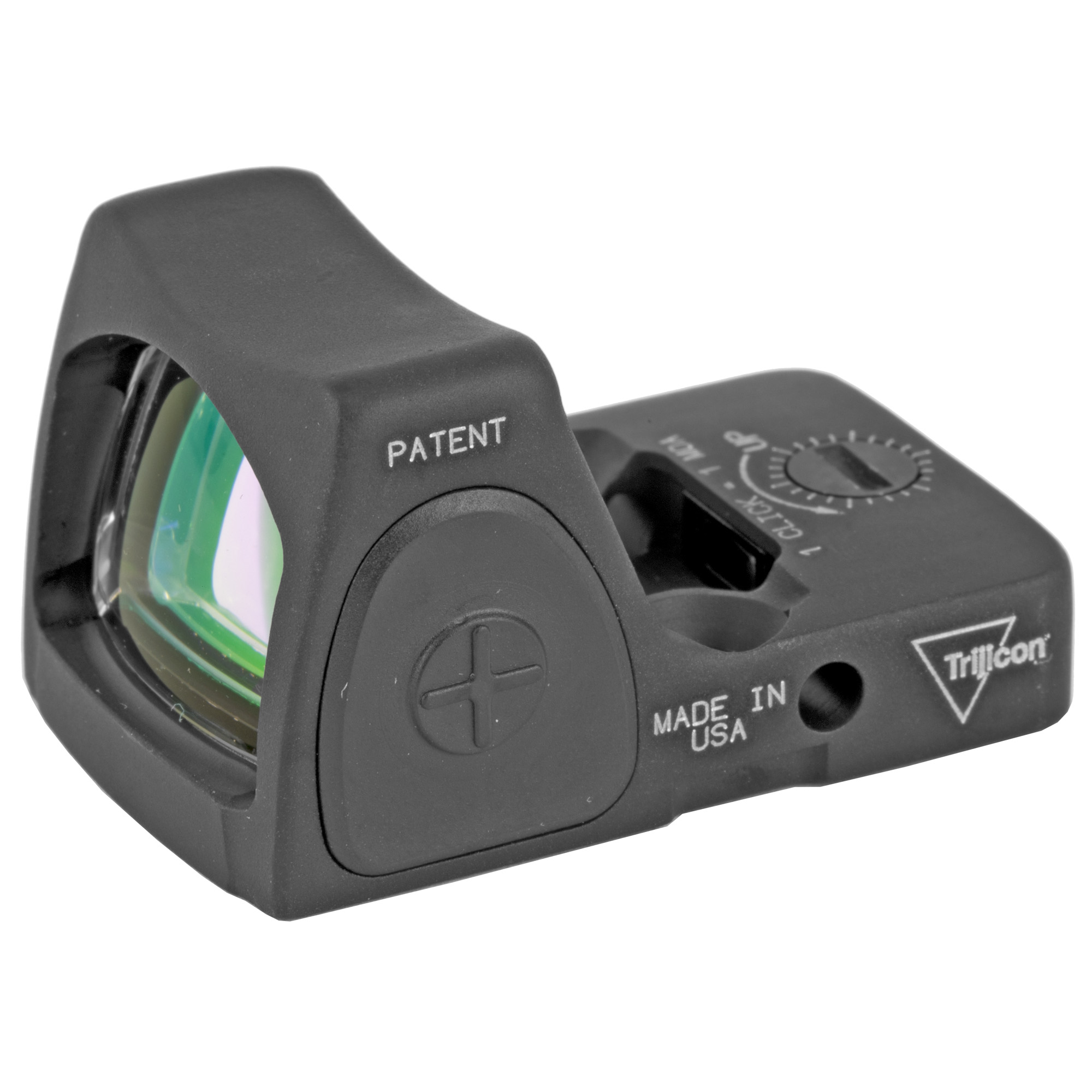
The RMR Type 2 RM06 uses the standard RMR mounting pattern. It is the interface many buyers mean when they refer to an RMR cut or RMR-compatible plate. That terminology is helpful, provided the actual plate and slide application are also identified.
An optic-ready slide may use an interchangeable plate system rather than having a direct RMR interface. The plate bridges two different requirements: it must suit the slide on one side and the optic on the other. A label describing only one of those sides is incomplete shopping information.
The Type 2 also has a bottom-access battery. That detail does not change its footprint, but it can affect the complete mounting arrangement and maintenance requirements. Follow the manufacturer’s specified sealing and mounting provisions for the exact combination rather than assuming every arrangement is identical.
Our Trijicon RMR collection contains multiple designs. Check the exact model name when comparing accessories, because a familiar family name can hide differences in body shape and battery location.
Trijicon SRO Footprint: RMR Pattern, Different Body
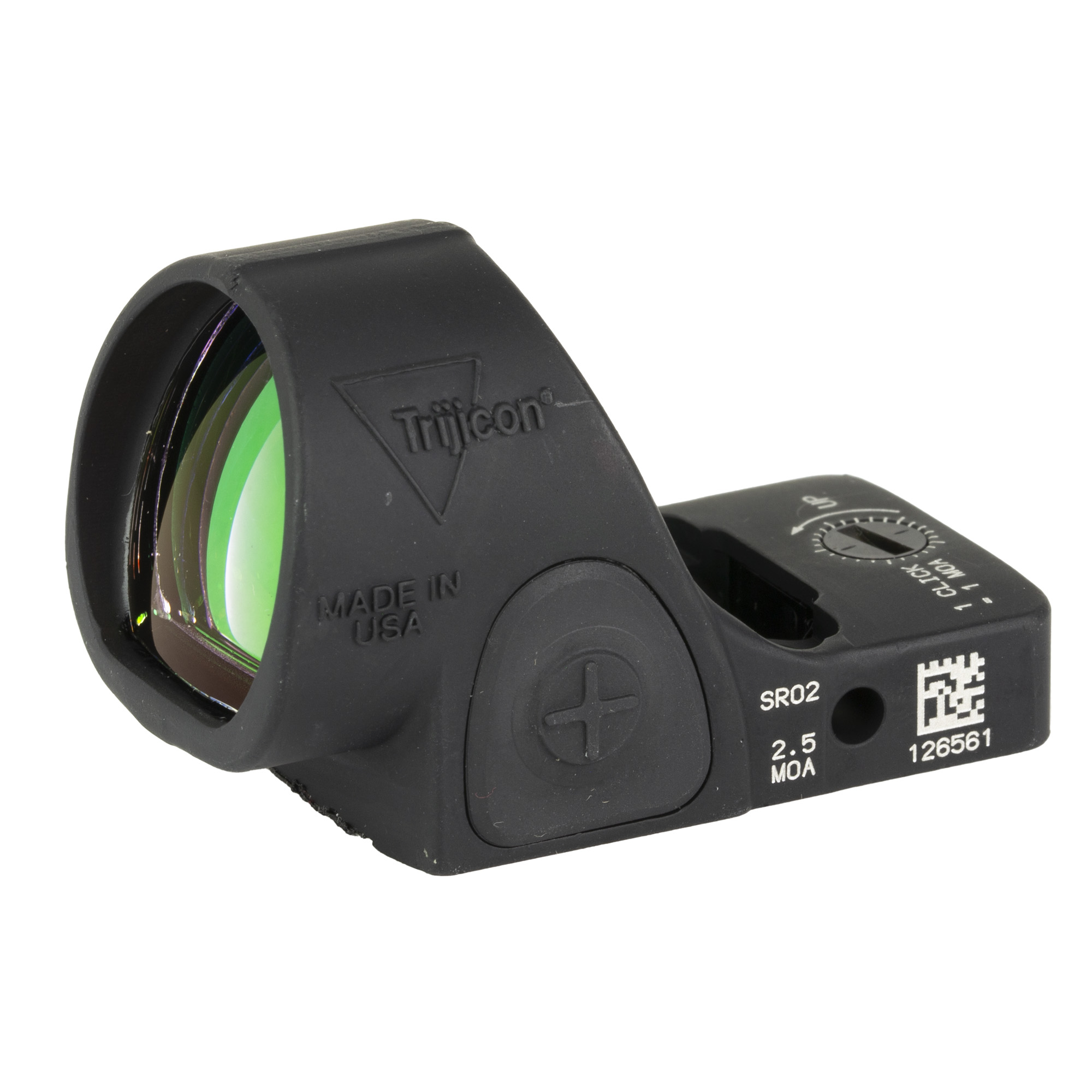
The SRO uses the RMR footprint. It is not an RMRcc-pattern sight, and its large rounded window does not create a new base pattern. This makes RMR-compatible mounting options relevant, but it does not make every RMR installation suitable.
The SRO’s forward overhang is the key additional consideration. Trijicon warns against combinations in which the optic overhangs the chamber or breech face. The optic’s body needs space beyond what the mounting-hole arrangement alone describes.
A holster can also fit a compact RMR while lacking room for an SRO. Confirm the exact optic in the holster manufacturer’s list. The same caution applies to nearby accessories and to plates whose dimensions may interfere with the larger housing.
All three fixed-dot sizes in the SRO collection share this basic compatibility question. Choosing 1, 2.5, or 5 MOA does not remove the need for the same body-clearance checks.
RMR HD Footprint: Familiar Pattern, New Clearance Checks
The RMR HD also uses the RMR pattern. Its larger window, top battery compartment, and expanded housing distinguish it from the Type 2. A buyer upgrading from a Type 2 should therefore confirm the HD explicitly rather than treating the replacement as physically identical.
The footprint identifies the base arrangement, while the larger body can change surrounding clearance. A plate manufacturer’s current compatibility statement is more useful than an old listing that merely says RMR. Holster support should also name the HD where the fit is close.
The 1 and 3.25 MOA RMR HD options have the same general mounting considerations. Reticle choice does not create a different footprint within those two models.
RCR Footprint: RMR Pattern with Specific Hardware Requirements
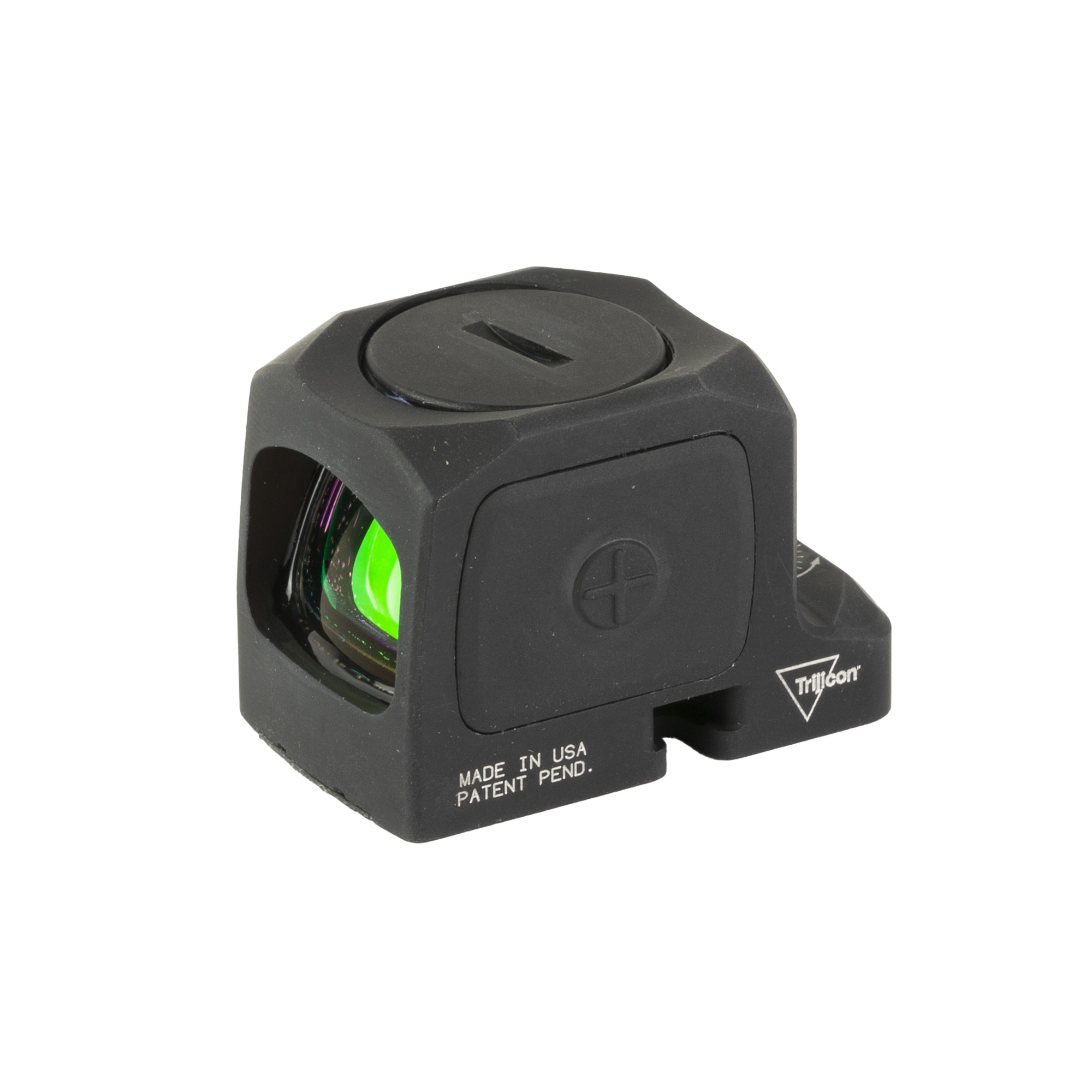
The RCR takes a different approach to mounting an enclosed optic on an RMR-pattern interface. Its hardware arrangement is specific to the RCR. Do not assume that a set of ordinary RMR screws, or every RMR-labeled plate, is appropriate.
This is more than a theoretical distinction. Trijicon offers an RCR-specific mounting plate for certain Agency AOS and Zev-style RMR cuts. The existence of that model-specific solution is a good reminder that a shared pattern does not erase all application differences.
When shopping for an RCR, ask whether the plate maker expressly supports the RCR on your exact platform. An answer about a Type 2 alone does not settle the question. The enclosed housing also needs its own clearance and holster check.
RMRcc Footprint: A Separate Interface
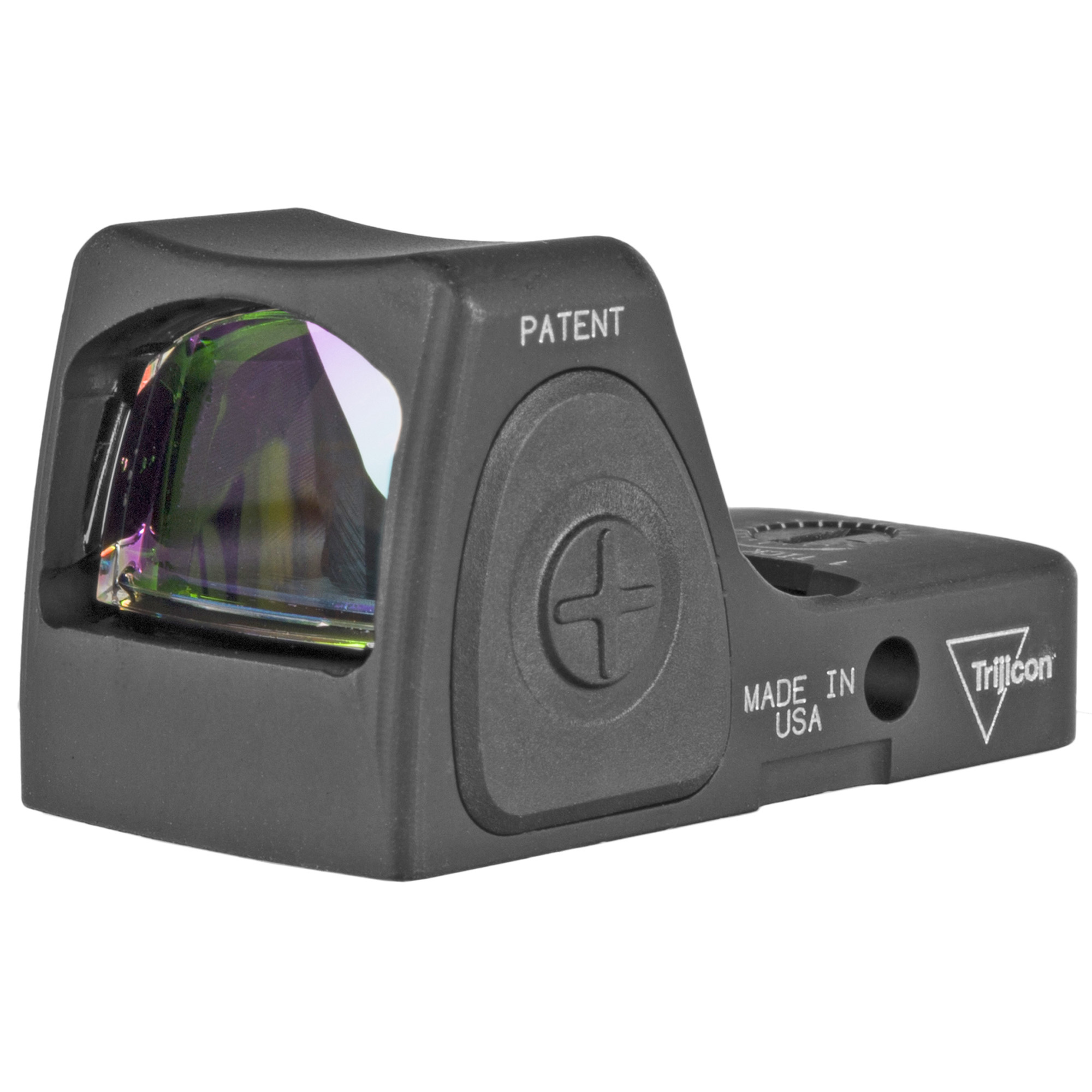
The RMRcc uses its own mounting footprint. It is not a smaller optic that automatically drops onto an RMR plate. The “cc” designation identifies a separate product design, not an accessory setting or a universal compact version of the standard pattern.
It should also not be confused with the Shield RMSc or Holosun K interface. Those compact-optic names often appear in the same shopping conversations, but they do not establish interchangeability. Similar overall size is not proof of matching recoil features, holes, or plate support.
Start with an RMRcc-specific compatibility listing for the exact slide or adapter. Our RMRcc collection keeps these models separate from the full-size RMR family for that reason.
Trijicon Optic Footprints at a Glance
| Optic | Mounting-pattern family | Additional question before buying |
|---|---|---|
| RMR Type 2 | RMR | Does the exact slide/plate arrangement meet the manufacturer’s mounting and sealing requirements? |
| SRO | RMR | Is there clearance for the forward-projecting body and rounded housing? |
| RMR HD | RMR | Does the accessory explicitly accommodate the HD’s larger body? |
| RCR | RMR pattern with RCR-specific hardware | Does the plate or slide support the RCR’s particular mounting arrangement? |
| RMRcc | Separate RMRcc pattern | Is the adapter explicitly RMRcc-compatible rather than RMR, RMSc, or K? |
A Simple Compatibility Checklist
- Identify the exact optic. Include Type 2, HD, RCR, or RMRcc rather than writing only Trijicon.
- Identify the exact platform and slide system. A model name without its optics-ready designation may be insufficient.
- Check both sides of the plate. It must match the platform and the optic.
- Confirm model-specific hardware support. A shared footprint does not make every screw or attachment method interchangeable.
- Check the complete body. Include forward overhang, nearby clearance, and holster fit.
This checklist helps prevent the common mistake of treating a footprint label as a complete installation approval. It also makes a support question easier to answer: an exact optic, slide, and plate combination is more useful than asking whether a sight “fits Glock” or “fits RMR.”
Browse our Trijicon optic mounts after identifying the optic you want. For a related explanation of another manufacturer’s patterns, see our Holosun optic footprint guide. Do not carry compatibility conclusions from one model into another merely because both are compact red dots.
Frequently Asked Questions
The SRO uses the RMR pattern. Its larger, forward-projecting body still requires an SRO-specific clearance check.
Do not assume that. It uses the RMR pattern, but the complete HD housing must be supported by the exact plate and surrounding setup.
The RCR uses an RMR-pattern interface with its own hardware arrangement. Confirm explicit RCR compatibility rather than relying only on a generic RMR label.
No. RMRcc uses a separate interface and requires an appropriate RMRcc-compatible mounting solution.
No. These are different compact-optic interfaces. Similar names or optic sizes do not make them directly interchangeable.
No. A footprint describes the base interface, while a holster must accommodate the complete housing. Confirm the exact optic model with the holster manufacturer.
Manufacturer references: RMR Type 2, SRO, RMR HD, RCR, and RCR-specific AC32127 plate.