
Looking for Trijicon ACOG reticles explained without getting lost in model numbers? Start with the shape you will see through the scope. A chevron uses an angular central mark. A horseshoe/dot combines a curved outer shape with a separate dot. A crosshair uses intersecting lines for a more familiar scope-like appearance.
Those names describe different visual layouts, not three settings inside every ACOG. Reticle color, illumination system, magnification, and model-specific markings also vary. Two scopes that look nearly identical from the outside can present very different views.
This guide compares the main reticle styles using specific products and genuine manufacturer diagrams. You can see how the shapes differ, learn which illumination systems accompany them, and narrow the choice to the ACOG configuration you want.
In This Guide
- ACOG Chevron Reticle: An Angular Center
- ACOG Horseshoe/Dot: A Dot Within a Larger Shape
- ACOG Crosshair: A Familiar Scope-Like Layout
- Trijicon ACOG Reticles Explained Side by Side
- Not Every ACOG Uses the Same Illumination
- Red, Green, or Amber?
- How to Choose an ACOG Configuration
- Frequently Asked Questions
ACOG Chevron Reticle: An Angular Center
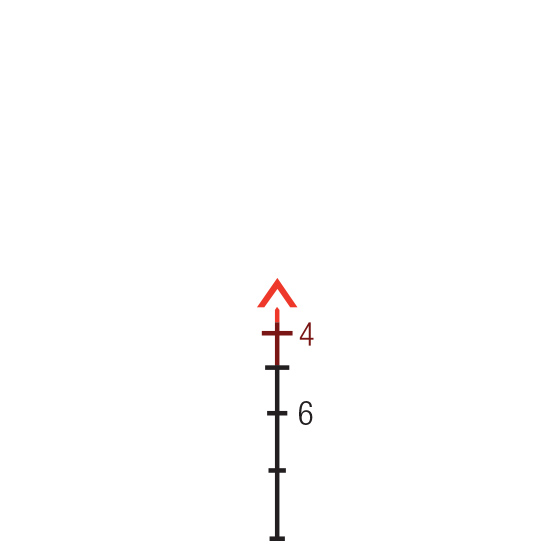
The chevron is one of the most recognizable ACOG designs. Its central illuminated mark is an upward-pointing angular shape rather than a round dot or an intersection of thin lines. For a buyer who likes that distinctive appearance, it offers a clear visual departure from a conventional crosshair.
The TA31-D-100288 4×32 ACOG is our red-chevron example. It has a black housing, a TA51 mount, and a reticle identified for M193. Fiber optics and tritium provide illumination without a battery.
The diagram also shows additional markings below the center. Their presence is part of the exact reticle pattern; another chevron ACOG is not automatically identical in every marking or model specification. The word chevron alone is therefore not enough to identify the complete scope.
Choose this style because you prefer its angular central reference, not because the shape is the most famous one in the ACOG family. A distinctive reticle that does not suit your visual preferences is not improved by its familiarity in photographs.
ACOG Horseshoe/Dot: A Dot Within a Larger Shape
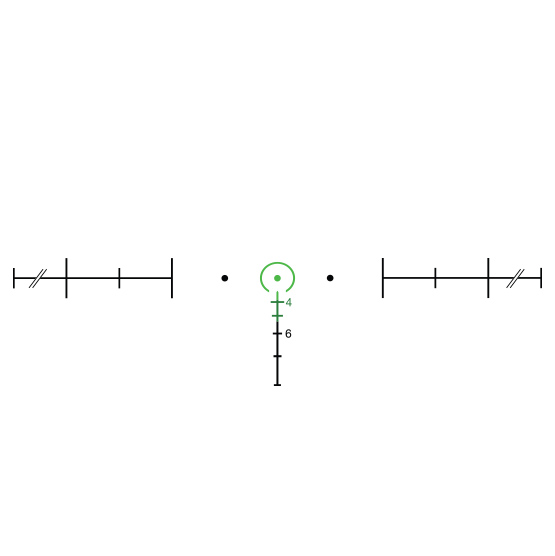
The horseshoe/dot arrangement combines a central dot with a larger curved shape around it. That outer element makes the center look more prominent than an isolated dot. It is a different presentation from both the chevron’s angular mark and a conventional crosshair.
Our example is the TA31-D-100367 4×32 ACOG, which has a green .223/5.56 horseshoe/dot reticle, a Flat Dark Earth housing, and a TA51 mount. Like the red-chevron example, it uses fiber optics and tritium.
The green color and the horseshoe layout are separate characteristics. You may like one without preferring the other. Compare shape first, then color, rather than assuming that every green ACOG has this pattern or that every horseshoe reticle belongs to the same scope configuration.
The manufacturer’s diagram is useful for seeing how the main shapes relate to one another. It should not be read as a promise of identical apparent size or brightness on a phone screen and through the actual scope. Screen scale and the illustration’s lighting are not an optical demonstration.
ACOG Crosshair: A Familiar Scope-Like Layout
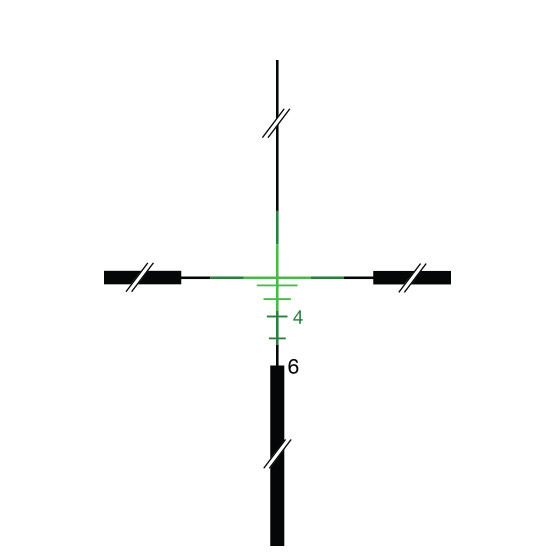
A crosshair ACOG presents intersecting lines around the center. That makes it a natural option to examine if you prefer the visual organization of a conventional riflescope. It is not simply a chevron reticle with a different illumination color.
The TA31-C-100380 4×32 ACOG provides a green .223/5.56 crosshair in a Flat Dark Earth housing, with a TA51 mount. Its illumination uses fiber optics and tritium. The manufacturer diagram shows the relationship between the central illuminated lines and the heavier outer portions of the pattern.
The TA01-D-100319 is a useful contrast. It has an amber .223 crosshair and tritium-only center illumination, rather than the fiber-optic/tritium arrangement of the TA31 example. It also includes backup iron sights. Calling both products crosshair ACOGs does not make their illumination systems or packages identical.
That is why the crosshair decision should include the exact model number. The central shape may be familiar, but color, illumination, and included accessories can change the overall experience and value.
Trijicon ACOG Reticles Explained Side by Side
| Example model | Reticle appearance | Color | Illumination |
|---|---|---|---|
| TA31-D-100288 | Chevron | Red | Fiber optics and tritium |
| TA31-D-100367 | Horseshoe/dot | Green | Fiber optics and tritium |
| TA31-C-100380 | Crosshair | Green | Fiber optics and tritium |
| TA01-D-100319 | Crosshair | Amber center illumination | Tritium only |
These are exact examples, not a complete matrix of every available ACOG. They illustrate why reticle shape and illumination should be considered separately. All four are 4×32 scopes, which keeps the comparison focused on the reticle and package rather than mixing different magnification formats.
Not Every ACOG Uses the Same Illumination
Many familiar ACOG models combine a fiber-optic collector with tritium. The collector gathers ambient light, while tritium supplies self-luminous illumination in low light. That arrangement does not need a replaceable battery.
The brightness still depends on the system and surrounding light. A fiber-optic model does not promise a constant illuminated appearance in every environment. The light reaching the scope and the brightness of the viewed scene can differ, changing how prominent the lit portion appears.
Tritium-only models such as the TA01 example do not add the same fiber-optic collector. There are also LED-powered ACOG models elsewhere in the family. “ACOG” therefore does not mean “fiber optics and tritium” in every case, and “no battery” should not be applied without checking the exact version.
The etched reticle pattern remains part of the optical system independently of how prominent the illumination looks. This distinction is useful when comparing an illuminated central feature with the darker lines around it: not every part of the pattern is necessarily illuminated in the same way.
Red, Green, or Amber?
Reticle color is a genuine preference, but it is not a universal ranking. One person may find green more distinct, while another prefers red or amber. Background colors, lighting, and individual vision influence the impression.
Do not assume that the housing color tells you the reticle color. A Flat Dark Earth scope can have a green reticle, as in two of our examples, while another earth-tone model has amber center illumination. The full product title and manufacturer number identify the actual combination.
Similarly, an illuminated portion shown brightly in a diagram is not a guarantee of that appearance under every condition. Use diagrams to understand shapes and specified colors, then compare an actual optic in person when possible.
How to Choose an ACOG Configuration
Start with the format you want. The ACOG 4×32 collection includes the examples discussed here, while the Compact ACOG collection covers other body and magnification choices. Choose a suitable scope format before narrowing the reticle options within it.
Next, choose the central layout you prefer: angular chevron, dot with an outer horseshoe, or intersecting crosshair. Then check illumination type and color. Finally, confirm the exact model’s reticle designation, housing finish, mount, and included accessories.
That order makes price comparisons more useful. A bare scope and a package with extra accessories are not identical offers. Nor are a TA01 tritium-only crosshair and a TA31 dual-illuminated crosshair simply different colors of the same item.
Browse our full Trijicon ACOG collection once you know which combination you prefer. The right model is the one whose complete specification matches that choice, not whichever listing uses the shortest or most familiar name.
Frequently Asked Questions
The scopes discussed here have fixed reticle configurations. Chevron, horseshoe/dot, and crosshair are model choices, not selectable patterns within one optic.
No. The examples here are fixed-magnification 4×32 scopes with etched reticle patterns. Similar central shapes do not make their optical designs identical to non-magnifying reflex sights.
No. Many combine fiber optics and tritium, but the TA01 example uses tritium-only illumination. LED-powered ACOG models also exist.
No color is universally better for every person and background. Compare the actual reticle shape, illumination system, and your own visual preference.
No. Multiple models use crosshair patterns, with differences in color, illumination, and package contents. The full manufacturer model number identifies the exact scope.
No. They are manufacturer illustrations for recognizing the pattern and color. Their appearance on a screen does not reproduce the exact size or brightness seen through an optic.
Manufacturer references: red-chevron TA31, green horseshoe/dot TA31, green-crosshair TA31, and amber-crosshair TA01.